
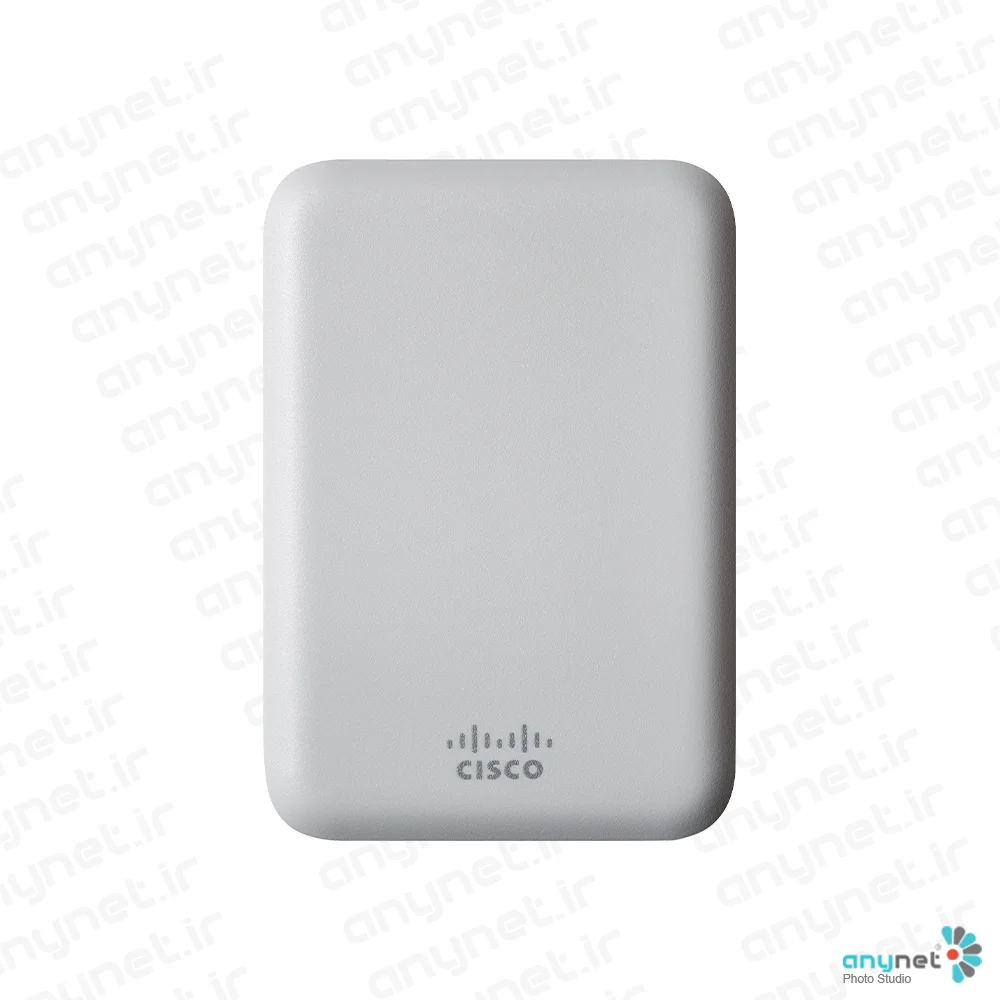

Cisco AIR-AP1810W-I-K9 Access Point
- Global Price List Information (GPL)
-
Category: Cisco Wireless LAN ProductsSubcategory: 1810 Series Access Points
-
Model: AIR-AP1810W-I-K9
-
Description: 802.11ac Wave 2 1810w, 2x2:2, 3 GbE; I Domain
-
Price: 645.00 USDLast Update: 2019-02-24
- End-of-Sale and End-of-Life Information (EOL/EOS)
- Release Date:
- End-of-Sale Date:
- End-of-Support Date:
The Cisco Aironet 1810W Series Access Points are designed to provide high-performance wireless connectivity in a compact, wall-plate form factor. These devices are specifically engineered for environments where space is at a premium and aesthetics matter, such as hospitality venues, cruise ships, and residential housing units. By leveraging existing cabling infrastructure, these access points offer a cost-effective way to upgrade network capabilities without requiring extensive new installations.
The series focuses on delivering a seamless user experience by combining robust wireless performance with versatile wired connectivity options. These devices are built to handle the demands of modern, high-density networks, ensuring that both wireless clients and wired devices receive reliable, secure, and fast network access. With their sleek design and flexible mounting options, they integrate easily into various professional and residential settings.
Product overview
The Cisco Aironet 1810W Series includes the AIR-AP1810W-x-K9 model, which serves as a dual-band, controller-based access point supporting the 802.11ac Wave 2 standard. This device is capable of delivering data rates of up to 867 Mbps on the 5-GHz radio, providing significantly higher capacity than previous generations of wireless technology. It is designed to be mounted directly on walls or desks, making it an ideal solution for multi-dwelling units that require a discreet yet powerful networking footprint.
Beyond wireless capabilities, the 1810W Series acts as a mini-switch, featuring multiple Gigabit Ethernet ports to support wired devices like IP phones or security cameras. The inclusion of Power over Ethernet (PoE) out functionality allows the access point to power these connected devices directly, further simplifying deployment. Additionally, the hardware is equipped with integrated Bluetooth 4.1 for future location and asset tracking applications, ensuring the device remains relevant as network requirements evolve.
Features and benefits
- 802.11ac Wave 2 Support: Utilizes 2x2 MU-MIMO technology with two spatial streams to provide high-speed, reliable wireless connectivity for multiple clients simultaneously.
- Gigabit Ethernet Connectivity: Features three local Gigabit Ethernet ports for secure wired connections, with the ability to tunnel traffic or switch it locally.
- PoE Out Capability: One of the Ethernet ports can provide Power over Ethernet to support peripheral devices such as IP phones or cameras, reducing the need for extra power cabling.
- Integrated Bluetooth 4.1: Includes a low-energy radio for future-ready location and asset tracking services.
- Flexible Mounting: Offers versatile installation options, including wall-mounting to standard junction boxes or desk-mounting via an optional cradle.
- Enhanced Security: Includes physical security features like Torx screws and Kensington lock slots, alongside advanced encryption and authentication protocols (WPA2, 802.1X).
- Compact Design: A sleek, small form factor that blends into professional and residential environments without compromising performance.
- Comprehensive Management: Supported by Cisco Unified Wireless Network Software, allowing for centralized control and monitoring.
With their sleek design and small form factor, the Cisco Aironet 1810W Series Access Points bring a full slate of Cisco high-performance functionality to multi-dwelling-unit deployments.
Product Overview
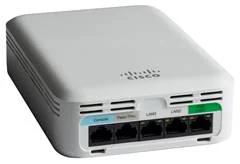
The Cisco Aironet 1810W Series Access Points offer a compact, wall plate–mountable access point, ideal for hospitality, cruise ships, residential halls or other multi-dwelling-unit deployments. The Aironet 1810W Series combines Gigabit Ethernet wired and 802.11ac Wave 2 wireless connectivity into a sleek device, built to take advantage of existing cabling infrastructure. This combination reduces total cost of ownership with no compromise to the end user.
Features and Benefits
With 802.11ac Wave 2, the 1810W Series provides a data rate of up to 867 Mbps on the 5-GHz radio, exceeding the data rates offered by today’s high-end 802.11n access points. It also enables wired devices to connect to the network without the need for additional investments in cabling infrastructure.
The 1810W Series delivers industry-leading performance for highly secure and reliable wired or wireless connections and provides a robust mobility experience. Table 1 lists the features and benefits of these access points.
Table 1.Features and Benefits
|
Feature |
Benefit |
|
MU-MIMO |
Multiuser (MU) multiple-input multiple-output (MU-MIMO) allows transmission of data to multiple 802.11ac Wave 2–capable clients simultaneously to improve the client experience. Prior to MU-MIMO, 802.11n and 802.11ac Wave 1 access points could transmit data to only one client at a time, typically referred to as single-user MIMO. 802.11ac Wave 2 with 2x2 MIMO technology with two spatial streams when operating in single-user or multiuser MIMO mode, offering 867-Mbps rates for more capacity and reliability than competing access points. |
|
Gigabit Ethernet ports |
Three local Gigabit Ethernet ports are available to securely connect wired devices to the network. Traffic from wired devices can be tunneled back to a wireless LAN controller (for compatible controllers) or be locally switched by the access point. One of these Ethernet ports can also provide Power over Ethernet (PoE) out to power a device such as an IP phone or a security camera. |
|
Integrated Bluetooth 4.1 |
Integrated Bluetooth low-energy (BLE) 4.1 radio for location and asset tracking (future availability). |
|
Multiple mounting and security options |
Multiple mounting options to standard junction boxes. You can vertically mount the access point directly on a wall or desk using the optional sleek desk cradle. Physical security is offered with the included Torx screw and the option to add a Kensington lock. Place your access point where you see fit, secure in the knowledge that it isn’t going anywhere. |
All of these features help ensure the best possible end-user experience on the wireless network.
Prominent Feature/Differentiator/Capability
The Aironet 1810W Series Access Points support the latest 802.11ac Wave 2 standard for higher performance, greater access and higher-density networks. With simultaneous dual radios and dual band with 802.11ac Wave 2 MU-MIMO, this access point can handle the increasing number of high-bandwidth devices that will soon become a normal part of the network.
The 1810W Series allows wired access via Power over Ethernet (PoE). This feature provides wired access with PoE out for other devices such as IP phones, security cameras, printers and copiers. In addition to standard PoE, the access point can be powered with an AC adapter. The 1810W Series comes with three local Gigabit Ethernet ports, one uplink Gigabit Ethernet port and one passive pass-through RJ-45 port, allowing for a variety of connections.
These sleek access points with a small form factor are designed with flexible mounting options in mind. You can mount them directly on the wall or to numerous global wall junction standards or have them desk mounted. They are also easy to install.
Product Specifications
Table 2 lists the specifications for the Cisco Aironet 1810W Series Access Points.
Table 2.Specifications
|
Item |
Specification |
||||||||||||||
|
Authentication and security |
●Advanced Encryption Standard (AES) for Wi-Fi Protected Access 2 (WPA2)
●802.1X, RADIUS authentication, authorization and accounting (AAA)
●802.11i
|
||||||||||||||
|
Software |
●Cisco Unified Wireless Network Software with AireOS Wireless Controllers Release 8.2.111.0 or later
|
||||||||||||||
|
Maximum clients |
●Maximum number of associated wireless clients: 200 per Wi-Fi radio, in total 400 clients per access point
|
||||||||||||||
|
802.11ac |
●2x2 single-user/multiuser MIMO with two spatial streams
●Maximal ratio combining (MRC)
●20-, 40- and 80-MHz channels
●PHY data rates up to 866.7 Mbps (80 MHz on 5 GHz)
●Packet aggregation: A-MPDU (Tx/Rx), A-MSDU (Rx)
●802.11 Dynamic Frequency Selection (DFS)
●Cyclic shift diversity (CSD) support
|
||||||||||||||
|
Ethernet ports |
●Authentication with 802.1X or MAC filtered
●Dynamic VLAN or per port
●Traffic locally switched or tunneled back to wireless LAN controller
|
||||||||||||||
|
Bluetooth (future availability) |
●Integrated Bluetooth 4.1 (including BLE) radio
●Maximum transmit power: 5 dBm
●Antenna gain: 2 dBi
|
||||||||||||||
|
Data rates supported |
802.11a: 6, 9, 12, 18, 24, 36, 48, 54 Mbps |
||||||||||||||
|
802.11b/g: 1, 2, 5.5, 6, 9, 11, 12, 18, 24, 36, 48, 54 Mbps |
|||||||||||||||
|
802.11n data rates on 2.4 GHz: |
|||||||||||||||
|
MCS Index1 |
GI2 = 800 ns |
GI = 400 ns |
|||||||||||||
|
20-MHz Rate (Mbps) |
20-MHz Rate (Mbps) |
||||||||||||||
|
0 |
6.5 |
7.2 |
|||||||||||||
|
1 |
13 |
14.4 |
|||||||||||||
|
2 |
19.5 |
21.7 |
|||||||||||||
|
3 |
26 |
28.9 |
|||||||||||||
|
4 |
39 |
43.3 |
|||||||||||||
|
5 |
52 |
57.8 |
|||||||||||||
|
6 |
58.5 |
65 |
|||||||||||||
|
7 |
65 |
72.2 |
|||||||||||||
|
8 |
13 |
14.4 |
|||||||||||||
|
9 |
26 |
28.9 |
|||||||||||||
|
10 |
39 |
43.3 |
|||||||||||||
|
11 |
52 |
57.8 |
|||||||||||||
|
12 |
78 |
86.7 |
|||||||||||||
|
13 |
104 |
115.6 |
|||||||||||||
|
14 |
117 |
130 |
|||||||||||||
|
15 |
130 |
144.4 |
|||||||||||||
|
802.11ac data rates on 5 GHz: |
|||||||||||||||
|
MCS Index |
Spatial Streams |
GI = 800 ns |
GI = 400 ns |
||||||||||||
|
20-MHz Rate (Mbps) |
40-MHz Rate (Mbps) |
80-MHz Rate (Mbps) |
20-MHz Rate (Mbps) |
40-MHz Rate (Mbps) |
80-MHz Rate (Mbps) |
||||||||||
|
0 |
1 |
6.5 |
13.5 |
29.3 |
7.2 |
15 |
32.5 |
||||||||
|
1 |
1 |
13 |
27 |
58.5 |
14.4 |
30 |
65 |
||||||||
|
2 |
1 |
19.5 |
40.5 |
87.8 |
21.7 |
45 |
97.5 |
||||||||
|
3 |
1 |
26 |
54 |
117 |
28.9 |
60 |
130 |
||||||||
|
4 |
1 |
39 |
81 |
175.5 |
43.3 |
90 |
195 |
||||||||
|
5 |
1 |
52 |
108 |
234 |
57.8 |
120 |
260 |
||||||||
|
6 |
1 |
58.5 |
121.5 |
263.3 |
65 |
135 |
292.5 |
||||||||
|
7 |
1 |
65 |
135 |
292.5 |
72.2 |
150 |
325 |
||||||||
|
8 |
1 |
78 |
162 |
351 |
86.7 |
180 |
390 |
||||||||
|
9 |
1 |
– |
180 |
390 |
– |
200 |
433.3 |
||||||||
|
0 |
2 |
13 |
27 |
58.5 |
14.4 |
30 |
65 |
||||||||
|
1 |
2 |
26 |
54 |
117 |
28.9 |
60 |
130 |
||||||||
|
2 |
2 |
39 |
81 |
175.5 |
43.3 |
90 |
195 |
||||||||
|
3 |
2 |
52 |
108 |
234 |
57.8 |
120 |
260 |
||||||||
|
4 |
2 |
78 |
162 |
351 |
86.7 |
180 |
390 |
||||||||
|
5 |
2 |
104 |
216 |
468 |
115.6 |
240 |
520 |
||||||||
|
6 |
2 |
117 |
243 |
526.5 |
130 |
270 |
585 |
||||||||
|
7 |
2 |
130 |
270 |
585 |
144.4 |
300 |
650 |
||||||||
|
8 |
2 |
156 |
324 |
702 |
173.3 |
360 |
780 |
||||||||
|
9 |
2 |
– |
360 |
780 |
– |
400 |
866.7 |
||||||||
|
Maximum number of non-overlapping channels |
A (A regulatory domain): ●2.412 to 2.462 GHz; 11 channels
●5.180 to 5.320 GHz; 8 channels
●5.500 to 5.700 GHz; 8 channels
(excludes 5.600 to 5.640 GHz)
●5.745 to 5.825 GHz; 5 channels
B (B regulatory domain): ●2.412 to 2.462 GHz; 11 channels
●5.180 to 5.320 GHz; 8 channels
●5.500 to 5.720 GHz; 12 channels
●5.745 to 5.825 GHz; 5 channels
C (C regulatory domain): ●2.412 to 2.472 GHz; 13 channels
●5.745 to 5.825 GHz; 5 channels
D (D regulatory domain): ●2.412 to 2.462 GHz; 11 channels
●5.180 to 5.320 GHz; 8 channels
●5.745 to 5.825 GHz; 5 channels
E (E regulatory domain): ●2.412 to 2.472 GHz; 13 channels
●5.180 to 5.320 GHz; 8 channels
●5.500 to 5.700 GHz; 8 channels
(excludes 5.600 to 5.640 GHz)
F (F regulatory domain): ●2.412 to 2.472 GHz; 13 channels
●5.745 to 5.805 GHz; 4 channels
G (G regulatory domain): ●2.412 to 2.472 GHz; 13 channels
●5.745 to 5.825 GHz; 5 channels
H (H regulatory domain): ●2.412 to 2.472 GHz; 13 channels
●5.150 to 5.350 GHz; 8 channels
●5.745 to 5.825 GHz; 5 channels
I (I regulatory domain): ●2.412 to 2.472 GHz; 13 channels
●5.180 to 5.320 GHz; 8 channels
|
K (K regulatory domain): ●2.412 to 2.472 GHz; 13 channels
●5.180 to 5.320 GHz; 8 channels
●5.500 to 5.620 GHz; 7 channels
●5.745 to 5.805 GHz; 4 channels
N (N regulatory domain): ●2.412 to 2.462 GHz; 11 channels
●5.180 to 5.320 GHz; 8 channels
●5.745 to 5.825 GHz; 5 channels
Q (Q regulatory domain): ●2.412 to 2.472 GHz; 13 channels
●5.180 to 5.320 GHz; 8 channels
●5.745 to 5.825 GHz; 5 channels
R (R regulatory domain): ●2.412 to 2.472 GHz; 13 channels
●5.180 to 5.320 GHz; 8 channels
●5.660 to 5.805 GHz; 7 channels
S (S regulatory domain): ●2.412 to 2.472 GHz; 13 channels
●5.180 to 5.320 GHz; 8 channels
●5.500 to 5.700 GHz; 11 channels
●5.745 to 5.825 GHz; 5 channels
T (T regulatory domain): ●2.412 to 2.462 GHz; 11 channels
●5.280 to 5.320 GHz; 3 channels
●5.500 to 5.700 GHz; 8 channels
(excludes 5.600 to 5.640 GHz)
●5.745 to 5.825 GHz; 5 channels
Z (Z regulatory domain): ●2.412 to 2.462 GHz; 11 channels
●5.180 to 5.320 GHz; 8 channels
●5.500 to 5.700 GHz; 8 channels
(excludes 5.600 to 5.640 GHz)
●5.745 to 5.825 GHz; 5 channels
|
|||||||||||||
|
Note: This varies by regulatory domain. Refer to the product documentation for specific details for each regulatory domain. |
|||||||||||||||
|
Receive sensitivity (combined sensitivity) |
802.11b -99 dBm @ 1 Mbps -96 dBm @ 2 Mbps -93 dBm @ 5.5 Mbps -86 dBm @ 11 Mbps |
802.11g -94 dBm @ 6 Mbps -93 dBm @ 9 Mbps -92 dBm @ 12 Mbps -90 dBm @ 18 Mbps -86 dBm @ 24 Mbps -83 dBm @ 36 Mbps -78 dBm @ 48 Mbps -77 dBm @ 54 Mbps |
802.11a -94 dBm @ 6 Mbps -93 dBm @ 9 Mbps -91 dBm @ 12 Mbps -89 dBm @ 18 Mbps -86 dBm @ 24 Mbps -83 dBm @ 36 Mbps -78 dBm @ 48 Mbps -76 dBm @ 54 Mbps |
||||||||||||
|
2.4 GHz 802.11n (HT20) -93 dBm @ MCS0 -90 dBm @ MCS1 -88 dBm @ MCS2 -84 dBm @ MCS3 -81 dBm @ MCS4 -76 dBm @ MCS5 -75 dBm @ MCS6 -74 dBm @ MCS7 -92 dBm @ MCS8 -89 dBm @ MCS9 -87 dBm @ MCS10 -83 dBm @ MCS11 -79 dBm @ MCS12 -76 dBm @ MCS13 -74 dBm @ MCS14 -73 dBm @ MCS15 |
5 GHz 802.11n (HT20) -93 dBm @ MCS0 -90 dBm @ MCS1 -88 dBm @ MCS2 -84 dBm @ MCS3 -81 dBm @ MCS4 -76 dBm @ MCS5 -75 dBm @ MCS6 -73 dBm @ MCS7 -92 dBm @ MCS8 -89 dBm @ MCS9 -86 dBm @ MCS10 -83 dBm @ MCS11 -80 dBm @ MCS12 -75 dBm @ MCS13 -74 dBm @ MCS14 -73 dBm @ MCS15 |
5 GHz 802.11n (HT40) -90 dBm @ MCS0 -87 dBm @ MCS1 -85 dBm @ MCS2 -81 dBm @ MCS3 -78 dBm @ MCS4 -74 dBm @ MCS5 -72 dBm @ MCS6 -71 dBm @ MCS7 -90 dBm @ MCS8 -86 dBm @ MCS9 -84 dBm @ MCS10 -81 dBm @ MCS11 -78 dBm @ MCS12 -73 dBm @ MCS13 -72 dBm @ MCS14 -70 dBm @ MCS15 |
|||||||||||||
|
802.11ac (non HT80) -88 dBm @ 6 Mbps -70 dBm @ 54 Mbps |
|||||||||||||||
|
MCS Index |
Spatial Streams |
||||||||||||||
|
VHT20 |
VHT40 |
VHT80 |
VHT20-STBC |
VHT40-STBC |
VHT80-STBC |
||||||||||
|
0 |
1 |
-93 dBm |
-90 dBm |
-87 dBm |
-95 dBm |
-93 dBm |
-90 dBm |
||||||||
|
8 |
1 |
-69 dBm |
-72 dBm |
-68 dBm |
-65 dBm |
||||||||||
|
9 |
1 |
-64 dBm |
-61 dBm |
||||||||||||
|
0 |
2 |
-92 dBm |
-89 dBm |
-86 dBm |
|||||||||||
|
8 |
2 |
-68 dBm |
|||||||||||||
|
9 |
2 |
-63 dBm |
-60 dBm |
||||||||||||
|
Maximum transmit power |
2.4 GHz ●802.11b
◦17 dBm with 1 antenna
●802.11g
◦20 dBm with 2 antennas
●802.11n (HT20)
◦20 dBm with 2 antennas
|
5 GHz ●802.11a
◦17 dBm with 1 antenna
●802.11n non-HT duplicate mode
◦20 dBm with 2 antennas
●802.11n (HT20)
◦20 dBm with 2 antennas
●802.11n (HT40)
◦20 dBm with 2 antennas
●802.11ac
◦Non-HT80: 20 dBm with 2 antennas
◦VHT20: 20 dBm with 2 antennas
◦VHT40: 20 dBm with 2 antennas
◦VHT80: 20 dBm, 2 antennas
◦VHT20-STBC: 20 dBm with 2 antennas
◦VHT40-STBC: 20 dBm with 2 antennas
◦VHT80-STBC: 20 dBm with 2 antennas
|
|||||||||||||
|
Note: The maximum power setting will vary by channel and according to individual country regulations. Refer to the product documentation for specific details. |
|||||||||||||||
|
Available transmit power settings |
2.4 GHz 20 dBm (100 mW) 17 dBm (50 mW) 14 dBm (25 mW) 11 dBm (12.5 mW) 8 dBm (6.25 mW) 5 dBm (3.13 mW) 2 dBm (1.56 mW) -1 dBm (0.78 mW) |
5 GHz 20 dBm (100 mW) 17 dBm (50 mW) 14 dBm (25 mW) 11 dBm (12.5 mW) 8 dBm (6.25 mW) 5 dBm (3.13 mW) 2 dBm (1.56 mW) -1 dBm (0.78mW) |
|||||||||||||
|
Note: The maximum power setting will vary by channel and according to individual country regulations. Refer to the product documentation for specific details. |
|||||||||||||||
|
Integrated antennas |
●2.4 GHz, gain 2 dBi
●5 GHz, gain 4 dBi
|
||||||||||||||
|
Interfaces |
●One 10/100/1000BASE-T PoE uplink port
●Management console port (RJ-45)
●Three 10/100/1000BASE-T ports (local Ethernet ports), including one PoE out port:
◦PoE out provides 802.3af when access point is powered by Cisco local power supply (AIR-PWR-C=, AIR-PWR-D=), or ~6.5W when powered by 802.3at, or no output when powered by 802.3af
●One passive pass-through port RJ-45 (back to bottom)
●DC power connector
|
||||||||||||||
|
Indicators |
●Status LED indicates boot loader status, association status, operating status, boot loader warnings, boot loader errors
●Per-port status for local Ethernet ports
●For privacy, LEDs are automatically turned off when the access point joins a controller. LEDs may be enabled to be administratively - see configuration guide.
|
||||||||||||||
|
Dimensions (W x L x H) |
●Access point (without mounting bracket): 6.5 x 4.5 x 1.6 in. (165 x 114 x 41 mm)
|
||||||||||||||
|
Weight |
●Access point without mounting bracket or any other accessories: 1.2 lb (560 g)
|
||||||||||||||
|
Environmental |
●Nonoperating (storage) temperature: -22° to 158°F (-30° to 70°C)
●Nonoperating (storage) maximum altitude: 25°C, 15,000 ft (4,500m)
●Operating temperature: 32° to 104°F (0° to 40°C)
●Operating humidity: 10% to 90% percent (noncondensing)
●Operating maximum altitude: 40°C, 9843 ft (3,000m)
|
||||||||||||||
|
System |
●512 MB DRAM
●256 MB flash
●1.4 GHz system dual-core CPU
|
||||||||||||||
|
Input power requirements |
●44 to 57V DC
●Optional power supply and power injector: 100 to 240V AC; 49 to 60 Hz
|
||||||||||||||
|
Powering options |
●802.3af/at Ethernet switch
●Optional Cisco power injectors (AIR-PWRINJ5=, AIR-PWRINJ6=)
●Optional Cisco local power supply (AIR-PWR-C= or AIR-PWR-D=)
|
||||||||||||||
|
Power draw |
●Maximum values: 12.95W (15.4W with 100m of cable) with no PoE out, 20.7W (22W with 100m of cable) with 6.49W PoE out and 27.65W with 12.95W PoE out (when powered using AIR-PWR-C or AIR-PWR-D)
Note: When deployed using PoE, the power draw numbers listed above include the power loss in 100m of cabling on the uplink port and 100m of cabling on the PoE out port. |
||||||||||||||
|
Physical security |
●Torx security screw, included with the access point
●Kensington security slot
|
||||||||||||||
|
Mounting |
●Included with the access point: mounting bracket AIR-AP-BRACKET-W2, compatible to install to single gang junction box or multiple international standards
●Optional:
◦AIR-AP1810W-KIT=, spacer kit to mount the access point directly on a wall where standard junction boxes are not available
◦AIR-OEAP1810-CRD=, cradle kit to mount the access point on a desk
|
||||||||||||||
|
Accessories |
●Mounting bracket: AIR-AP-BRACKET-W2= (available as spare)
●Spacer kit: AIR-AP1810W-KIT= (sold separately), includes spacer and RJ-45 jumper cable
●Cradle kit: AIR-OEAP1810-CRD= (sold separately), includes back cover and RJ-45 jumper cable
●Physical security kit: AIR-SEC-50= (sold separately), with 50 pcs. security screws used to secure the access point onto wall-mounting bracket, 20 pcs. RJ-45 caps and 2 pcs. unlock keys used to block physical access to Ethernet ports
●Cisco local power supply: AIR-PWR-D= (sold separately)
|
||||||||||||||
|
Warranty |
Limited Lifetime Hardware Warranty |
||||||||||||||
|
Compliance |
●Safety:
◦UL 60950-1
◦CAN/CSA-C22.2 No. 60950-1
◦UL 2043
◦IEC 60950-1
◦EN 60950-1
●Radio approvals:
◦FCC Part 15.247, 15.407
◦RSS-247 (Canada)
◦EN 300.328, EN 301.893 (Europe)
◦ARIB-STD 66 (Japan)
◦ARIB-STD T71 (Japan)
◦EMI and susceptibility (Class B)
◦FCC Part 15.107 and 15.109
◦ICES-003 (Canada)
◦VCCI (Japan)
◦EN 301.489-1 and -17 (Europe)
●IEEE standards:
◦IEEE 802.11a/b/g, 802.11n, 802.11h, 802.11d
◦IEEE 802.11ac Draft 5
●Security:
◦802.11i, WPA2, WPA
◦802.1X
◦AES
●Extensible Authentication Protocol (EAP) types:
◦EAP-Transport Layer Security (TLS)
◦EAP-Tunneled TLS (TTLS) or Microsoft Challenge Handshake Authentication Protocol Version 2 (MSCHAPv2)
◦Protected EAP (PEAP) v0 or EAP-MSCHAPv2
◦EAP-Flexible Authentication via Secure Tunneling (FAST)
◦PEAP v1 or EAP-Generic Token Card (GTC)
◦EAP-Subscriber Identity Module (SIM)
●Multimedia:
◦Wi-Fi Multimedia (WMM)
●Other:
◦FCC Bulletin OET-65C
◦RSS-102
|
||||||||||||||
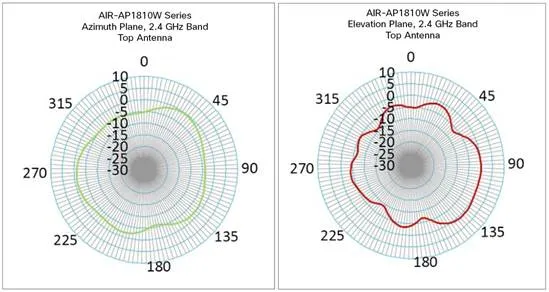
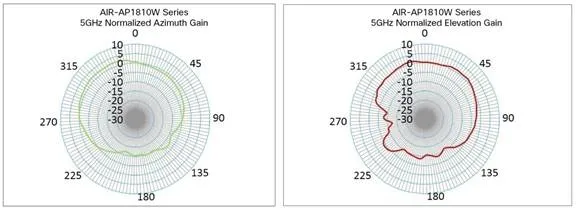
Antenna Radiation Patterns
2.4 GHz Normalized Antenna Radiation Pattern for Both Antennas
5 GHz Normalized Antenna Radiation Pattern for Both Antennas
Ordering Information
Table 3.Ordering Information
|
Product Name |
Part Number |
|
Cisco Aironet 1810W Series |
●AIR-AP1810W-x-K9: Dual-band, controller-based 802.11a/g/n/ac, Wave 2
Customers are responsible for verifying approval for use in their individual countries. To verify approval that corresponds to a particular country or the regulatory domain used in a specific country, visit http://www.cisco.com/go/aironet/compliance. Not all regulatory domains have been approved. As they are approved, the part numbers will be available on the Global Price List. |
For More Information
For more information about the Cisco Aironet 1810W Series Access Point, visit:
http://www.cisco.com/c/en/us/products/wireless/aironet-1810w-series-access-points/index.html.
| Model | AIR-AP1810W-I-K9 |
| Category | Cisco Wireless LAN Products |
| Subcategory | 1810 Series Access Points |
| Description | 802.11ac Wave 2 1810w, 2x2:2, 3 GbE; I Domain |
| Price | 645.00 USD |
| Last Update | 2019-02-24 |