
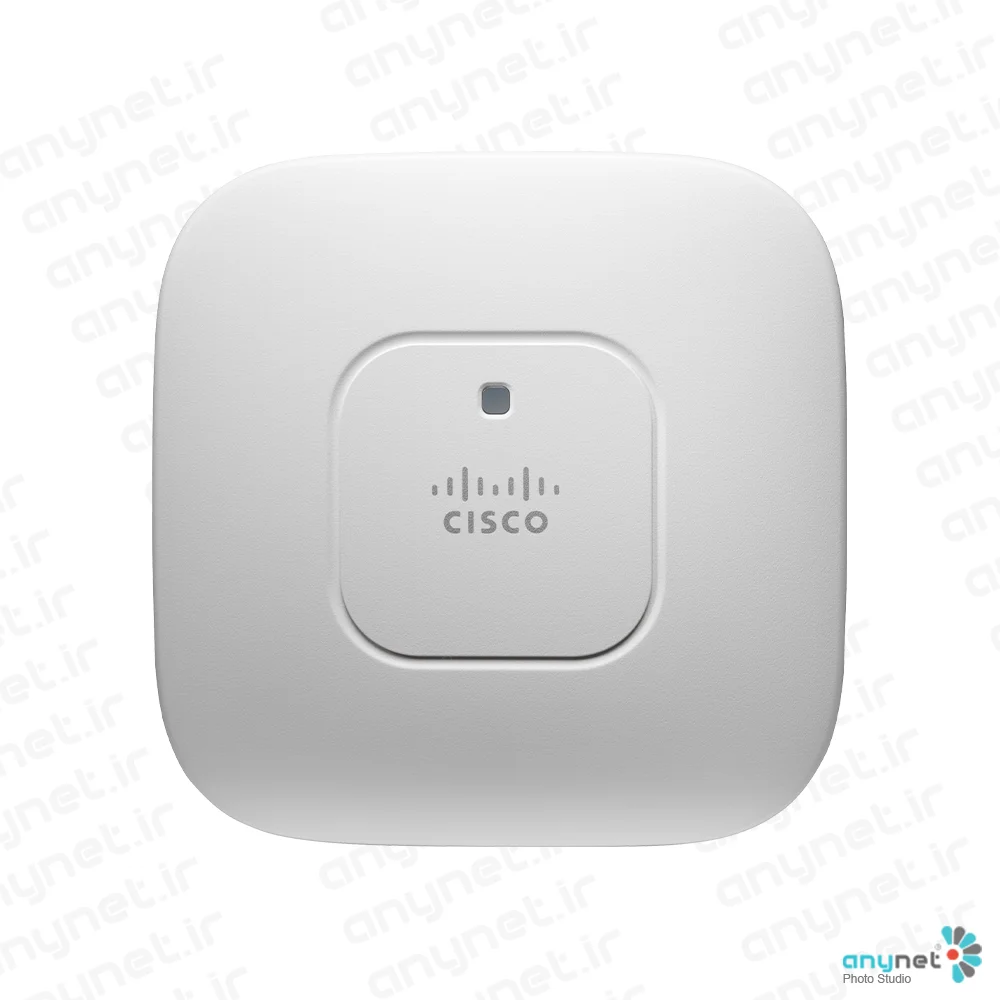

Cisco AIR-CAP702I-Z-K9 Access Point
- Global Price List Information (GPL)
-
Model: AIR-CAP702I-Z-K9
-
Description:
-
Price: USDLast Update:
- End-of-Sale and End-of-Life Information (EOL/EOS)
- Release Date:
- End-of-Sale Date:
- End-of-Support Date:
The Cisco Aironet 700 Series is designed as a compact, cost-effective access point solution for businesses looking to modernize their wireless infrastructure. It is specifically engineered to meet the demands of increasingly complex network environments by providing a significant performance boost over older 802.11a/g networks. By utilizing 802.11n technology, this series offers a reliable and high-speed wireless experience while maintaining a competitive price point for value-conscious organizations.
As an integral part of the Cisco Unified Wireless Network, the 700 Series ensures that businesses can protect their existing investments through seamless integration with current wired networks. This architecture is built to be flexible and scalable, supporting full Layer 3 mobility across various environments, including enterprise campuses, branch offices, and remote sites. By focusing on low total cost of ownership, the series provides a stable foundation for deploying modern mobility services and applications.
Product overview
The Cisco Aironet 700 Series includes several models tailored to different deployment needs, primarily featuring internal antennas for indoor environments. The product lineup consists of controller-based models, such as the AIR-CAP702I, and stand-alone (autonomous) models, like the AIR-SAP702I. These are available in various configurations, including multi-unit packs and eco-packs, to accommodate different project scales.
These access points are powered by 802.11n dual-radio technology, supporting both 2.4 GHz and 5 GHz bands simultaneously. They are equipped with 128 MB of DRAM and 128 MB of flash memory, ensuring robust performance. The hardware is designed for versatility, supporting multiple deployment modes such as FlexConnect, Monitor, and Converged Access. Furthermore, the series is backed by a Limited Lifetime Hardware Warranty, providing long-term peace of mind for the original owner.
Features and benefits
- High-Speed Connectivity: Utilizes 802.11n 2x2 MIMO technology to deliver up to 300 Mbps PHY data rates, providing at least six times the throughput of legacy 802.11a/g networks.
- Optimized RF Performance: Features Radio Resource Management (RRM) for automated self-healing, which reduces dead spots and ensures high-availability client connections.
- Enhanced Client Handling: Includes Cisco BandSelect to improve 5-GHz client connections in mixed-client environments, ensuring efficient bandwidth usage.
- Advanced Security: Incorporates enterprise-grade security features, including Rogue Detection, wIPS, and Context-Aware services to protect the network from unauthorized access.
- Flexible Powering Options: Supports 802.3af Power over Ethernet (PoE), as well as external power injectors and local power supplies for versatile installation.
- Seamless Mobility: Provides full Layer 3 mobility across the entire Cisco Unified Wireless Network, allowing users to move between locations without losing connectivity.
- Reliable Hardware: Built with optimized antenna and radio designs to maintain consistent transmit and receive performance across varying ranges.
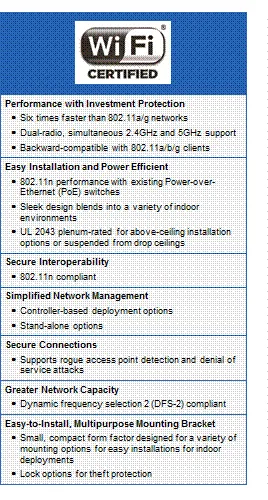 The Cisco Aironet 700 Series offers a compact access point for value-minded customers looking to modernize their networks to handle today’s increasingly complex wireless access demands.
With 802.11n dual-radio 2 x 2 multiple-input multiple-output (MIMO) technology providing at least six times the throughput of existing 802.11a/g networks, the Cisco Aironet 700 Series offers the performance advantage of 802.11n quality at a competitive price.
As part of the Cisco Unified Wireless Network, the 700 Series Access Point provides low total cost of ownership and investment protection by integrating seamlessly with the existing network.
RF Excellence
Building on the Cisco Aironet heritage of RF excellence, the 700 Series Access Point delivers secure and reliable wireless connections with:
●Simultaneous dual band, dual radio with support for 2.4GHz and 5GHz
●Optimized antenna and radio designs: Consistent network transmit and receive for optimized rate versus range
●Radio resource management (RRM): Automated self-healing optimizes the unpredictability of RF to reduce dead spots and help ensure high-availability client connections
●Cisco BandSelect improves 5-GHz client connections in mixed-client environments
●Advanced security features including Rogue Detection, wIPS and Context-Aware
Scalability
The Cisco Aironet 700 Series is a component of the Cisco Unified Wireless Network, which can provide full Layer 3 mobility across central or remote locations on the enterprise campus, in branch offices, and at remote sites. The Cisco Unified Wireless Network is the industry's most flexible, resilient, and scalable architecture delivering secure access to mobility services and applications, and offering the lowest total cost of ownership and investment protection by integrating seamlessly with the existing wired network.
Product Specifications
Table 1 lists the product specifications for Cisco Aironet 700 Series Access Points.
Table 1.Product Specifications for Cisco Aironet 700 Series Access Points
|
Item |
Specification |
|||||
|
Part Numbers |
The Cisco Aironet 700 Access Point: Indoor environments, with internal antennas ●AIR-CAP702I-x-K9 - Dual-band controller-based 802.11a/g/n
●AIR-CAP702I-xK910 - Eco-pack (dual-band controller-based 802.11a/g/n) 10 quantity access points
●AIR-SAP702I-x-K9 - Dual-band stand-alone 802.11a/g/n
●AIR-SAP702I-xK9-5 - Multi-unit pack (dual-band stand-alone 802.11a/g/n) 5 quantity access points
Cisco SMARTnet Service for the Cisco Aironet 700 Series Access Point with internal antennas ●CON-SNT-AIRCAP7x - SMARTnet 8x5xNBD 702i access point (dual-band 802.11 a/g/n) controller-based
(e.g. CON-SNT-AIRCAP7A for controller-based 702i internal antenna for A Domain) Cisco Wireless LAN Services ●AS-WLAN-CNSLT - Cisco Wireless LAN Network Planning and Design Service
●AS-WLAN-CNSLT - Cisco Wireless LAN 802.11n Migration Service
●AS-WLAN-CNSLT - Cisco Wireless LAN Performance and Security Assessment Service
Regulatory domains: (x = regulatory domain) Customers are responsible for verifying approval for use in their individual countries. To verify approval and to identify the regulatory domain that corresponds to a particular country, please visit: http://www.cisco.com/go/aironet/compliance. Not all regulatory domains have been approved. As they are approved, the part numbers will be available on the Global Price List. |
|||||
|
Software |
●Cisco Unified Wireless Network Software Release 7.5 or later (controller-based)
●Cisco IOS Software (stand-alone)
|
|||||
|
Deployment Modes |
●Controller-based, FlexConnect, Monitor, Converged Access and Autonomous
|
|||||
|
802.11n |
●2 x 2 multiple-input multiple-output (MIMO) with two spatial streams
●Maximal ratio combining (MRC)
●20- and 40-MHz channels
●PHY data rates up to 300 Mbps
●Packet aggregation: A-MPDU (Tx/Rx), A-MSDU (/Rx)
●802.11 dynamic frequency selection (DFS)
●Cyclic shift diversity (CSD) support
|
|||||
|
Data Rates Supported |
802.11a: 6, 9, 12, 18, 24, 36, 48, 54 Mbps |
|||||
|
802.11bg: 1, 2, 5.5, 6, 9, 11, 12, 18, 24, 36, 48, 54 Mbps |
||||||
|
802.11n data rates (2.4 GHz[1] and 5 GHz): |
||||||
|
MCS Index[2] |
GI[3] = 800ns |
GI = 400ns |
||||
|
20-MHz Rate (Mbps) |
40-MHz Rate (Mbps) |
20-MHz Rate (Mbps) |
40-MHz Rate (Mbps) |
|||
|
0 |
6.5 |
13.5 |
7.2 |
15 |
||
|
1 |
13 |
27 |
14.4 |
30 |
||
|
2 |
19.5 |
40.5 |
21.7 |
45 |
||
|
3 |
26 |
54 |
28.9 |
60 |
||
|
4 |
39 |
81 |
43.3 |
90 |
||
|
5 |
52 |
108 |
57.8 |
120 |
||
|
6 |
58.5 |
121.5 |
65 |
135 |
||
|
7 |
65 |
135 |
72.2 |
150 |
||
|
8 |
13 |
27 |
14.4 |
30 |
||
|
9 |
26 |
54 |
28.9 |
60 |
||
|
10 |
39 |
81 |
43.3 |
90 |
||
|
11 |
52 |
108 |
57.8 |
120 |
||
|
12 |
78 |
162 |
86.7 |
180 |
||
|
13 |
104 |
216 |
115.6 |
240 |
||
|
14 |
117 |
243 |
130 |
270 |
||
|
15 |
130 |
270 |
144.4 |
300 |
||
|
Frequency Band and 20-MHz Operating Channels |
A Regulator Domain: ●2.412 to 2.462 GHz; 11 channels
●5.180 to 5.320 GHz; 8 channels
●5.500 to 5.700 GHz, 8 channels (excludes 5.600 to 5.640 GHz)
●5.745 to 5.825 GHz; 5 channels
C Regulatory Domain: ●2.412 to 2.472 GHz; 13 channels
●5.745 to 5.825 GHz; 5 channels
E Regulatory Domain: ●2.412 to 2.472 GHz; 13 channels
●5.180 to 5.320 GHz; 8 channels
●5.500 to 5.700 GHz; 8 channels (excludes 5.600 to 5.640 GHz)
F Regulatory Domain: ●2.412 to 2.472 GHz; 13 channels
●5.745 to 5.805 GHz; 4 channels
H Regulatory Domain: ●2.412 to 2.472 GHz; 13 channels
●5180 to 5320, 8 channels
●5.745 to 5.825 GHz; 5 channels
I Regulatory Domain: ●2.412 to 2.472 GHz, 13 channels
●5.180 to 5.320 GHz; 8 channels
K Regulatory Domain: ●2.412 to 2.472 GHz; 13 channels
●5.180 to 5.320 GHz; 8 channels
●5.500 to 5.620 GHz; 7 channels
●5.745 to 5.805 GHz; 4 channels
|
N Regulatory Domain: ●2.412 to 2.462 GHz; 11 channels
●5.180 to 5.320 GHz; 8 channels
●5.745 to 5.825 GHz; 5 channels
Q Regulatory Domain: ●2.412 to 2.472 GHz; 13 channels
●5.180 to 5.320 GHz; 8 channels
●5.500 to 5.700 GHz, 11 channels
R Regulatory Domain: ●2.412 to 2.472 GHz; 13 channels
●5.180 to 5.320 GHz; 8 channels
●5.660 to 5.805 GHz; 7 channels
S Regulatory Domain: ●2.412 to 2.472 GHz; 13 channels
●5.180 to 5.320 GHz; 8 channels
●5.500 to 5.700 GHz; 11 channels
●5.745 to 5.825 GHz; 5 channels
T Regulatory Domain: ●2.412 to 2.462 GHz; 11 channels
●5.280 to 5.320 GHz; 3 channels
●5.500 to 5.700 GHz, 8 channels (excludes 5.600 to 5.640 GHz)
●5.745 to 5.825 GHz; 5 channels
Z Regulatory Domain: ●2.412 to 2.462 GHz; 11 channels
●5.180 to 5.320 GHz; 8 channels
●5.500 to 5.700 GHz, 8 channels (excludes 5.600 to 5.640 GHz)
●5.745 to 5.825 GHz; 5 channels
|
||||
|
Note: This varies by regulatory domain. Refer to the product documentation for specific details for each regulatory domain. |
||||||
|
Maximum Number of Nonoverlapping Channels |
2.4 GHz ●802.11b/g:
◦20 MHz: 3
●802.11n:
◦20 MHz: 3
|
5 GHz ● 802.11a:
◦ 20 MHz: 21
● 802.11n:
◦ 20 MHz: 21
◦40 MHz: 9
|
||||
|
Note: This varies by regulatory domain. Refer to the product documentation for specific details for each regulatory domain. |
||||||
|
Receive Sensitivity (Combined sensitivity) |
802.11b –98 dBm @ 1 Mb/s –95 dBm @ 2 Mb/s –93 dBm @ 5.5 Mb/s –91 dBm @ 11 Mb/s |
802.11g –94dBm @ 6 Mb/s –92 dBm @ 9 Mb/s –91 dBm @ 12 Mb/s –89 dBm @ 18 Mb/s –85 dBm @ 24 Mb/s –82 dBm @ 36 Mb/s –78 dBm @ 48 Mb/s –76 dBm @ 54 Mb/s |
802.11a –93 dBm @ 6 Mb/s –91 dBm @ 9 Mb/s –90 dBm @ 12 Mb/s –87 dBm @ 18 Mb/s –84 dBm @ 24 Mb/s –81 dBm @ 36 Mb/s –76 dBm @ 48 Mb/s –75 dBm @ 54 Mb/s |
|||
|
2.4-GHz 802.11n (HT20) –93 dBm @ MCS0 –90 dBm @ MCS1 –88 dBm @ MCS2 –85 dBm @ MCS3 –81 dBm @ MCS4 –77 dBm @ MCS5 –75 dBm @ MCS6 –74 dBm @ MCS7 –91dBm @ MCS8 –88 dBm @ MCS9 –86 dBm @ MCS10 –83 dBm @ MCS11 –79 dBm @ MCS12 –75 dBm @ MCS13 –73 dBm @ MCS14 –72 dBm @ MCS15 |
5-GHz 802.11n (HT20) –93 dBm @ MCS0 –90 dBm @ MCS1 –87 dBm @ MCS2 –83 dBm @ MCS3 –80 dBm @ MCS4 –75 dBm @ MCS5 –74 dBm @ MCS6 –72 dBm @ MCS7 –91 dBm @ MCS8 –88 dBm @ MCS9 –85 dBm @ MCS10 –81 dBm @ MCS11 –78 dBm @ MCS12 –73 dBm @ MCS13 –72 dBm @ MCS14 –70 dBm @ MCS15 |
5-GHz 802.11n (HT40) –89 dBm @ MCS0 –86 dBm @ MCS1 –83 dBm @ MCS2 –79 dBm @ MCS3 –76 dBm @ MCS4 –72 dBm @ MCS5 –71 dBm @ MCS6 –70 dBm @ MCS7 –88 dBm @ MCS8 –84 dBm @ MCS9 –81 dBm @ MCS10 –77 dBm @ MCS11 –74 dBm @ MCS12 –70 dBm @ MCS13 –69 dBm @ MCS14 –68 dBm @ MCS15 |
||||
|
Maximum Transmit Power |
2.4 GHz ●802.11b
◦17 dBm with one antenna
●802.11g
◦20 dBm with two antennas
●802.11n (HT20)
◦20 dBm with two antennas
|
5 GHz ●802.11a
◦20 dBm with two antennas
● 802.11n non-HT duplicate mode
◦20 dBm with two antennas
●802.11n (HT20)
◦20 dBm with two antennas
●802.11n (HT40)
◦20 dBm with two antennas
|
||||
|
Note: The maximum power setting will vary by channel and according to individual country regulations. Refer to the product documentation for specific details. |
||||||
|
Available Transmit Power Settings |
2.4 GHz 20 dBm (100 mW) 17 dBm (50 mW) 14 dBm (25 mW) 11 dBm (12.5 mW) 8 dBm (6.25 mW) 5 dBm (3.13 mW) |
5 GHz 20 dBm (100 mW) 17 dBm (50 mW) 14 dBm (25 mW) 11 dBm (12.5 mW) 8 dBm (6.25 mW) 5 dBm (3.13 mW) |
||||
|
Note: The maximum power setting will vary by channel and according to individual country regulations. Refer to the product documentation for specific details. |
||||||
|
Integrated Antenna |
●2.4 GHz, gain 3.0 dBi, horizontal beamwidth 360°
●5 GHz, gain 5.0 dBi, horizontal beamwidth 360°
|
|||||
|
Interfaces |
●10/100/1000BASE-T autosensing (RJ-45)
●Management console port (RJ-45)
●DC power connector
|
|||||
|
Indicator |
●Status LED indicates boot loader status, association status, operating status, boot loader warnings, boot loader errors
|
|||||
|
Dimensions |
●Access point (without mounting bracket): 7 x 7 x 2 inches (177.6 x 177.6 x 50.4 mm)
|
|||||
|
Weight |
●1.06 lb (0.48 kg)
|
|||||
|
Environmental |
Cisco Aironet 702i ●Nonoperating (storage) temperature: –22 to 158°F (–30 to +70°C)
●Nonoperating (storage) Altitude Test: 25°C, 15,000 ft.
●Operating temperature: 32 to 104°F (0 to 40°C)
●Operating humidity: 10 to 90% percent (noncondensing)
●Operating Altitude Test: 40°C, 9843 ft.
|
|||||
|
System Memory |
●128 MB DRAM
●128 MB flash
|
|||||
|
Input Power Requirements |
●44 to 57 VDC
●Power Supply and Power Injector: 100 to 240 VAC; 50 to 60 Hz
|
|||||
|
Powering Options |
●802.3af Ethernet Switch
●Cisco Power Injectors (AIR-PWRINJ5=, AIR-PWRINJ4=)
●Cisco Local Power Supply (AIR-PWR-B=)
|
|||||
|
Power Draw |
●9.5W (maximum)
Note: When deployed using PoE, the power drawn from the power sourcing equipment will be higher by some amount dependent on the length of the interconnecting cable. This additional power may be as high as 1.3W, bringing the total system power draw (access point + cabling) to 10.8W. |
|||||
|
Warranty |
Limited Lifetime Hardware Warranty |
|||||
|
Compliance |
Standards ● Safety:
◦UL 60950-1
◦CAN/CSA-C22.2 No. 60950-1
◦UL 2043
◦IEC 60950-1
◦EN 60950-1
● Radio approvals :
◦FCC Part 15.247, 15.407
◦RSS-210 (Canada)
◦EN 300.328, EN 301.893 (Europe)
◦ARIB-STD 33 (Japan)
◦ARIB-STD 66 (Japan)
◦ARIB-STD T71 (Japan)
◦AS/NZS 4268.2003 (Australia and New Zealand)
◦EMI and susceptibility (Class B)
◦FCC Part 15.107 and 15.109
◦ICES-003 (Canada)
◦VCCI (Japan)
◦SRRC (China)
◦EN 301.489-1 and -17 (Europe)
◦EN 60601-1-2 EMC requirements for the Medical Directive 93/42/EEC
● IEEE Standard:
◦ IEEE 802.11a/b/g, IEEE 802.11n, IEEE 802.11h, IEEE 802.11d
● Security:
◦802.11i, Wi-Fi Protected Access 2 (WPA2), WPA
◦802.1X
◦Advanced Encryption Standards (AES), Temporal Key Integrity Protocol (TKIP)
● EAP Type(s):
◦Extensible Authentication Protocol-Transport Layer Security (EAP-TLS)
◦EAP-Tunneled TLS (TTLS) or Microsoft Challenge Handshake Authentication Protocol Version 2 (MSCHAPv2)
◦Protected EAP (PEAP) v0 or EAP-MSCHAPv2
◦Extensible Authentication Protocol-Flexible Authentication via Secure Tunneling (EAP-FAST)
◦PEAPv1 or EAP-Generic Token Card (GTC)
◦EAP-Subscriber Identity Module (SIM)
● Multimedia:
◦ Wi-Fi Multimedia (WMM )
● Other:
◦FCC Bulletin OET-65C
◦RSS-102
|
|||||
For More Information
For more information about the Cisco Aironet 700 Series, visit http://www.cisco.com/go/wireless or contact your local account representative.
| Model | AIR-CAP702I-Z-K9 |