
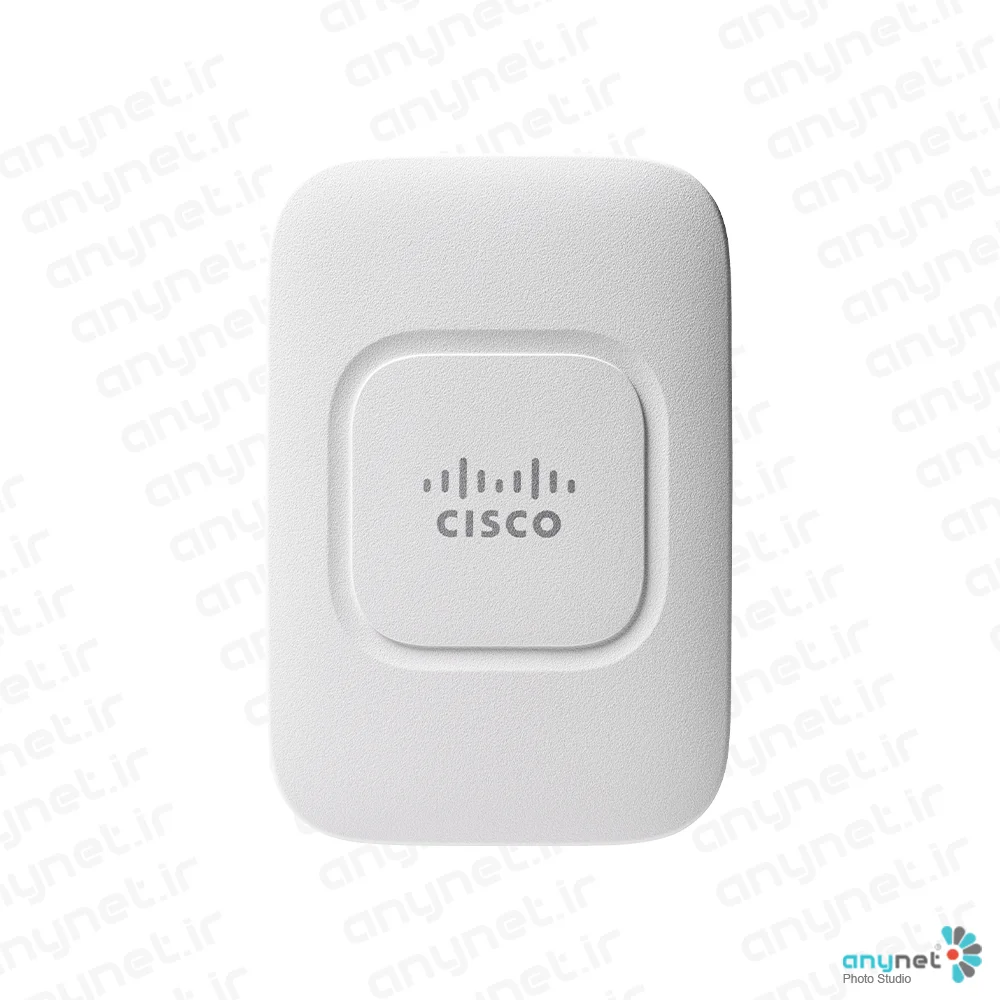

Cisco AIR-CAP702W-C-K9 Access Point
- Global Price List Information (GPL)
-
Model: AIR-CAP702W-C-K9
-
Description:
-
Price: USDLast Update:
- End-of-Sale and End-of-Life Information (EOL/EOS)
- Release Date:
- End-of-Sale Date:
- End-of-Support Date:
The Cisco Aironet 700W Series is a compact, wall-plate mountable access point specifically engineered for environments like hospitality and education. As organizations look to modernize their infrastructure to support increasingly complex wireless demands, this series provides a cost-effective solution that integrates seamlessly into the broader Cisco Unified Wireless Network.
By utilizing 802.11n dual-radio 2x2 MIMO technology, these access points deliver significantly higher throughput compared to older 802.11a/g networks. This design ensures that businesses can protect their existing network investments while gaining the performance benefits of modern wireless standards at a competitive price point.
Product overview
The 700W Series includes the standard AIR-CAP702W-x-K9 model and the AIR-CAP702W-xK910 eco-pack, which provides ten units in a single package. These devices are designed for indoor use and feature internal antennas, making them ideal for discreet wall-plate installations. They are built to be highly reliable, offering consistent transmit and receive capabilities that maintain performance across various ranges.
Beyond basic connectivity, these access points are equipped with advanced radio resource management to automatically self-heal and reduce dead spots, ensuring high availability for clients. They also support robust security protocols and are backed by Cisco’s comprehensive wireless LAN services, which assist in planning, migration, and ongoing performance optimization.
Features and benefits
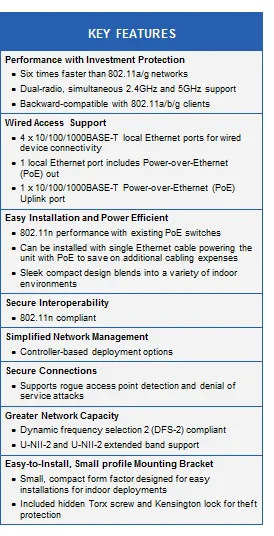
- Dual-Band Support: Simultaneous 2.4 GHz and 5 GHz radio operation in a compact form factor.
- High-Performance 802.11n: Features 2x2 MIMO with two spatial streams, supporting PHY data rates up to 300 Mbps.
- Optimized RF Management: Includes Radio Resource Management (RRM) for automated self-healing and Cisco BandSelect to improve 5 GHz client connections.
- Advanced Security: Built-in support for Rogue Detection, wIPS, Context-Aware services, and standard encryption protocols like WPA2/AES and TKIP.
- Versatile Connectivity: Equipped with a 10/100/1000BASE-T PoE uplink port, four local Ethernet ports, and one PoE-out port for powering additional devices.
- Flexible Powering: Supports 802.3af/at Ethernet switches, Cisco power injectors, or local power supplies.
- Reliable Warranty: Comes with a Limited Lifetime Hardware Warranty, including 10-day advance hardware replacement.
 The Cisco Aironet 700W Series offers a compact wall plate mountable access point for hospitality and education focused customers looking to modernize their networks to handle today’s increasingly complex wireless access demands.
With 802.11n dual-radio 2 x 2 multiple-input multiple-output (MIMO) technology providing at least six times the throughput of existing 802.11a/g networks, the Cisco Aironet 700W Series offers the performance advantage of 802.11n quality at a competitive price.
As part of the Cisco Unified Wireless Network, the 700W Series Access Point provides low total cost of ownership and investment protection by integrating seamlessly with the existing network.
RF Excellence
Building on the Cisco Aironet heritage of RF excellence, the 700W Series Access Point delivers secure and reliable wireless connections with:
●Simultaneous dual band, dual radio with support for 2.4GHz and 5GHz in a compact form factor
●Optimized antenna and radio designs: Consistent network transmit and receive for optimized rate versus range
●Radio resource management (RRM): Automated self-healing optimizes the unpredictability of RF to reduce dead spots and help ensure high-availability client connections
●Cisco BandSelect improves 5-GHz client connections in mixed-client environments
●Advanced security features including Rogue Detection, wIPS and Context-Aware
Product Specifications
Table 1 lists the product specifications for Cisco Aironet 700W Series Access Points.
Table 1.Product Specifications for Cisco Aironet 700W Series Access Points
|
Item |
Specification |
|||||||
|
Part Numbers |
The Cisco Aironet 700W Wall Plate Access Point: Indoor environments, with internal antennas ● AIR-CAP702W-x-K9 - Dual-band controller-based 802.11a/g/n
● AIR-CAP702W-xK910 - Eco-pack (dual-band controller-based 802.11a/g/n) 10 quantity access points
Cisco SMARTnetService for the Cisco Aironet 700W Series Access Point ● CON-SNT-AIRCAP7x - SMARTnet 8x5xNBD 702w access point (dual-band 802.11 a/g/n)
(e.g. CON-SNT-AIRCAP7A for 702w internal antenna for A Domain) Cisco Wireless LAN Services ● AS-WLAN-CNSLT - Cisco Wireless LAN Network Planning and Design Service
● AS-WLAN-CNSLT - Cisco Wireless LAN 802.11n Migration Service
● AS-WLAN-CNSLT - Cisco Wireless LAN Performance and Security Assessment Service
Regulatory domains: (x = regulatory domain) Customers are responsible for verifying approval for use in their individual countries. To verify approval and to identify the regulatory domain that corresponds to a particular country, please visit: http://www.cisco.com/go/aironet/compliance. Not all regulatory domains have been approved. As they are approved, the part numbers will be available on the GlobalPrice List. |
|||||||
|
Authentication & Security |
● TKIP for WPA, AES for WPA2
● 802.1X, Radius, AAA (authentication, authorization, accounting)
● 802.11i
|
|||||||
|
Software |
● Cisco Unified Wireless Network Software Release
● Cisco IOS Software Release (future)
|
|||||||
|
802.11n |
●2 x 2 multiple-input multiple-output (MIMO) with two spatial streams
●Maximal ratio combining (MRC)
●20- and 40-MHz channels
●PHY data rates up to 300 Mbps
●Packet aggregation: A-MPDU (Tx/Rx), A-MSDU (/Rx)
●802.11 dynamic frequency selection (DFS) 4
●Cyclic shift diversity (CSD) support
●Antenna Diversity
|
|||||||
|
Data Rates Supported |
802.11a: 6, 9, 12, 18, 24, 36, 48, 54 Mbps |
|||||||
|
802.11bg: 1, 2, 5.5, 6, 9, 11, 12, 18, 24, 36, 48, 54 Mbps |
||||||||
|
802.11n data rates (2.4 GHz[1] and 5 GHz): |
||||||||
|
MCS Index[2] |
GI[3] = 800ns |
GI = 400ns |
||||||
|
20-MHz Rate (Mbps) |
40-MHz Rate (Mbps) |
20-MHz Rate (Mbps) |
40-MHz Rate (Mbps) |
|||||
|
0 |
6.5 |
13.5 |
7.2 |
15 |
||||
|
1 |
13 |
27 |
14.4 |
30 |
||||
|
2 |
19.5 |
40.5 |
21.7 |
45 |
||||
|
3 |
26 |
54 |
28.9 |
60 |
||||
|
4 |
39 |
81 |
43.3 |
90 |
||||
|
5 |
52 |
108 |
57.8 |
120 |
||||
|
6 |
58.5 |
121.5 |
65 |
135 |
||||
|
7 |
65 |
135 |
72.2 |
150 |
||||
|
8 |
13 |
27 |
14.4 |
30 |
||||
|
9 |
26 |
54 |
28.9 |
60 |
||||
|
10 |
39 |
81 |
43.3 |
90 |
||||
|
11 |
52 |
108 |
57.8 |
120 |
||||
|
12 |
78 |
162 |
86.7 |
180 |
||||
|
13 |
104 |
216 |
115.6 |
240 |
||||
|
14 |
117 |
243 |
130 |
270 |
||||
|
15 |
130 |
270 |
144.4 |
300 |
||||
|
Frequency Band and 20-MHz Operating Channels |
A Regulatory Domain: ●2.412 to 2.462 GHz; 11 channels
●5.180 to 5.320 GHz; 8 channels
●5.500 to 5.700 GHz; 8 channels (excludes 5.600 to 5.640 GHz)
●5.745 to 5.825 GHz; 5 channels
C Regulatory Domain: ●2.412 to 2.472 GHz; 13 channels
●5.745 to 5.825 GHz; 5 channels
D (D regulatory domain): ●2.412 to 2.462 GHz; 11 channels
●5.180 to 5.320 GHz; 8 channels
●5.745 to 5.825 GHz; 5 channels
E Regulatory Domain: ●2.412 to 2.472 GHz; 13 channels
●5.180 to 5.320 GHz; 8 channels
●5.500 to 5.700 GHz; 8 channels (excludes 5.600 to 5.640 GHz)
H (H regulatory domain): ●2.412 to 2.472 GHz; 13 channels
●5.150 to 5.350 GHz; 8 channels
●5.745 to 5.825 GHz; 5 channels
I Regulatory Domain: ●2.412 to 2.472 GHz; 13 channels
●5.180 to 5.320 GHz; 8 channels
K Regulatory Domain: ●2.412 to 2.472 GHz; 13 channels
●5.180 to 5.320 GHz; 8 channels
●5.500 to 5.620 GHz; 7 channels
●5.745 to 5.805 GHz; 4 channels
|
N Regulatory Domain: ●2.412 to 2.462 GHz; 11 channels
●5.180 to 5.320 GHz; 8 channels
●5.745 to 5.825 GHz; 5 channels
Q Regulatory Domain: ●2.412 to 2.472 GHz; 13 channels
●5.180 to 5.320 GHz; 8 channels
●5.500 to 5.700 GHz; 11 channels
R Regulatory Domain: ●2.412 to 2.472 GHz; 13 channels
●5.180 to 5.320 GHz; 8 channels
●5.660 to 5.805 GHz; 7 channels
S Regulatory Domain: ●2.412 to 2.472 GHz; 13 channels
●5.180 to 5.320 GHz; 8 channels
●5.500 to 5.700 GHz; 11 channels
●5.745 to 5.825 GHz; 5 channels
T Regulatory Domain: ●2.412 to 2.462 GHz; 11 channels
●5.280 to 5.320 GHz; 3 channels
●5.500 to 5.700 GHz; 11 channels
●5.745 to 5.825 GHz; 5 channels
Z Regulatory Domain: ●2.412 to 2.462 GHz; 11 channels
●5.180 to 5.320 GHz; 8 channels
●5.500 to 5.700 GHz; 11 channels (excludes 5.600 to 5.640 GHz)
●5.745 to 5.825 GHz; 5 channels
|
||||||
|
Maximum Number of Nonoverlapping Channels |
2.4 GHz ●802.11b/g:
◦20 MHz: 3 ●802.11n:
◦20 MHz: 3 |
5 GHz ● 802.11a:
◦20 MHz: 21 ● 802.11n:
◦20 MHz: 21 ◦40 MHz: 9 |
||||||
|
Note: This varies by regulatory domain. Refer to the product documentation for specific details for each regulatory domain. |
||||||||
|
Receive sensitivity (Combined sensitivity) |
802.11b -98 dBm @ 1 Mb/s -95 dBm @ 2 Mb/s -93 dBm @ 5.5 Mb/s -91 dBm @ 11 Mb/s |
802.11g -94dBm @ 6 Mb/s -92 dBm @ 9 Mb/s -91 dBm @ 12 Mb/s -89 dBm @ 18 Mb/s -85 dBm @ 24 Mb/s -82 dBm @ 36 Mb/s -78 dBm @ 48 Mb/s -76 dBm @ 54 Mb/s |
802.11a -93 dBm @ 6 Mb/s -91 dBm @ 9 Mb/s -90 dBm @ 12 Mb/s -87 dBm @ 18 Mb/s -84 dBm @ 24 Mb/s -81 dBm @ 36 Mb/s -76 dBm @ 48 Mb/s -75 dBm @ 54 Mb/s |
|||||
|
2.4-GHz 802.11n (HT20) -93 dBm @ MCS0 -90 dBm @ MCS1 -88 dBm @ MCS2 -85 dBm @ MCS3 -81 dBm @ MCS4 -77 dBm @ MCS5 -75 dBm @ MCS6 -74 dBm @ MCS7 -91dBm @ MCS8 -88 dBm @ MCS9 -86 dBm @ MCS10 -83 dBm @ MCS11 -79 dBm @ MCS12 -75 dBm @ MCS13 -73 dBm @ MCS14 -72 dBm @ MCS15 |
5-GHz 802.11n (HT20) -93 dBm @ MCS0 -90 dBm @ MCS1 -87 dBm @ MCS2 -83 dBm @ MCS3 -80 dBm @ MCS4 -75 dBm @ MCS5 -74 dBm @ MCS6 -72 dBm @ MCS7 -91 dBm @ MCS8 -88 dBm @ MCS9 -85 dBm @ MCS10 -81 dBm @ MCS11 -78 dBm @ MCS12 -73 dBm @ MCS13 -72 dBm @ MCS14 -70 dBm @ MCS15 |
5-GHz 802.11n (HT40) -89 dBm @ MCS0 -86 dBm @ MCS1 -83 dBm @ MCS2 -79 dBm @ MCS3 -76 dBm @ MCS4 -72 dBm @ MCS5 -71 dBm @ MCS6 -70 dBm @ MCS7 -88 dBm @ MCS8 -84 dBm @ MCS9 -81 dBm @ MCS10 -77 dBm @ MCS11 -74 dBm @ MCS12 -70 dBm @ MCS13 -69 dBm @ MCS14 -68 dBm @ MCS15 |
||||||
|
Maximum Transmit Power |
2.4 GHz ●802.11b
◦20 dBm with one antenna ●802.11g
◦20 dBm with two antennas ●802.11n (HT20)
◦20 dBm with two antennas |
5 GHz ●802.11a
◦20 dBm with one antenna ● 802.11n non-HT duplicate mode
◦20 dBm with two antennas ●802.11n (HT20)
◦20 dBm with two antennas ●802.11n (HT40)
◦20 dBm with two antennas |
||||||
|
Note: The maximum power setting will vary by channel and according to individual country regulations. Refer to the product documentation for specific details. |
||||||||
|
Available Transmit Power Settings |
2.4 GHz 20 dBm (100 mW) 17 dBm (50 mW) 14 dBm (25 mW) 11 dBm (12.5 mW) 8 dBm (6.25 mW) 5 dBm (3.13 mW) 2 dBm (1.56 mW) -1 dBm (0.78 mW) |
5 GHz 20 dBm (100 mW) 17 dBm (50 mW) 14 dBm (25 mW) 11 dBm (12.5 mW) 8 dBm (6.25 mW) 5 dBm (3.13 mW) 2 dBm (1.56 mW) -1 dBm (0.78mW) |
||||||
|
Note: The maximum power setting will vary by channel and according to individual country regulations. Refer to the product documentation for specific details. |
||||||||
|
Integrated Antennas |
●2.4 GHz, gain 2.0 dBi
●5 GHz, gain 4.0 dBi
|
|||||||
|
Interfaces |
●10/100/1000BASE-T PoE Uplink port
●Management console port (RJ-45)
●4 x 10/100/1000BASE-T ports (RJ-45) (local Ethernet ports)
●1 PoE out port (when powered by 802.3at Ethernet switch, or Cisco power injector AIR-PWRJ4=, or Cisco Local Power Supply)
●DC power connector
|
|||||||
|
Indicators |
●Status LED indicates boot loader status, association status, operating status, boot loader warnings, boot loader errors
●Per-port status for local Ethernet ports
|
|||||||
|
Dimensions |
●Access point (without mounting bracket): 6 x 4 x 1.6 inches (152.4 x 101.6 x 40.6 mm)
|
|||||||
|
Weight |
·Access point (without mounting bracket): 0.86 lb (0.39 Kg) |
|||||||
|
Environmental |
Cisco Aironet 700W ●Non-operating (storage) temperature: -22 to 158°F (-30 to +70°C)
● Non-operating (storage) maximum altitude: 25°C, 15,000 ft.
● Operating temperature: 32 to 104°F (0 to 40°C)
● Operating humidity: 10 to 90% percent (noncondensing)
● Operating maximum altitude: 40°C, 9843 ft.
|
|||||||
|
System |
● 128 MB DRAM
● 128 MB flash
● 560MHz System CPU
|
|||||||
|
Input Power Requirements |
●44 to 57 VDC
●Optional - Power Supply and Power Injector: 100 to 240 VAC; 49 to 60 Hz
|
|||||||
|
Powering Options |
● 802.3af/at Ethernet Switch
●Optional - Cisco Power Injectors (AIR-PWRINJ5=, AIR-PWRINJ4=)
●Optional - Cisco Local Power Supply (AIR-PWR-C=)
|
|||||||
|
Power Draw |
● Maximum values: 11.6W with no PoE out, 22.1W with PoE Class 2 out, and 29.2W with PoE Class 0 out
● Note: When deployed using PoE, the power draw numbers listed above include the power loss in 100m of cabling on the Uplink port and the 100m of cabling on the PoE Out port.
|
|||||||
|
Accessories |
● Mounting brackets: AIR-AP-BRACKET-W
● Cisco Local Power Supply: AIR-PWR-C= (sold separately)
|
|||||||
|
Warranty |
Limited Lifetime Hardware Warranty |
|||||||
|
Compliance |
Standards ● Safety:
◦UL 60950-1 ◦CAN/CSA-C22.2 No. 60950-1 ◦IEC 60950-1 ◦EN 60950-1 ● Radio approvals:
◦FCC Part 15.247, 15.407 ◦RSS-210 (Canada) ◦EN 300.328, EN 301.893 (Europe) ◦ARIB-STD 33 (Japan) ◦ARIB-STD 66 (Japan) ◦ARIB-STD T71 (Japan) ◦AS/NZS 4268.2003 (Australia and New Zealand) ◦EMI and susceptibility (Class B) ◦FCC Part 15.107 and 15.109 ◦ICES-003 (Canada) ◦VCCI (Japan) ◦SRRC (China) ◦EN 301.489-1 and -17 (Europe) ◦EN 60601-1-2 EMC requirements for the Medical Directive 93/42/EEC ● IEEE Standard:
◦IEEE 802.11a/b/g, IEEE 802.11n, IEEE 802.11h, IEEE 802.11d ● Security:
◦802.11i, Wi-Fi Protected Access 2 (WPA2), WPA ◦802.1X ◦Advanced Encryption Standards (AES), Temporal Key Integrity Protocol (TKIP) ● EAP Type(s):
◦Extensible Authentication Protocol-Transport Layer Security (EAP-TLS) ◦EAP-Tunneled TLS (TTLS) or Microsoft Challenge Handshake Authentication Protocol Version 2 (MSCHAPv2) ◦Protected EAP (PEAP) v0 or EAP-MSCHAPv2 ◦Extensible Authentication Protocol-Flexible Authentication via Secure Tunneling (EAP-FAST) ◦PEAPv1 or EAP-Generic Token Card (GTC) ◦EAP-Subscriber Identity Module (SIM) ● Multimedia:
◦Wi-Fi Multimedia (WMM) ● Other:
◦FCC Bulletin OET-65C ◦RSS-102 |
|||||||
| Model | AIR-CAP702W-C-K9 |