
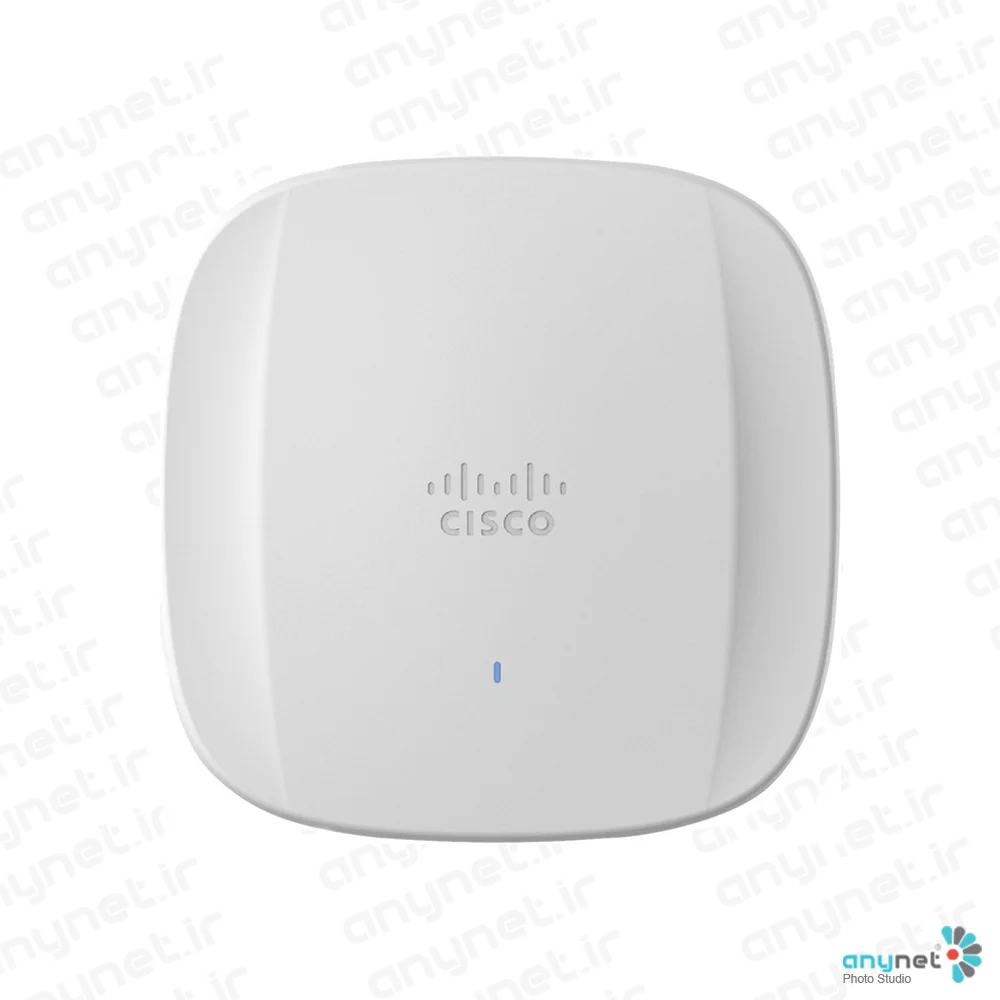

Cisco C9136I-Q Access Point
- Global Price List Information (GPL)
-
Model: C9136I-Q
-
Description:
-
Price: USDLast Update:
- End-of-Sale and End-of-Life Information (EOL/EOS)
- Release Date:
- End-of-Sale Date:
- End-of-Support Date:
The Cisco Catalyst 9136 Series Access Points represent the next generation of enterprise-grade wireless technology, specifically engineered to support the 6-GHz spectrum through Wi-Fi 6E compliance. These devices are designed to provide a highly resilient, secure, and intelligent network infrastructure that meets the demands of modern, hybrid work environments. By leveraging the expanded 6-GHz band, these access points deliver increased capacity, higher throughput, and significantly reduced device interference.
As digital applications become increasingly critical to business operations, the Catalyst 9136 Series ensures that users have reliable and unencumbered access to their tools. The integration of advanced features, such as mandatory WPA3 security and improved connection predictability, helps bridge the performance gap between wireless and wired networks. This series is built to handle high-density environments, making it an ideal solution for organizations looking to future-proof their wireless infrastructure while maintaining a secure and efficient connection for all users.
Product overview
The Catalyst 9136 Series features a robust hardware architecture equipped with two 4x4 radios and one 8x8 radio, providing comprehensive coverage and performance. A standout capability of this series is its built-in environmental sensors, which monitor air quality, temperature, and humidity, allowing businesses to maintain safe working conditions without the need for additional, complex sensor overlays. Furthermore, the units include dual Multigigabit Ethernet ports that offer power-redundant uplinks, ensuring consistent performance even during failover events.
To optimize operational efficiency, the access points incorporate "Smart AP" technology, which dynamically adjusts power consumption based on the current client load. The series also supports Flexible Radio Assignment (FRA), allowing the system to intelligently adapt its radio operating modes to match the specific RF environment and traffic demands. With integrated Bluetooth 5 for location-based services and container support for edge computing, the Catalyst 9136 Series serves as a versatile platform for both connectivity and IoT deployments.
Features and benefits
- Wi-Fi 6E Support: Extends Wi-Fi 6 capabilities into the 6-GHz band, providing more bandwidth, less interference, and faster speeds.
- Enhanced Security: Implements mandatory WPA3 security and Cisco Trust Anchor Technologies to ensure hardware and software authenticity.
- Environmental Monitoring: Integrated sensors track TVOC, temperature, and humidity to support workplace safety.
- Dual Multigigabit Ethernet: Provides redundant uplink ports with speeds up to 5 Gbps, supporting hitless performance.
- Smart AP Technology: Automatically reduces radio stream counts during low-traffic periods to conserve energy.
- Flexible Radio Assignment (FRA): Allows for dynamic switching between tri-radio and quad-radio modes to optimize capacity.
- Advanced Scheduling: Utilizes OFDMA and Target Wake Time (TWT) to reduce latency and significantly extend the battery life of connected devices.
- Intelligent Capture: Provides deep network analysis and anomaly tracking to assist administrators in making informed decisions.
- Cisco DNA Integration: Enables network-wide automation, real-time analytics, and simplified management through Cisco’s software-defined architecture.
- Bluetooth 5 Integration: Facilitates location-based services such as asset tracking and wayfinding.
- Container Support: Allows for the deployment of edge computing applications directly on the access point to simplify IoT management.
The Cisco Catalyst 9136 Series Access Points are the next generation of enterprise access points supporting the new 6-GHz band for Wi-Fi. They are resilient, secure, and intelligent.
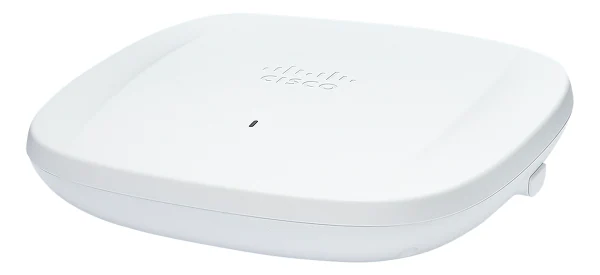
Catalyst 9136I access point
The Wi-Fi 6E-compliant Catalyst 9136 Series takes advantage of the 6-GHz band expansion to produce a network that is more reliable and secure, with higher throughput, more capacity, and less device interference. The access points come with two 4x4 radios and one 8x8 radio and provide a host of features.
Wi-Fi 6E technology extends Wi-Fi 6 into the 6-GHz spectrum, bringing faster speeds and lower latency while also providing more security to the network. As apps become increasingly vital for getting work done, clients need unencumbered access to them. Wi-Fi 6E provides that direct access.
Wi-Fi 6E features:
●Network speed increases due to the new 6-GHz spectrum and additional bandwidth.
●A new standard of reliability and predictability of connection that is shortening the gap between wireless and wired connections. Wi-Fi 6E devices won’t have to share the same spectrum with any devices that are not Wi-Fi 6E compliant and will have an additional 1.2 GHz of no-interference spectrum to themselves.
●Greater network security than ever before, due to mandatory WPA3 security.
Table 1.Catalyst 9136 Series features and benefits
| Feature |
Benefits |
| Wi-Fi 6E (802.11ax) |
The IEEE 802.11ax standard, also known as High-Efficiency Wireless (HEW) or Wi-Fi 6, builds on 802.11ac. It delivers a better experience in typical environments with more predictable performance for advanced applications such as 4K or 8K video; high-density, high-definition collaboration apps; all-wireless offices; and the Internet of Things (IoT). Wi-Fi 6E is Wi-Fi 6 “extended” into the 6-GHz frequency band. |
| Environmental sensors |
These built-in sensors measure air quality (Total Volatile Organic Compounds [TVOC]), temperature, and humidity, and help ensure a safe working environment, avoiding the need to install an overlay of difficult-to-manage independent sensors. |
| Dual 5G Multigigabit Ethernet |
Dual Multigigabit Ethernet provides power-redundant uplink ports, each with speeds up to 5 Gbps. All speeds are supported on Category 5e cabling, as well as 10GBASE-T (IEEE 802.3bz) cabling. Redundant powering provides hitless performance during failover. |
| Smart AP |
Smart AP causes the access point to change its power consumption to reflect its current client load. An access point will typically operate on the radios provided to it irrespective of how many clients are connected. With Smart AP, if there is a small enough number of clients, the access point will automatically reduce the radio stream count, saving power. (Available with a future software upgrade.) |
| Band steering |
Enhanced to help clients that are 6-GHz capable to leave the 5-GHz radio and connect to the 6-GHz one. Wi-Fi 6E clients are automatically directed to connect to the 6-GHz radio to take advantage of the benefits that that radio offers and free up the 2.4- and 5-GHz radios for legacy clients. |
| Uplink/downlink OFDMA |
Orthogonal Frequency-Division Multiple Access (OFDMA)-based scheduling splits the bandwidth into smaller frequency allocations called Resource Units (RUs), which can be assigned to individual clients in both the downlink and uplink directions to reduce overhead and latency. |
| Uplink/downlink MU‑MIMO technology |
Supporting the highest number with 16 spatial streams, Multiuser Multiple Input, Multiple Output (MU-MIMO) enables the access points to split spatial streams between client devices to maximize throughput. |
| BSS coloring |
Spatial reuse (also known as Basic Service Set [BSS] coloring) allows the access points and their clients to differentiate between BSSs, thus permitting more simultaneous transmissions. |
| Target Wake Time |
Target Wake Time (TWT) allows the client to stay asleep and to wake up only at prescheduled (target) times to exchange data with the access point. This offers significant energy savings for battery-operated devices, up to three to four times the savings achieved by 802.11n and 802.11ac. |
| Intelligent Capture |
Intelligent Capture probes the network and provides Cisco DNA Center with deep analysis. The software can track more than 240 anomalies and instantaneously review all packets on demand, emulating the onsite network administrator. Intelligent Capture allows for more informed decisions on your wireless networks. |
| Flexible Radio Assignment (FRA) with quad-radio mode (with future software SW upgrade) |
FRA allows the access points to intelligently determine the operating mode of serving radios based on the RF environment and traffic demands. The access points can operate in the following modes:
●Tri-radio mode: One 4x4 6-GHz radio, one 8x8 5-GHz radio, and one 4x4 2.4-GHz radio.
●Quad-radio mode: One 4x4 6-GHz radio, Dual 4x4 5-GHz radios, and one 4x4 2.4-GHz radio. With four total 4x4 radios (quad-radio) inside the access point, client device capacity can be increased on demand.
The access point’s default mode is tri-radio with 8x8 5-GHz and 4x4 for 6-GHz and 2.4-GHz. It has the ability to split the 8x8 radio into two separate 4x4 5-GHz radios through a future software upgrade, thereby enabling the benefits of FRA while allowing the 2.4- and 6-GHz radios to remain active. |
| Application hosting |
Application hosting helps simplify IoT deployments and ready them for the future by eliminating the need to install and manage overlay networks. Using the USB interface, containerized applications and hardware modules can be deployed to reduce cost and complexity. Adding Cisco DNA Center provides workflows and deployment-wide application lifecycle management. |
| Bluetooth 5 |
The integrated Bluetooth Low Energy (BLE) 5 radio enables location-based use cases such as asset tracking, wayfinding, and analytics. |
| Container support for applications |
Container support enables edge computing capabilities for IoT applications on the host access point. |
For more details about Catalyst 9136 feature support, see Cisco's Feature Matrix.
Secure infrastructure
Trustworthy systems built with Cisco Trust Anchor Technologies provide a highly secure foundation for Cisco products. With the Cisco Catalyst 9100 Access Points, these technologies enable assurance of hardware and software authenticity for supply chain trust and strong defense against man-in-the-middle attacks that compromise software and firmware. Trust Anchor capabilities include:
●Image signing
●Secure Boot
●Cisco Trust Anchor module
Cisco DNA support
Pairing the Cisco Catalyst 9136 Series Access Points with Cisco DNA allows for a total network transformation. Cisco DNA allows you to truly understand your network with real-time analytics, quickly detect and contain security threats, and easily provide networkwide consistency through automation and virtualization. The Cisco Catalyst 9136 Series supports Software-Defined Access (SD-Access), Cisco’s leading enterprise architecture.
Working together, the Catalyst 9136 Series and Cisco DNA offer such features as:
●Cisco Spaces
●Cisco Identity Services Engine
●Cisco DNA Analytics and Assurance along with Intelligence Capture (iCAP)
The result? Your network stays relevant, becomes digital ready, and is the lifeblood of your organization.
Note: For information about Cisco DNA, refer to the Cisco DNA Solution Overview.
Product specifications
Table 2.Specifications
| Item |
Specification |
|||||||
| Part numbers |
Cisco Catalyst 9136I Access Point: Indoor environments, with internal antennas
●C9136I-x: Cisco Catalyst 9136 Series
Regulatory domains: (x = regulatory domain) Customers are responsible for verifying approval for use in their individual countries. To verify approval and to identify the regulatory domain that corresponds to a particular country, visit https://www.cisco.com/go/aironet/compliance. Not all regulatory domains have been approved. As they are approved, the part numbers will be available on the Global Price List and/or regional price lists. Cisco Wireless LAN Services
●For details on optional WLAN Services, visit
Services for Wireless and Mobility
|
|||||||
| Software |
Catalyst 9136I
●Cisco IOS XE Software Release 17.7.1 or later
|
|||||||
| Supported wireless LAN controllers |
●Cisco Catalyst 9800 Series Wireless Controllers (physical or virtual)
●Cisco Catalyst 9k switches with Embedded Wireless Controller in SDA mode
|
|||||||
| 802.11n version 2.0 (and related) capabilities |
●4x4 MIMO with four spatial streams
●Maximal Ratio Combining (MRC)
●802.11n and 802.11a/g beamforming
●20- and 40-MHz channels
●PHY data rates up to 1.5 Gbps (40 MHz with 5-GHz and 20 MHz with 2.4-GHz)
●Packet aggregation: Aggregate MAC Protocol Data Unit (A-MPDU) (transmit and receive), Aggregate MAC Service Data Unit (A-MSDU) (transmit and receive)
●802.11 Dynamic Frequency Selection (DFS)
●Cyclic Shift Diversity (CSD) support
|
|||||||
| 802.11ac |
●8x8 downlink MU-MIMO with eight spatial streams
●MRC
●802.11ac beamforming
●20-, 40-, 80-, and 160-MHz channels
●PHY data rates up to 3.4 Gbps (8x8 80 MHz or dual 4x4 80+80 MHz on 5-GHz)
●Packet aggregation: A-MPDU (transmit and receive), A-MSDU (transmit and receive)
●802.11 DFS
●Cyclic Shift Diversity (CSD) support
●Wi-Fi Protected Access (WPA) 3 support
|
|||||||
| 802.11ax |
●8x8 uplink/downlink MU-MIMO with eight spatial streams (5-GHz)
●4x4 uplink/downlink MU-MIMO with four spatial streams (2.4 and 6-GHz)
●Uplink/downlink OFDMA
●TWT
●BSS coloring
●MRC
●802.11ax beamforming
●20-, 40-, 80-, and 160-MHz channels (6-GHz)
●20-, 40-, 80-, 80+80-MHz (5-GHz)
●20-MHz channels (2.4-GHz)
●PHY data rates up to 10.2 Gbps (4x4 160 MHz on 6 GHz, 8x8 80 MHz on 5-GHz, and 4x4 20 MHz on 2.4-GHz)
●Packet aggregation: A-MPDU (transmit and receive), A-MSDU (transmit and receive)
●802.11 DFS
●CSD support
●WPA3 support
|
|||||||
| Integrated antenna |
●2.4-GHz: Peak gain 4 dBi, internal antenna, omnidirectional in azimuth
●5-GHz: Peak gain 5 dBi, internal antenna, omnidirectional in azimuth
●6-GHz: Peak gain 6 dBi, internal antenna, omnidirectional in azimuth
|
|||||||
| Interfaces |
●2x 100M/1000M/2.5G/5G Multigigabit Ethernet (RJ-45)
●Management console port (RJ-45)
●USB 2.0 at 9W
|
|||||||
| Indicators |
●Status LED indicates boot loader status, association status, operating status, boot loader warnings, and boot loader errors
|
|||||||
| Dimensions |
●Access point (without mounting brackets):
◦9.9 x 9.9 x 2.2 in. (25.1 x 25.1 x 5.6 cm) |
|||||||
| Weight |
Catalyst 9136I
●3.6 lb. (1.65 kg)
|
|||||||
| Input power requirements |
●802.3bt Cisco Universal PoE (Cisco UPOE), 802.3at Power over Ethernet Plus (PoE+)
●Cisco power injector, AIR-PWRINJ7=
●802.3af PoE (only for configuration staging, all radios off)
|
|||||||
| Catalyst 9136I |
||||||||
| Power Source |
2.4-GHz radio |
5-GHz radio |
6-GHz radio |
Link speed |
USB |
Max PoE Power Consumption |
||
| 802.3bt (UPOE) |
4x4 |
8x8 |
4x4 |
2x 5G |
Y (9W) |
47.3W |
||
| 802.3at (PoE+) |
2x2 |
4x4 |
2x2 |
1x 2.5G |
N |
24.4W |
||
| 802.3af (PoE) |
– |
– |
– |
1x 1G |
N |
13.95W |
||
| Note: Actual power consumption may vary depending on AP usage. It is recommended that you ensure that LLDP/CDP is enabled to allow proper power negotiation. |
||||||||
| Environmental |
Catalyst 9136I
●Nonoperating (storage) temperature: -22° to 158°F (-30° to 70°C)
●Nonoperating (storage) altitude test: 25˚C (77°F) at 15,000 ft (4600 m)
●Operating temperature: 32° to 122°F (0° to 50°C)
●Operating humidity: 10% to 90% (noncondensing)
●Operating altitude test: 40˚C (104°F) at 9843 ft (3000 m)
Note: When the ambient operating temperature exceeds 40°C (104°F), the access point will shift from 8x8 to 4x4 on the 5-GHz radio, and uplink Ethernet will downgrade to a single 1G; however, the USB interface will remain enabled. |
|||||||
| System memory |
●2048 MB DRAM
●1024 MB flash
|
|||||||
| Warranty |
Limited lifetime hardware warranty |
|||||||
| Available transmit power settings |
2.4 GHz
●23 dBm (200 mW)
●-4 dBm (0.39 mW)
|
5 GHz
●26 dBm (400 mW)
●-1 dBm (0.79 mW)
|
6 GHz
●23 dBm (200 mW)
●-4 dBm (0.39 mW)
Note: In countries where use of the 6 GHz band is not allowed or there is no current software support, the 6 GHz radio will be disabled. The radio may be enabled with future software, once the product is certified to operate in 6 GHz for that country. |
|||||
| Regulatory domains |
Note: Customers are responsible for verifying approval for use in their individual countries. To verify approval and to identify the regulatory domain that corresponds to a particular country, visit https://www.cisco.com/go/aironet/compliance. For information about regulatory domain support, refer to the Cisco Regulatory Domain White Paper. |
|||||||
| Compliance standards |
●
Safety:
◦IEC 60950-1 / IEC 62368-1 Ed.3 (with Ed.2 Deviation annex) ◦EN 60950-1 / EN 62368-1 Ed.3 (with Ed.2 Deviation annex) ◦UL 60950-1 / UL62368-1 3rd (with Ed.2 Deviation annex) ◦CAN/CSA-C22.2 No. 60950-1 / CAN/CSA-C22.2 No. 62368-1 3rd (with Ed.2 Deviation annex) ◦AS/NZS60950.1 / AS/NZS62368.1 Ed.3 (with Ed.2 Deviation annex) ◦UL 2043 ◦Class III equipment
●
Emissions:
◦CISPR 32 (rev. 2015) +AMD1:2019 ◦EN 55032:2015/A11:2020 ◦EN IEC 61000-3-2:2019/A1:2021 ◦EN 61000-3-3:2013+A1:2019 ◦AS/NZS CISPR32: 2015+AMD1:2020 ◦47 CFR FCC Part 15B ◦ICES-003 (Issue 7, Class B) ◦VCCI-CISPR 32:2016 ◦CNS 13438:2006 (95) ◦KS C 9832:2019 ◦QCVN 118:2018/BTTTT
●
Immunity:
◦EN 55035:2017+A11:2020 ◦KS C 9835:2019
●
Emissions and immunity:
◦EN 301 489-1 V2.2.3 (2019-11) ◦EN 301 489-17 V3.2.4 (2020-09) ◦QCVN (18:2014) ◦QCVN 112:2017/BTTTT ◦KS X 3124:2020 ◦KS X 3126:2020 ◦EN 61000-6-1:2019 ◦EN 60601-1-2:2015+A1:2021 |
●
Radio:
◦EN 300 328 (v2.2.2) ◦EN 301 893 (v2.1.1) ◦EN 303 687 (v0.0.14, draft) ◦AS/NZS 4268 (rev. 2017) ◦47 CFR FCC Part 15C, 15.247, 15.407 ◦RSP-100 ◦RSS-GEN ◦RSS-247 ◦LP0002 (109) ◦Japan Std. 66, and Std. 71
●
RF safety:
◦EN 50385:2017 ◦AS/NZS 2772 (rev. 2016) ◦47 CFR Part 2.1091 ◦RSS-102
●
IEEE standards:
◦IEEE 802.3 ◦IEEE 802.3ab ◦IEEE 802.3af/at ◦IEEE 802.11a/b/g/n/ac/ax ◦IEEE 802.11h, 802.11d
●
Security:
◦802.11i, (WPA2, WPA3) ◦802.1X ◦Advanced Encryption Standard (AES)
●
Extensible Authentication Protocol (EAP) types:
◦EAP-Transport Layer Security (TLS) ◦EAP-Tunneled TLS (TTLS) or Microsoft Challenge Handshake Authentication Protocol (MSCHAP) v2 ◦Protected EAP (PEAP) v0 or EAP-MSCHAP v2 ◦EAP-Flexible Authentication via Secure Tunneling (EAP-FAST) ◦PEAP v1 or EAP-Generic Token Card (GTC) ◦EAP-Subscriber Identity Module (SIM) |
||||||
| Certifications |
●
Wi-Fi Alliance: Wi-Fi 6 (R2), Wi-Fi 6E, WPA3-R3, WPA3-Suite B, Enhanced Open Security
●
Bluetooth SIG: Bluetooth Low Energy
|
|||||||
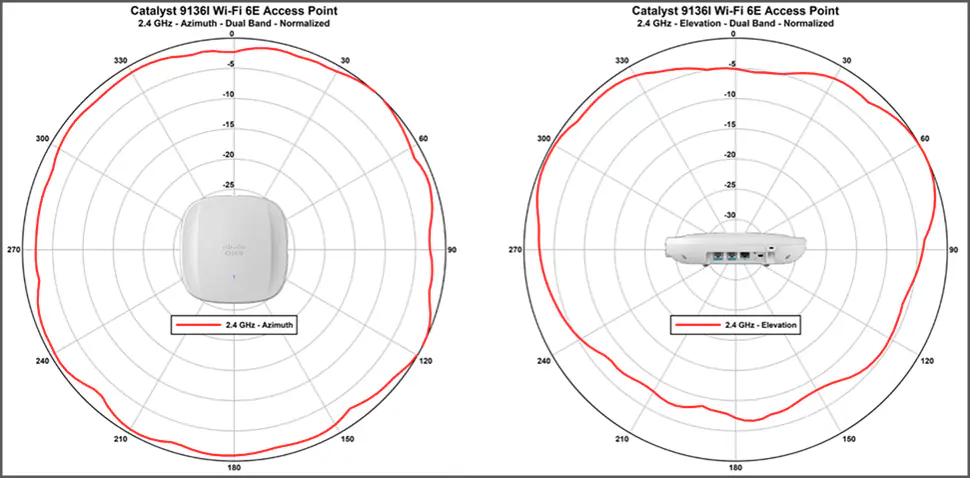
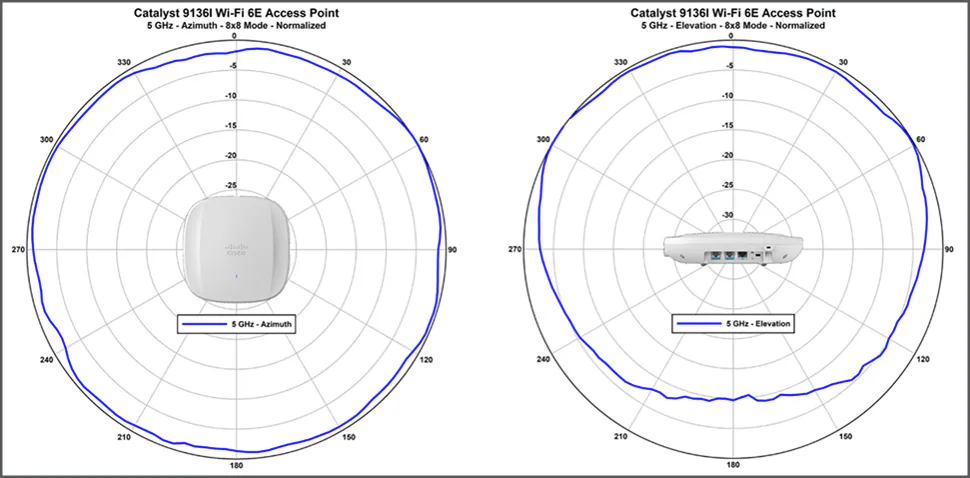
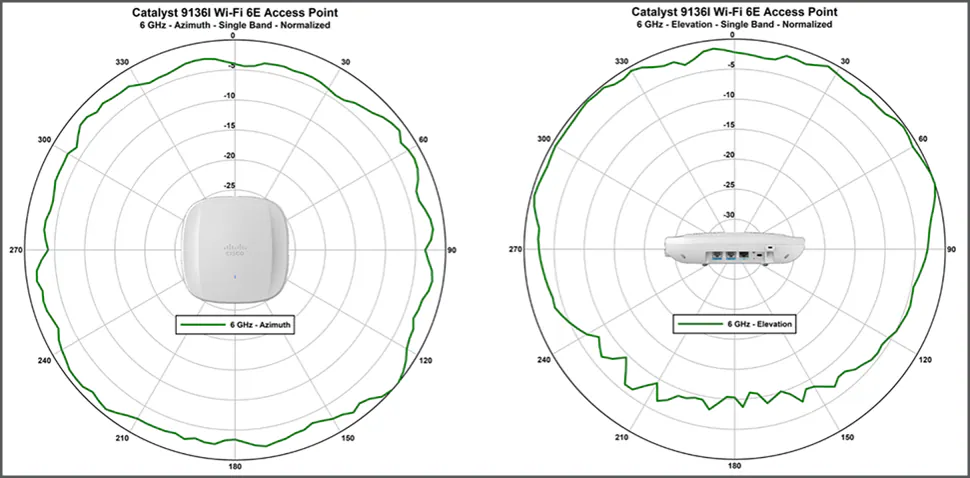
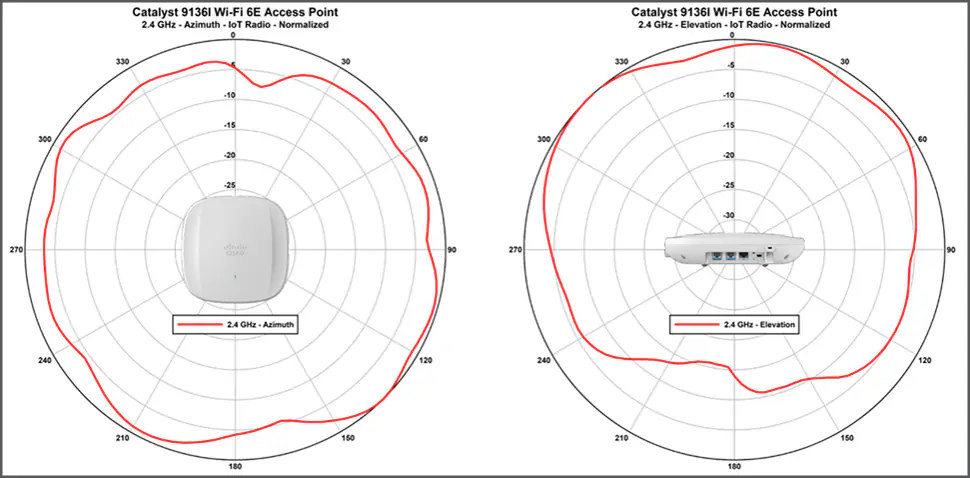
Antenna profiles
Licensing
You have two options for licensing: unified wireless licenses or Cisco DNA licenses. The details for each licensing model are captured below:
Unified licensing with the Cisco Networking Subscription
Unified licensing is available through the Cisco Networking Subscription and Cisco Enterprise Agreement.
The Cisco Networking Subscription provides a consistent way to purchase and manage eligible Cisco networking software, hardware support, services, and platform capabilities. It offers customers the flexibility to:
●Align renewal dates with business and budget requirements
●Add licenses to an existing subscription while maintaining a common renewal date
●Upgrade license entitlements during the subscription term or at renewal
●Include both Essentials and Advantage licenses in the same subscription
●Choose cloud-based or on-premises license management and deployment options, where supported
A new Cisco Networking Subscription has a standard minimum term of 12 months for wireless licenses.
There are two unified wireless license tiers:
●Cisco Wireless Essentials
●Cisco Wireless Advantage
Both tiers combine wireless capabilities with subscription-based management, monitoring, and assurance capabilities. The precise capabilities available depend on the license tier, access point or controller platform, software release, deployment model, and management platform.
For a complete comparison, see the Cisco Wireless Licensing Feature Matrix.
Cisco DNA licensing
Cisco DNA wireless licenses are offered in Essentials and Advantage tiers with 3-, 5-, or 7-year terms. The applicable Cisco DNA tier must correspond to the network entitlement supported by the wireless product.
●Cisco DNA Essentials provides foundational wireless automation, management, visibility, monitoring, and assurance capabilities.
●Cisco DNA Advantage adds advanced assurance, analytics, policy-based automation, segmentation, security, location, and application-experience capabilities.
As part of the Cisco DNA licensing model, applicable wireless products support corresponding perpetual network entitlements:
●Network Essentials
●Network Advantage
See the Cisco DNA Software Wireless Feature Matrix for more information.
| Model | C9136I-Q |