


Cisco NM-HDV2 Module
- Global Price List Information (GPL)
-
Category: Cisco 2600 Series ProductsSubcategory: Cisco 2600 Series Supported Network Modules
-
Model: NM-HDV2-RF
-
Description: IP Comm.HighDensityDigital Voice Network Mod. REMANUFACTURED
-
Price: 984.00 USDLast Update: 2019-02-24
- End-of-Sale and End-of-Life Information (EOL/EOS)
- Release Date:
- End-of-Sale Date:
- End-of-Support Date:
The Cisco IP Communications High-Density Digital Voice/Fax Network Modules are designed to enhance the Cisco Unified Communications suite by providing a versatile, all-in-one solution for branch offices. These modules integrate high-density digital voice, analog voice, and WAN connectivity into a single form factor, allowing enterprises and service providers to connect directly to the Public Switched Telephone Network (PSTN) and traditional telephony equipment like PBXs, fax machines, and analog phones.
By operating within Cisco Unified Communications Manager (UCM) or Cisco Unified Communications Manager Express (UCME) environments, these modules serve as a critical gateway for IP telephony. They enable businesses to maintain existing traditional infrastructure while transitioning to IP-based communications, ultimately helping to reduce operating costs and improve overall productivity through features like toll bypass and integrated voice and data services.
Product overview
The product line includes three primary network module versions: the NM-HDV2, the NM-HDV2-1T1/E1, and the NM-HDV2-2T1/E1. These modules are compatible with a wide range of Cisco Unified Communications Routers, including the 2800, 2900, 3800, and 3900 series. Each module features a dedicated slot for Voice/WAN Interface Cards (VWICs) or Voice Interface Cards (VICs), providing flexibility to support various digital and analog connectivity requirements.
To handle voice processing, these modules utilize PVDM2 Packet Fax/Voice DSP modules, which offer scalable channel capacity ranging from 4 to 120 channels. The architecture is designed for efficiency, allowing for dynamic codec negotiation and the sharing of DSP resources across multiple modules or the router motherboard. This modular approach ensures that organizations can scale their voice capabilities as their business needs grow, while protecting their initial hardware investment.
Features and benefits
- All-in-One Integration: Combines data WAN connectivity, high-density digital voice, analog voice, and conferencing/transcoding resources into a single network module slot.
- Flexible Connectivity: Supports a wide array of interfaces, including FXS, FXO, DID, E&M, BRI, and T1/E1, facilitating seamless connection to both modern IP networks and legacy telephony equipment.
- Scalable DSP Technology: Features advanced PVDM2 digital signal processing that supports up to 120 voice channels, with the ability to scale capacity based on specific branch requirements.
- Cost-Effective Toll Bypass: Enables voice and fax traffic to be routed over the enterprise WAN, significantly reducing or eliminating long-distance carrier charges.
- Advanced Conferencing and Transcoding: Provides hardware-based resources for multiparty conferencing and transcoding, which reduces bandwidth consumption and lowers costs by allowing communication between devices using different codecs.
- High Availability: Supports Survivable Remote Site Telephony (SRST) to ensure that basic telephony services remain operational even if the connection to the central Cisco UCM is lost.
- Quality of Service (QoS): Leverages Cisco IOS Software to prioritize voice and fax traffic, ensuring toll-quality performance even during periods of high network congestion.
- Simplified Management: Fully manageable via standard Cisco IOS command-line interfaces, SNMP, and other Cisco management tools, ensuring straightforward configuration and monitoring.
The IP Communications High-Density Digital Voice/Fax Network Modules are an addition to the Cisco Systems IP Communications suite of solutions. The IP Communications High-Density Digital Voice/Fax Network Modules deliver high-density digital voice connectivity, high-density WAN connectivity, analog voice connectivity, and conferencing and transcoding capability in a network module form factor. The network modules provide enterprises, managed service providers, and service providers with the ability to directly connect the public switched telephone network (PSTN), traditional telephony equipment (such as private branch exchange (PBX), key systems, analog telephones, and fax machines), and WAN to Cisco 2811, 2821, 2851, 2911, 2921, 2951, 3825, 3845 and 3925, 3945 Unified Communications Routers for either IP Communications capabilities or pure toll bypass. The IP Communications High-Density Digital Voice/Fax Network Modules flexibly operates within two different Cisco Unified Communications (UC) environments-the Cisco Unified Communications Manager (UCM) system with Survivable Remote Site Telephony (SRST) or Cisco Unified Communications Manager Express (UCME). The network modules can be integrated with these IP Telephony solutions in a Unified Communications Router, to provide a complete IP Communications solution for full service branch customers.
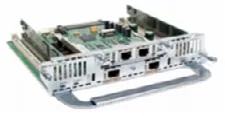
Figure 1. NM-HDV2-2T1/E1 with a 2-Port FXS VIC
Important Features and Benefits
Table 1. The IP Communications Digital Voice/Fax Network Modules Provide a Wide Range of Features and Benefits
|
Product Features |
Benefits |
|
Rich set of features are delivered on a single network module form factor |
Features such as data WAN connectivity, high-density digital voice connectivity, analog voice connectivity and conferencing/transcoding are supported on a single network module form factor, allowing customers to utilize other network module slots for other applications. A single NM-slot platform can be deployed for small offices, providing a cost-effective solution for IP telephony. |
|
Tightly integrated into the Cisco Integrated Services Routers |
The IP Communications High-Density Digital Voice Network Modules are tightly integrated into the Cisco Integrated Services Routers, providing a single IP communications solutions for the full-service branch office. The Cisco Integrated Services Routers run Cisco IOS Software, incorporating advanced quality-of-service (QoS) features, intelligent network queuing, and standards-based encapsulation providing efficient direct transport of both voice and fax over IP, Frame Relay, and ATM networks. |
|
Efficiently provides analog and digital voice connectivity to the PSTN and traditional office equipment |
Analog and digital voice connectivity are supported in a single network module, enabling customers to efficiently provide flexible and reliable connectivity to public or private switched telephone networks, and phones, faxes, PBXs, and key systems. |
|
Integrated data WAN and digital |
Voice and WAN data is integrated on the same T1 interface, providing a cost-effective way of delivering PSTN and data WAN access for small branch offices. |
|
Supports higher-densities of digital |
Supports up to a maximum of four T1/E1 ports in a single network module slot for digital voice connectivity, ideal for offices deploying toll bypass (transporting voice and fax traffic across the WAN to reduce or eliminate toll charges). |
|
Displays next-generation robust, scalable and powerful digital signal processor (DSP) technology |
Features the latest digital signal processing technology that can support higher call densities per DSP, and more flexibility in channel allocation per DSP. Up to four PVDM2 slots are supported per network module, providing scalability of 4-120 channels per network module. These DSPs can be shared among multiple IP Communications High-Density Digital Voice/Fax Network Modules that are installed in an Integrated Services Router. DSPs on the motherboard on the Cisco 2811, 2821, 2851, 2911, 2921, 2951, 3825, 3845, 3925, and 3945 Integrated Services Routers can also be used with the NM-HDV2 network modules. |
|
Built-in and easily-configurable T1/E1 ports |
The convenient built-in ports can be easily configured for either T1 or E1 operation, providing flexibility when ordering, provisioning and in multi-national enterprise deployments. |
|
Scalable and flexible for enterprise office requirements of any size |
The IP Communications High-Density Network module is supported on the Cisco 2811, 2821, 2851, 2911, 2921, 2951, 3825, 3845, 3925, and 3945 Integrated Services Routers, providing a broad range of selection depending on branch office sizes and communications needs. The network module can be reused as the platforms scale, delivering investment protection. |
Figure 2. IP Telephony Application using NM-HDV-2T1/E1 (with a VIC3-4FXS/DID), and SRST in a Full-Service Branch
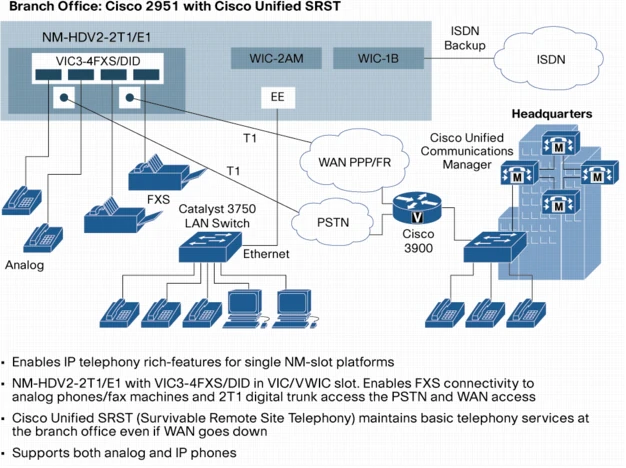
Table 2. Cisco IP Communications High-Density Digital Voice/Fax Network Module
|
Module |
Description |
Application |
|
NM-HDV2 |
IP Communications High-Density Digital Voice/fax Network Module |
Supports a VIC/VWIC slot that can fitted with either digital or analog/BRI voice/WAN interface cards. Supports a maximum of 60 channels of digital voice, or four channels of analog voice in medium complexity codec. Up to four PVDM2 Packet Fax/Voice DSP modules can be used. |
|
NM-HDV2-1T1/E1 |
IP Communications High-Density Digital Voice/fax Network Module with one Built-in T1/E1 port |
Includes a built-in T1/E1 port and a VIC/VWIC slot that can be fitted with either digital or analog/BRI voice/WAN interface cards. Supports a maximum of 90 channels of digital voice, or 30 channels of digital voice and four channels of analog voice in medium complexity codec. Up to four PVDM2 Packet Fax/Voice DSP modules can be used. |
|
NM-HDV2-2T1/E1 |
IP Communications High-Density Digital Voice/fax Network Module with two Built-in T1/E1 ports |
Includes two built-in T1/E1 ports and a VIC/VWIC slot that can be fitted with either digital or analog/BRI voice/WAN interface cards. Supports a maximum of 120 channels of digital voice, or 60 channels of digital voice and four channels of analog voice in medium complexity codec. Up to four PVDM2 Packet Fax/Voice DSP modules can be used. |
Table 3. VIC/VWIC Options for the IPC High-Density Digital Voice Network Modules
|
VIC/VWIC Options for the IPC High-Density Digital Voice NM |
Description |
Application |
|
VIC3-2FXS/DID |
2-port FXS/DID voice/fax interface card. |
FXS port is used to connect directly to phones, fax machines, and key systems. Generates battery polarity reversal and caller ID. DID port is used to provide off-premises DID connection from central office. Serves only incoming calls from the PSTN. Does not support caller ID in DID mode. |
|
VIC3-2FXS-E/DID |
2-port Enhanced FXS/DID voice/fax interface card. |
FXS port is used to connect directly to phones, fax machines, and key systems. Generates battery polarity reversal and caller ID. VIC3-2FXS-E/DID is designated as an "Off-Premise Extension Lite" product offering. This means that while the module addresses a subset of the off-premise extension applications, it should be noted that the module is not in full compliance DID port is used to provide off-premises DID connection from central office. Serves only incoming calls from the PSTN. Does not support caller ID in DID mode. |
|
VIC3-4FXS/DID |
4-port FXS/DID voice/fax interface card |
FXS port is used to connect directly to phones, fax machines, and key systems. Generates battery polarity reversal and caller ID. DID port is used to provide off-premises DID connection from central office. Serves only incoming calls from the PSTN. Does not support caller ID in DID mode. |
|
VIC2-2FXO |
2-port FXO voice/fax interface card [universal card for all countries]. Also supports analog Centralized Automated Message Accounting (CAMA) on any port. |
FXO port is used to connect to PBX or key system, or to provide off-premise connections to PSTN. Supports battery reversal detection and caller ID. These VICs can be software configured to work in all countries. Also used to connect to analog CAMA trunk to provide dedicated E-911 service (North America only). |
|
VIC2-4FXO |
4-port FXO voice/fax interface card [universal card for all countries]. Also supports analog CAMA on any port. |
FXO port is used to connect to PBX or key system, or to provide off-premise connections to PSTN or PTT. Supports battery reversal detection and caller ID. These VICs can be software configured to work in all countries. Also used to connect to analog CAMA trunk to provide dedicated E-911 service (North America only). |
|
VIC3-2E/M |
2-port E&M voice/fax interface card |
Use to connect to PBX or key system as tie lines. |
|
VIC2-2BRI-NT/TE |
2-port BRI voice/fax interface card (configurable for either network or terminal side) |
Use to connect as network side or user side to PBX or key system as off-premise connections (ISDN voice BRI). Supports Patent Pending flexible L2 and L3 configurations |
|
VWIC2-1MFT-T1/E1 |
1-Port T1/E1 Multiflex Trunk Voice/WAN Interface Card |
Used to connect to PBX, PSTN, or WAN using T1/E1 standard interface and provide channel drop-and-insert capability. |
|
VWIC2-2MFT-T1/E1 |
2-Port T1/E1 Multiflex Trunk Voice/WAN Interface Card |
Used to connect to PBX, PSTN, or WAN using T1/E1 standard interface and provide channel drop-and-insert capability. |
|
VWIC2-1MFT-G703 |
1-Port G.703 Multiflex Trunk Voice/WAN Interface Card |
Used to support unstructured E1 (G.703) and all features of the other Cisco MFT VWIC2 modules, including drop-and-insert. |
|
VWIC2-2MFT-G703 |
2-Port G.703 Multiflex Trunk Voice/WAN Interface Card |
Used to support unstructured E1 (G.703) and all features of the other Cisco MFT VWIC2 modules, including drop-and-insert. Additional flexibility is provided on the two port module with the capability to configure one port for unstructured E1 (G.703) while configuring the other for standard framed E1. |
Table 4. PVDM2 Packet Fax/Voice DSP Type and Density Supported on the IP Communications High-Density Digital Voice/Fax Network Module
|
Module Name |
Description |
Number of DSPs |
Maximum Channels in High-Complexity1 Codec |
Maximum Channels in Medium-Complexity2 Codec |
Maximum Channels in G.711 codec |
|
PVDM2-8 |
8-channel Packet Fax/Voice DSP Module |
1 |
4 |
4 |
8 |
|
PVDM2-16 |
16-channel Packet Fax/Voice DSP Module |
1 |
6 |
8 |
16 |
|
PVDM2-32 |
32-channel Packet Fax/Voice DSP Module |
2 |
12 |
16 |
32 |
|
PVDM2-48 |
48-channel Packet Fax/Voice DSP Module |
3 |
18 |
24 |
48 |
|
PVDM2-64 |
64-channel Packet Fax/Voice DSP Module |
4 |
24 |
32 |
64 |
|
1 High-complexity codecs supported are: G.711, G.726, G.729, G.723.1, G.728, GSM-EFR and Fax Relay.
2 Medium-complexity codecs supported are: G.711, G.726, G.729a, GSM and Fax Relay
|
Table 5. Maximum Network Modules Allowed per Platform
|
Cisco Platform |
Maximum Number of Network Modules Allowed |
|
Cisco 2811/2821/2851 Integrated Services Routers |
1 |
|
Cisco 3825 Integrated Services Router |
2 |
|
Cisco 3845 Integrated Services Router |
4 |
|
Cisco 2901/2911/2921/2951 Integrated Services Routers |
0 / 1 / 1 / 2 |
|
Cisco 3925/3945 Integrated Services Routers |
2 / 4 |
Table 6. IP Communications High-Density Digital Voice/Fax Network Module Feature Summary
|
Feature |
Description and Benefits |
|
IP Telephony Voice Gateway |
• Integrates all Cisco IP Communications solutions by providing flexible and reliable connectivity to public or private switched telephone networks around the world.
• Provides high-density gateway for Cisco IP phones to PSTN or legacy PBX/PABXs. (Private Automatic Branch Exchange).
• Provides high-density gateway to PSTN for traditional PBX systems, phones, fax machines, and key communication systems connected to a voice, data, and video infrastructure.
• Interoperable within a Cisco AVVID architecture and Cisco IP Communications solution.
|
|
Toll Bypass |
• Reduce or eliminate toll charges assessed by long distance and local carriers by transporting voice and fax traffic across the enterprise intranet, LAN, metropolitan-area network (MAN), or WAN.
• Works with existing phones, fax machines, PBX systems, and key systems.
• Connection trunk: Creates a permanent tie-line replacement structure (digital-to-digital, digital-to-analog, or analog-to-analog capabilities).
• Interoperates end-to-end with Cisco IP phones, analog phones, fax machine connections, and PBX/PABX connections to and from other Cisco voice-enabled products.
|
|
Voice over Packet Transport |
• Voice/Fax over IP: VoIP traffic at Layer 3 can travel over any Layer 1 or Layer 2 media, including ISDN, leased lines, serial connections, Frame Relay, Ethernet, Token Ring, and Asynchronous Transfer Mode (ATM).
• Voice/Fax over Frame Relay: VoFR is supported using FRF.11 and FRF.12 standards. This solution also uses features found only in Cisco IOS Software for maintaining voice quality.
• Voice over ATM: VoATM is supported using AAL2 or AAL5 encapsulation. Leverages existing ATM networks as a direct transport method for voice. VoATM requires ATM interfaces such as T1/E1 ATM, IMA, DS3/E3 or OC-3, or DSL WICs.
• Compressed Real-Time Protocol (cRTP) offers RTP header compression and packet fragmentation techniques that allow toll-quality voice and fax transmissions over any WAN connection.
• Call admission control and PSTN fallback: Uses Service Assurance Agent (SAA) to determine latency, delay and jitter and provide real-time ICPIF calculations before establishing a call across an IP infrastructure. SAA packets emulate voice packets receiving the same priority as voice throughout the entire network.
• Advanced quality of service (QoS) mechanisms: These configurable Cisco IOS Software features reserve appropriate bandwidth and prioritize voice and fax traffic to ensure transparent delivery of toll-quality voice and fax. They include Resource Reservation Protocol (RSVP), Queuing Techniques (such as Low Latency Queuing), IP Precedence, and DiffServ Code Points.
|
|
Call Control Signaling |
• Supports H.323 V1/V2/V3/V4, MGCP 0.1/1.0, and SIP call control protocols. Also supports CiscoUCM3.3 using MGCP or H.323, and Cisco UCME 3.1.
|
|
ITU Standard Voice Codecs |
• G.711, G.729, G.729a/b, G.723.1, G.726, G.728, iLBC, G.722-These are standards-based compression technologies allowing transmission of voice across IP, Frame Relay, and ATM. The G.711 standard employs 64 kbps PCM modulation using either u-law or A-law. Other codecs employ lower bit rates.
|
|
Telephony Interface Signaling Support |
• Supports the following signaling protocols:
• FXO/FXS loop-start and ground-start signaling
• E&M (wink, immediate, delay)
• Inbound signaling (such as DTMF, MF support)
• T1 and E1 CAS
• T1 and E1 PRI Q.931 user side and network side
• T1 and E1 PRI QSIG
• E1 MelCAS
• E1 R2 CAS
• T1 and E1 Transparent CCS (with Multi-D channel)
• Country-specific signaling
|
|
Voice Features |
• Conferencing/Transcoding 1 1: Supports up to 50 eight-party G.711 ad-hoc conferencing sessions, or up to 32 eight-party multi-codec (G.711/G.729) ad-hoc conferencing sessions. A maximum of 128 transcoding sessions between G.729a and G.711 codecs, and 96 transcoding sessions between G.729 and G.711 codecs.
• Echo cancellation: Industry-leading G.168-compliant software echo cancellation provides echo cancellation on tail circuits up to 64 Mbps.
• Silence suppression, voice activity detection (VAD): Bandwidth is used only when someone is speaking. During silent periods of a phone call, bandwidth is available for data traffic.
• Comfort noise generation: This feature reassures the phone user that the connection is being maintained, even when no voice packets are being transmitted.
• Private line automatic ring-down (PLAR): Provides a direct connection to another digital or analog voice port by lifting a telephone handset on one end. Includes "Trader Turret" PLAR.
• Local/Advanced Voice Busy-Out (LVBO/AVBO): Automatically busies out any desired voice trunk line to a PBX or PSTN when a direct WAN or LAN connection to the router or any part of the network to the destination port is down.
• Caller ID support: Per-port configurable caller ID (with per call un-blocking) over analog FXS and FXO interfaces.
• Hunt groups across cards: Calls can be forwarded automatically to the first available line.
• Integrated add/drop multiplexer (drop and insert): Performs add/drop multiplexing for voice within a multi-port voice Network Module. Eliminates the requirement, maintenance, support, and expense of using an external add/drop multiplexer.
• Channel bank: Supports the conversion of analog voice ports into digital voice traffic using DS-0 channels on a T1 or E1 interface.
• Dial plan mapping: Simplifies configuration and management through automatic mapping of dialed phone numbers to IP addresses.
• Interactive Voice Response Support (IVR): Provides automated-attendant, voice-mail support, and call routing based on desired service.
• Hoot and Holler over IP: Delivers superior quality Hoot and Holler multicast voice services and multicast conferencing over the WAN using existing end-points.
|
|
Voice Port Interfaces |
• Supports FXS, FXO (includes CAMA), DID, E/M, BRI (S/T), T1, and E1 interfaces.
|
|
Voice Port-Specific Features |
• FXS and FXO: Provide battery polarity reversal detection and initiation for disconnect supervision and far-end answer supervision.
• ISDN BRI network side and phantom power: The VIC2-2BRI-NT/TE provides the ability to connect a PBX/PABX configured as user side directly to the router. Also provides phantom power to accommodate equipment that requires it.
• Analog CAMA trunk connection: The VIC2-2FXO and VIC2-4FXO provide the ability to connect to analog CAMA trunks which provide dedicated E-911 services. Each VIC port can be individually configured as an FXO or a CAMA port via Cisco IOS Software.
• Per port disable: Allows disabling of any single port without affecting any other port on the same VIC or NM.
• LED indicators for voice processing resources and port status.
|
|
Fax and Modem |
• Fax and modem passthrough: Allows fax and modem traffic to pass through a voice port.
• Fax relay: Provides a more robust protocol for fax transmission over packet networks. Also supports the T.37 and T.38 fax protocols.
|
|
Data Features |
• Supports serial data WAN access using T1/E1 or fractional T1/E1 network interface.
• N X 64 Kbps or N X 56 Kbps channel group data rates (T1:N=1 to 24, E1:n=1 to 31).
• Supports up to 32 data channel groups with a total bandwidth of up to 2 Mbps.
• Supports integrated data WAN access and DS-0 voice channels on the same T1/E1.
• Dual clocking domain: Supports a second clocking domain for one T1/E1 data only trunk, independent of the primary clocking domain used by other T1/E1 and BRI ports resident within a single NM-HDV2 module.
|
|
High-Performance Flexible DSP Architecture |
• Channel capacity: Supports up to 120 medium-complexity voice channels. See NM specifications below for further details.
• Flexi-DSP architecture: There is no need to specify codec complexity at configuration. An appropriate codec is dynamically selected when a call is established, while allocating DSP resources optimally.
• Feature upgrades: The DSP architecture allows for addition of new features through simple code updates.
• DSP sharing: Supports the ability to share DSPs among multiple NM-HDV2 modules within a single Voice Gateway Router.
|
|
1 Conferencing/transcoding feature available on the 2800 Series starting with 12.3(8)T4, 3800 Series starting with 12.3(11)T, 2900 and 3900 Series starting with 15.0(1)M.
|
Additional Features
Cisco IOS Software and Platform Support
• Fully supported via Cisco IOS Software CLI (call level interface) including device configuration, monitoring, link status, security, Layer 2 and 3 protocol configuration and management, and call history
• Supported on all Cisco 2811, 2821, 2851, 2911, 2921, 2951,3825, 3845, 3925 and 3945 Unified Communications routers
Network Management Support
• Cisco Voice Manager
• SNMP protocol compliant
• Manageable via a MIB browser
• CiscoView interface for configuration
• ConfigMaker
• NetSys supported
Software and Memory Requirements
Table 7. Cisco IOS Software Version
|
Product |
Cisco 2811, 2821, 2851 |
Cisco 2911, 2921, 2951 |
Cisco 3825, 3845 |
Cisco 3925, 3945 |
|
NM-HDV2 NM-HDV2-1T1/E1 NM-HDV2-2T1/E1 PVDM2-8 PVDM2-16 PVDM2-32 PVDM2-48 PVDM2-64 |
• 12.3(8)T4
• IP Plus images and higher
• 256 MB DRAM
• 64 MB Flash
|
• Cisco IOS Software Release 15.0(1)M
• "UC Technology" images
• 1 GB DRAM
• 256 MB Flash
|
• 12.3(8)T4
• IP Plus images and higher
• 256 MB DRAM
• 64 MB Flash
|
• Cisco IOS Software Release 15.0(1)M
• "UC Technology" images
• 1 GB DRAM
• 256 MB Flash
|
• Operating temperature: 0 to 40°C (32 to 104°F)
• Storage temperature: -25 to +70°C (-13 to 158°F)
• Relative humidity: 5 to 85% noncondensing operating; 5 to 95% noncondensing, nonoperating
NM Specifications
Table 8.
|
Product |
NM-HDV2
|
NM-HDV2-1T1/E1
|
NM-HDV2-2T1/E1
|
|
Description |
IP Communications High-Density Digital Voice/Fax Network Module |
IP Communications High-Density Digital Voice/Fax Network Module with One Built-in T1/E1 Port |
IP Communications High-Density Digital Voice/Fax Network Module with Two Built-in T1/E1 Ports |
|
Cisco Part Number |
800-22166-01 |
800-22167-01 |
800-22168-01 |
|
FCC Specifications |
FCC Class B device |
FCC Class B device |
FCC Class B device |
|
Spare |
NM-HDV2= |
NM-HDV2-1T1/E1= |
NM-HDV2-2T1/E1 |
|
Voice Channel Capacity |
• 60 digital voice channels of medium complexity or
• 4 analog voice channels
|
• 90 digital voice channels of medium complexity or
• 30 digital voice channels of medium-complexity and 4 analog voice channels
|
• 120 digital voice channels of medium complexity or
• 60 digital voice channels of medium complexity and 4 analog voice channels
|
|
Mean Time Between Failures (MTBF) |
1,251,736 |
1,012,136 |
939,368 |
|
VICs/VWICs Supported |
Maximum of ONE: • VIC3-2FXS/DID
• VIC3-2FXS-E/DID
• VIC3-4FXS/DID
• VIC2-2FXO
• VIC2-4FXO
• VIC3-2E/M
• VIC2-2BRI-NT/TE
• Any VWIC2-xMFT-xx
|
Maximum of ONE: • VIC3-2FXS/DID
• VIC3-2FXS-E/DID
• VIC3-4FXS/DID
• VIC2-2FXO
• VIC2-4FXO
• VIC3-2E/M
• VIC2-2BRI-NT/TE
• Any VWIC2-xMFT-xx
|
Maximum of ONE: • VIC3-2FXS/DID
• VIC3-2FXS-E/DID
• VIC3-4FXS/DID
• VIC2-2FXO
• VIC2-4FXO
• VIC3-2E/M
• VIC2-2BRI-NT/TE
• Any VWIC2-xMFT-xx
|
|
PVDM2 Supported |
Requires at least one and maximum of four Packet Fax/Voice DSP Module for voice calls: • PVDM2-8
• PVDM2-16
• PVDM2-32
• PVDM2-48
• PVDM2-64
|
Requires at least one and maximum of four Packet Fax/Voice DSP Module for voice calls: • PVDM2-8
• PVDM2-16
• PVDM2-32
• PVDM2-48
• PVDM2-64
|
Requires at least one and maximum of four Packet Fax/Voice DSP Module for voice calls: • PVDM2-8
• PVDM2-16
• PVDM2-32
• PVDM2-48
• PVDM2-64
|
Voice Interface Card Specifications
Voice WAN Interface Card Specifications
Table 9.
|
Product Number |
Description |
|
VWIC2-1MFT-T1/E1 |
1-Port T1/E1 Multiflex Trunk Voice/WAN Interface Card |
|
VWIC2-2MFT-T1/E1 |
2-Port T1/E1 Multiflex Trunk Voice/WAN Interface Card |
|
VWIC2-1MFT-G703 |
1-Port G.703 Multiflex Trunk Voice/WAN Interface Card |
|
VWIC2-2MFT-G703 |
2-Port G.703 Multiflex Trunk Voice/WAN Interface Card |
|
T1 Network Interface |
|
|
Transmit Bit Rate |
1.544 Mbps ± 50 bps/32 PPM |
|
Receive Bit Rate |
1.544 Mbps ± 50 bps/32 PPM |
|
Line Code |
AMI, B8ZS |
|
AMI Ones Density |
Enforced for N x 56 Kbps Channels |
|
Framing Format |
D4 (SF) and ESF |
|
Output level (LBO) |
0, -7.5, or -15 dB |
|
Input Level |
+1dB0 down to -24 dB0 |
|
DTE Interface (WIC mode) |
Fractional Service |
|
DTE Interface (VIC mode) |
G.704/Structured |
|
DCE Interface |
G.704/Structured |
|
E1 Network Interface |
|
|
Transmit Bit Rate |
2.048 Mbps ±100 bps/50 PPM |
|
Receive Bit Rate |
2.048 Mbps ±100 bps/50 PPM |
|
Data Rate |
1.984 Mbps (framed mode) Per E1 Port |
|
Clocking |
Internal and Loop (recovered from network) |
|
E1 National Bits |
Fixed (non-configurable) |
|
Encoding |
HDB3 |
|
DTE Interface (WIC mode) |
Fractional Service |
|
DTE Interface (VIC mode) |
G.704/Structured |
|
DCE Interface |
G.704/Structured |
Homologation
Table 10.
|
Country |
Specification |
Approval |
|
United States |
• EMC 47CFR15 Subpart B 2002, T1
• Safety IEC60950
• Telecom 47 CFR part 68, TIA/EIA 968-A
|
Supported |
|
Canada |
• EMC CISPR22 or FCC Part 15
• Safety IEC60950
• Telecom CS-03
|
Supported |
|
European Community (CE) Countries11 |
• EMC EN55022/EN50082/EN61000
• Safety EN60950
• Telecom TBR4, TBR12 and TBR13
|
Supported |
|
1 CE (European Community) countries: Austria, Belgium, Denmark, Finland, France, Germany, Gibraltar, Greece, Ireland, Italy, Liechtenstein, Luxembourg, Malta, Monaco, Netherlands, Norway, Portugal, Spain, Sweden, Switzerland, United Kingdom
|
| Model | NM-HDV2-RF |
| Category | Cisco 2600 Series Products |
| Subcategory | Cisco 2600 Series Supported Network Modules |
| Description | IP Comm.HighDensityDigital Voice Network Mod. REMANUFACTURED |
| Price | 984.00 USD |
| Last Update | 2019-02-24 |