
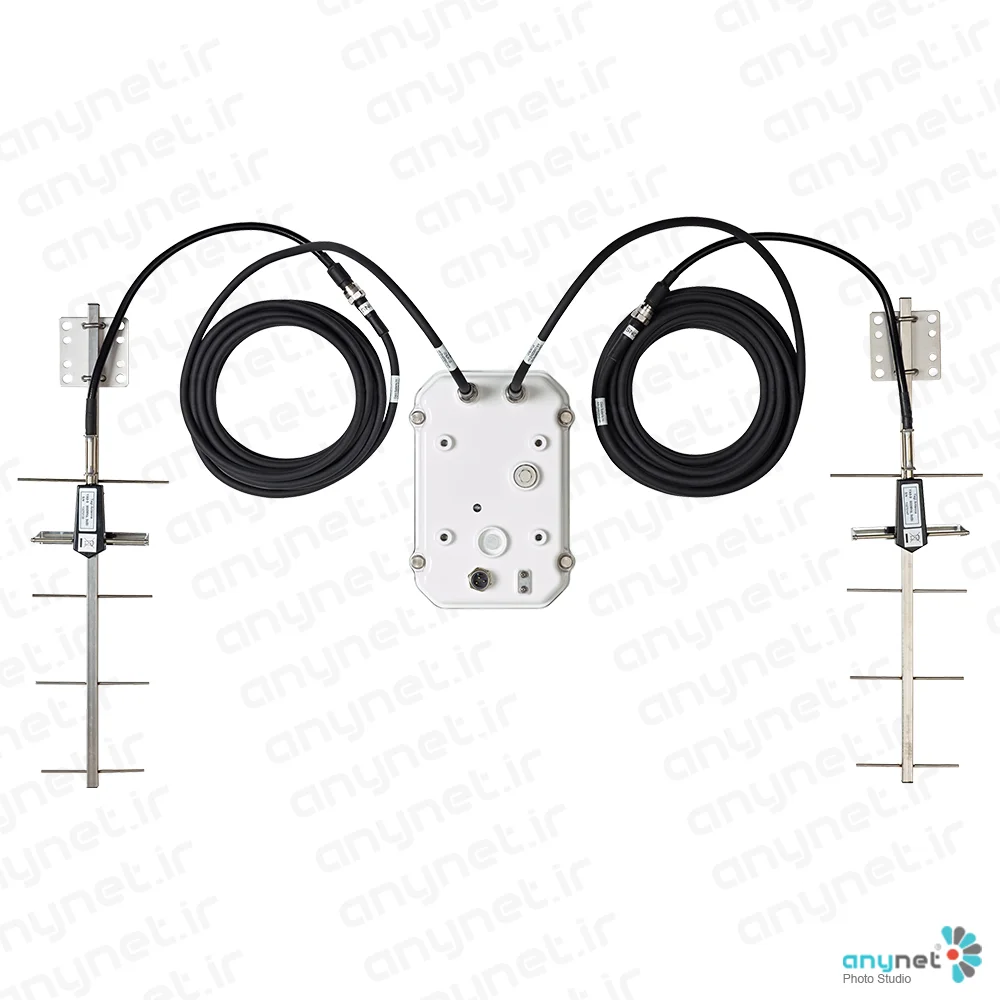

Cisco IR529UWP-915D/K9 Industrial Range Extender
-
: IR529UWP-915D/K9
-
: IR529 915Mhz WPAN IP67 Range Ext. Adv PS Dual antenna
-
: 1,768.15: 2021-11-01
- اطلاعات مربوط به تاریخ های پایان فروش و پایان پشتیبانی فنی (EOL/EOS - End-of-Sale and End-of-Life)
- تاریخ معرفی محصول:
- تاریخ پایان فروش:
- تاریخ پایان پشتیبانی:
Introduction
The Cisco 500 Series Wireless Personal Area Network (WPAN) Industrial Routers represent a significant advancement in the realm of industrial connectivity, specifically engineered to address the rigorous demands of utility companies and industrial environments. As the digital transformation of critical infrastructure continues to accelerate, the need for robust, secure, and highly reliable communication networks has never been more pressing. These routers are meticulously designed to serve as the backbone for Advanced Metering Infrastructure (AMI) and various industrial IoT applications, ensuring that data transmission remains seamless even in the most challenging field conditions. By integrating cutting-edge wireless technologies, Cisco provides a scalable solution that bridges the gap between legacy field devices and modern, data-driven operational centers.
At the core of this technology is a commitment to operational continuity and long-term investment protection. The Cisco 500 Series is built to withstand extreme environmental stressors, including temperature fluctuations, humidity, and electromagnetic interference, which are common in outdoor utility deployments. By offering a unified platform that supports multiple communication standards, these routers empower organizations to modernize their grid infrastructure without the need for frequent hardware overhauls. This strategic approach not only reduces the total cost of ownership but also enhances the overall agility of the network, allowing utility providers to respond more effectively to grid fluctuations, outages, and the increasing demand for real-time monitoring and control across vast geographic areas.
Product overview
The Cisco 500 Series WPAN Industrial Routers are primarily categorized into two main models: the IR510 and the IR530. The IR510 is a compact, highly efficient WPAN gateway designed for deployments where space is at a premium but high-performance connectivity is non-negotiable. It acts as a bridge between the field area network and the head-end system, utilizing robust wireless protocols to maintain consistent communication with smart meters and other industrial sensors. Its design philosophy centers on simplicity and reliability, making it an ideal choice for dense urban or suburban utility deployments where multiple endpoints need to be aggregated into a single, secure backhaul connection.
On the other hand, the IR530 serves as a more versatile and powerful industrial router, offering enhanced capabilities for complex network topologies. It is built to handle higher data throughput and provides additional connectivity options, making it suitable for more demanding industrial environments that require advanced routing features and increased processing power. Both the IR510 and IR530 are integrated into the broader Cisco IoT ecosystem, allowing for centralized management and orchestration. This integration ensures that network administrators can monitor device health, push security updates, and optimize traffic flow from a single pane of glass, significantly reducing the operational burden associated with managing thousands of distributed field assets.
Furthermore, these routers are designed with a modular mindset, supporting various communication interfaces that allow for future-proofing as industry standards evolve. By leveraging Cisco’s proven expertise in networking, the 500 Series routers provide a secure, encrypted, and resilient communication path that protects sensitive utility data from unauthorized access. Whether deployed in a smart grid, a water management system, or a complex industrial automation site, these products provide the necessary intelligence to transform raw field data into actionable insights, thereby driving operational efficiency and improving the overall safety and reliability of critical industrial services.
Features and benefits
- Support for Wi-SUN (Wireless Smart Utility Network) standards, ensuring interoperability and a robust mesh networking capability for large-scale deployments.
- Industrial-grade hardware design that meets stringent environmental certifications, ensuring reliable operation in harsh outdoor conditions ranging from extreme heat to freezing temperatures.
- Advanced security features, including hardware-based encryption and secure boot processes, which protect the network against sophisticated cyber threats and unauthorized tampering.
- Seamless integration with Cisco IoT Field Network Director, allowing for simplified provisioning, monitoring, and troubleshooting of large-scale router fleets.
- High-performance routing capabilities that support both IPv4 and IPv6, providing the flexibility needed for modern, IP-based industrial communication architectures.
- Low-power consumption profiles that make these routers suitable for energy-constrained environments, helping utility providers meet their sustainability and operational cost targets.
- Scalable architecture that allows for the easy addition of new endpoints, ensuring that the network can grow alongside the expanding needs of the utility or industrial facility.
- Enhanced diagnostic tools and remote management capabilities that minimize the need for on-site maintenance, thereby reducing operational expenses and improving response times.
- Support for multiple backhaul options, providing the flexibility to choose the most cost-effective and reliable connectivity method for specific geographic locations.
- Comprehensive quality of service (QoS) mechanisms that prioritize critical traffic, ensuring that time-sensitive data, such as grid protection signals, are delivered with minimal latency.
The Cisco® IR529 Resilient Mesh Range Extenders provide unlicensed 902-928 MHz ISM band IEEE 802.15.4g/e RF mesh communications to enable a diverse set of Internet of Things (IoT) applications such as Advanced Metering Infrastructure (AMI), Distribution Automation (DA), and smart city wireless sensor networks. These platforms provide enterprise-class RF connectivity to other Cisco Field Area Network (FAN) infrastructure devices such as CGR 1000 routers, IR509 DA gateways, and Cisco IoT partner endpoint devices, including industrial wireless sensors and electricity. In addition, the IR529 Range Extenders withstand harsh environments and are purpose built to be installed on pole mounts in demanding outdoor environments.
IR529 range extenders provide a cost-effective means for extending the coverage area of RF mesh networks so that more IPv6 endpoints can connect to Cisco’s mesh network across greater distances and challenging RF environments. These devices take full advantage of Cisco world-class networking technologies. The IR529 Series Range Extenders offer innovative capabilities in IPv6, self-healing mesh networking, end-to-end security, standards-based solutions for legacy protocol transport, network management, and ease of deployment.
Figure 1 displays the Cisco IR529 Base Range Extender (IR529WP-915S/K9) and the Cisco IR529 Advanced Range Extender (IR529UBWP-915D/K9).
Benefits
● IPv6 multihop networking to extend the reach and coverage of IoT IEEE 802.15.4g/e RF mesh networks
● 2FSK 150kbs modulation or 75kbps with Forward Error Correction (FEC)
● Compact ruggedized IP67 form factor with optional battery backup units
● Flexible antenna options that provide pervasive local area RF coverage or directional antennas for connecting RF nodes across greater distances
● Delivers state-of-the-art IPv6 communications platform that is standards-based and interoperable for large-scale smart grid and IoT sensor deployments
● Lowers Total Cost of Ownership (TCO) by aggregrating hard-to-reach wireless sensor endpoints into existing RF mesh networks
● Supports graceful migration and integration of legacy assets with support for several industry-standard protocols
● Increases communications network uptime and grid availability to help ensure message delivery based on rugged industrial hardware design and highly resilient solution architecture
Architectural capabilities
Table 1. Architectural capabilities of Cisco IR529 range extenders
|
Architectural principles |
Cisco IR500 range extender capabilities |
|
Network reliability and Disaster Recovery (DR) architectures |
Highly resilient design that optimizes communications network uptime and grid availability to help ensure message delivery: ● Standards-based routing protocol for low-power and lossy networks (IETF RPL) extends to last mile with route propagation to other routing protocols such as Open Shortest Path First (OSPF)
● Interference-avoiding frequency hopping spread spectrum and per-device spatial frequency reuse
● Rugged industrial design and compliance with IEC-61850-3 and IEEE 1613 for utility environments
More details on standards support can be found in Table 3. |
|
Network security |
Comprehensive security capabilities based on open standards and Cisco innovation: ● Access control based on X.509 certs, IEEE 802.1x, and utility Public Key Infrastructure (PKI)
● Data confidentiality and privacy based on link-layer AES-128 bit encryption and IEEE 802.11i
● Device and platform integrity based on firmware signing and cert-based, role-based access control
More details on security capabilities can be found in Table 3. |
|
Ease of use to reduce TCO |
Enterprise-class network management and device management capabilities, based on open standards and Cisco innovation: ● Network and device management tools for easy deployment, upgrades, and remote monitoring
● Highly secure, automated, zero-touch deployment solution
● Comprehensive wireless monitoring capabilities for multiple communication technologies
|
|
Unified FAN architecture |
Architecture based on different choices of wired and wireless technologies: ● Media-independent network services based on IP architectures
● Separation of network services and applications
|
Cisco IR529 range extenders specifications
Table 2 lists hardware specifications, and Table 3 lists software features for IR529 Range Extenders.
Table 2. Cisco IR529 series hardware specifications
|
Base RE hardware specifications |
Advanced RE with single-antenna hardware specifications |
Advanced RE with dual-antenna hardware specifications |
|
|
Cisco product ID |
IR529WP-915S/K9 |
IR529UBWP-915S/K9 |
IR529UBWP-915D/K9 w/BBU IR529UWP-915D/K9 w/o BBU |
|
Dimensions (W x D x H) |
9.4 cm x 14.5 cm x 19.3 cm (3.7 in. x 5.7 in. x 7.6 in.) |
18.36 cm x 26.34 cm x 12.32 cm (7.23 in. x 10.37 in. x 4.85 in.) |
18.36 cm x 26.34 cm x 12.32 cm (7.23 in. x 10.37 in. x 4.85 in.) |
|
Pole mount |
Yes |
Yes |
Yes |
|
Typical weight fully configured |
2.3 kg (5.1 lbs) |
3.8 kg (8.4 lbs) |
Without optional BBU: 3.2 kg (7.0 lbs) With optional BBU: 3.9 kg (8.5 lbs) |
|
Operating temperature |
-40°C to +60°C (-40°F to 140°F) |
-40°C to +70°C (-40°F to 158°F) with type test up to 85°C (185°F) for 16 hours |
-40°C to +70°C (-40°F to 158°F) with type test up to 85°C (185°F) for 16 hours |
|
Typical power consumption or dissipation |
4-5W depending on configuration |
4-5W depending on configuration |
4-5W depending on configuration |
|
Maximum power consumption |
9W peak; 6W steady state |
9W peak; 6W steady state With BBU charge: 23W max |
9W peak; 6W steady state With BBU charge: 23W max |
|
Maximum power consumption |
8W peak, 5W steady state |
8W peak, 5W steady state |
8W peak, 5W steady state |
|
Frequency support |
902-928 MHz (and FW configurable subsets to comply with in-country regulations) ● North America - ISM: 902-928 MHz
● Australia: 915-928 MHz
● Brazil: 902-907.5, 915-928 MHz
● Hong Kong: 920-925 MHz
● Singapore: 920-925 MHz
|
902-928 MHz (and FW configurable subsets to comply with in-country regulations) ● North America - ISM: 902-928 MHz
● Australia: 915-928 MHz
● Brazil: 902-907.5, 915-928 MHz
● Hong Kong: 920-925 MHz
● Singapore: 920-925 MHz
|
902-928 MHz (and FW configurable subsets to comply with in-country regulations) ● North America - ISM: 902-928 MHz
● Australia: 915-928 MHz
● Brazil: 902-907.5, 915-928 MHz
● Hong Kong: 920-925 MHz
● Singapore: 920-925 MHz
|
|
Spread spectrum technology |
FHSS |
FHSS |
FHSS |
|
Receiver sensitivity |
-105 dBm |
-105 dBm |
-101 dBm |
|
Transmitter output |
30 dBm |
30 dBm |
26.5 dBm |
|
Antenna connector |
Type N, female |
Type N, female |
Type N, female (x2) |
|
Direct-mount antenna |
1.5 dBi omnidirectional |
1.5 dBi omnidirectional |
1.5 dBi omnidirectional |
|
Externally mounted antenna |
5 dBi omnidirectional |
5 dBi omnidirectional |
5 dBi omnidirectional 10 dBi yagi-directional |
|
Battery backup options |
No |
Yes Charging operates -40°C to +45°C (-40°F to 113°F) Discharge operates -40°C to +55°C (-40°F to 131°F) |
Optional Charging operates -40°C to +45°C (-40°F to 113°F) Discharge operates -40°C to +55°C (-40°F to 131°F) |
|
Console and AUX port |
1 |
1 |
1 |
|
Integrated AC/DC power supply |
85 – 264 VAC, 47 – 63 Hz |
90 - 264 VAC, 47 – 63 Hz |
90 - 264 VAC, 47 – 63 Hz |
|
Environmental compliance |
● IEC-61850-3 (Temperature)
● IEC-61850-3 (Temp/Humidity)
● IEC-61850-3 (Transport)
● IEC-61850-3 (Transport)
● IEC-61850-3 Cm (Vibe/Shock/Drop)
● IEC-61850-3 S3 (Earthquake)
● IEEE1613 VS2 (Op Vibe)
|
● IEC-61850-3 (Temperature)
● IEC-61850-3 (Temp/Humidity)
● IEC-61850-3 (Transport)
● IEC-61850-3 (Transport)
● IEC-61850-3 Cm (Vibe/Shock/Drop)
● IEC-61850-3 S3 (Earthquake)
● IEEE1613 VS2 (Op Vibe)
|
● IEC-61850-3 (Temperature)
● IEC-61850-3 (Temp/Humidity)
● IEC-61850-3 (Transport)
● IEC-61850-3 (Transport)
● IEC-61850-3 Cm (Vibe/Shock/Drop)
● IEC-61850-3 S3 (Earthquake)
● IEEE1613 VS2 (Op Vibe)
|
|
Smart grid |
● C37.90 high-voltage impulse
|
● IEC-61850-3
● IEEE1613
● C37.90 high-voltage impulse
|
● IEC-61850-3
● IEEE1613
● C37.90 high-voltage impulse
|
|
Immunity |
● EN61000-6-2
● EN61000-4-2 (ESD)
● EN61000-4-3 (RF)
● EN61000-4-4 (EFT)
● EN61000-4-5 (SURGE)
● EN61000-4-6 (CRF)
● EN61000-4-11 (VDI)
● EN 55024, CISPR 24
● EN50082-1
|
● EN61000-6-2
● EN61000-4-2 (ESD)
● EN61000-4-3 (RF)
● EN61000-4-4 (EFT)
● EN61000-4-5 (SURGE)
● EN61000-4-6 (CRF)
● EN61000-4-11 (VDI)
● EN 55024, CISPR 24
● EN50082-1
|
● EN61000-6-2
● EN61000-4-2 (ESD)
● EN61000-4-3 (RF)
● EN61000-4-4 (EFT)
● EN61000-4-5 (SURGE)
● EN61000-4-6 (CRF)
● EN61000-4-11 (VDI)
● EN 55024, CISPR 24
● EN50082-1
|
|
EMC |
● 47 CFR, Part 15
● ICES-003 Class A
● EN55022 Class A
● CISPR22 Class A
● AS/NZS 3548 Class A
● VCCI V-3
● CNS 13438
● EN 300-386
|
● 47 CFR, Part 15
● ICES-003 Class A
● EN55022 Class A
● CISPR22 Class A
● AS/NZS 3548 Class A
● VCCI V-3
● CNS 13438
● EN 300-386
|
● 47 CFR, Part 15
● ICES-003 Class A
● EN55022 Class A
● CISPR22 Class A
● AS/NZS 3548 Class A
● VCCI V-3
● CNS 13438
● EN 300-386
|
|
Safety |
● USA: UL 60950-1 Cat II Overvoltage Category II
● Canada: CAN/CSA C22.2 No. 60950-1 Cat II
● Rest of world: IEC 60950-1 Cat II
● UL/cUL certified to UL/CSA 60950-1 Cat II, 2nd Ed.
● CB report to IEC60950-1Cat II, 2nd Ed., covering all group differences and national deviations
|
● USA: UL 60950-1 Cat IV Overvoltage Category II
● Canada: CAN/CSA C22.2 No. 60950-1 Cat IV
● Rest of world: IEC 60950-1 Cat IV
● UL/cUL certified to UL/CSA 60950-1 Cat IV, 2nd Ed.
● CB report to IEC60950-1Cat IV, 2nd Ed., covering all group differences and national deviations
|
● USA: UL 60950-1 Cat IV Overvoltage Category II
● Canada: CAN/CSA C22.2 No. 60950-1 Cat IV
● Rest of world: IEC 60950-1 Cat IV
● UL/cUL certified to UL/CSA 60950-1 Cat IV, 2nd Ed.
● CB report to IEC60950-1 Cat IV, 2nd Ed., covering all group differences and national deviations
|
|
Ingress protection (dust/water) |
IEC 60529, IP67 UL 50E, type 4X |
IEC 60529, IP67 UL 50E, type 4X |
IEC 60529, IP67 UL 50E, type 4X |
Table 3. Cisco range extender software specifications
|
Software specifications for base range extender, advanced RE with single antenna, and advanced RE with dual antenna |
|
|
Layer-2 |
● IEEE 802.15.4g WPAN
● IEEE 802.15.4e WPAN MAC extensions
● 6LoWPAN – RFC 4944 and 6282
|
|
IP/Layer-3 |
● IPv4 (RFC 791, 826, 1918)
● RFC 0768: User Datagram Protocol
● RFC 1661: The Point-to-Point Protocol (PPP)
● RFC 2460: Internet Protocol, Version 6 (IPv6) Specification
● RFC 3306: Unicast-Prefix-based IPv6 Multicast Addresses
● RFC 3315: Dynamic Host Configuration Protocol for IPv6 (DHCPv6)
● RFC 3484: Default Address Selection for Internet Protocol version 6 (IPv6)
● RFC 3748: Extensible Authentication Protocol (EAP)
● RFC 4291: IP Version 6 Addressing Architecture
● RFC 4346: The Transport Layer Security (TLS) Protocol Version 1.1
● RFC 4492: Elliptic Curve Cryptography (ECC) Cipher Suites for Transport Layer Security (TLS)
● RFC 4861: Neighbor Discovery for IP version 6 (IPv6)
● RFC 4862: IPv6 Stateless Address Autoconfiguration
● RFC 5072: IP Version 6 over PPP
● RFC 5216: The EAP-TLS Authentication Protocol
● RFC 5280: Internet X.509 Public Key Infrastructure Certificate and Certificate Revocation List (CRL) Profile
● RFC 5915: Elliptic Curve Private Key Structure
● RFC 5958: Asymmetric Key Packages
● RFC 6090: Fundamental Elliptic Curve Cryptography Algorithms
● RFC 6282: Compression Format for IPv6 Datagrams in Low Power and Lossy Networks (6LoWPAN)
● RFC 6550: RPL: IPv6 Routing Protocol for Low power and Lossy Networks
|
|
Application layer |
● DHCPv6 (RFC 3315) - for IPv6 address allocation
● IETF Constrained Application Protocol (CoAP) (draft RFC CoAP) - for CSMP network management
|
|
Security |
● Encryption: AES-128 (IEEE 802.11i – for WPAN key management)
● Authentication, Authorization: IEEE 802.1x – for WPAN authentication and encryption, X.509 certificate support with integration into customer’s PKI
● Hardware-based device identity: IEEE 802.1AR (hardware-ready)
● Role-based access control for device configuration
● Secure boot loader and signed firmware images
|
|
Quality of service |
● Classification and marking: Layer 3- Differentiated Services Code Point (DSCP)
● Congestion management: Priority Queuing (PQ)
|
| IR529UWP-915D/K9 | |
| Cisco 1000 Series Connected Grid Routers | |
| Cisco 1240 Connected Grid Router | |
| IR529 915Mhz WPAN IP67 Range Ext. Adv PS Dual antenna | |
| 1,768.15 | |
| 2021-11-01 |