
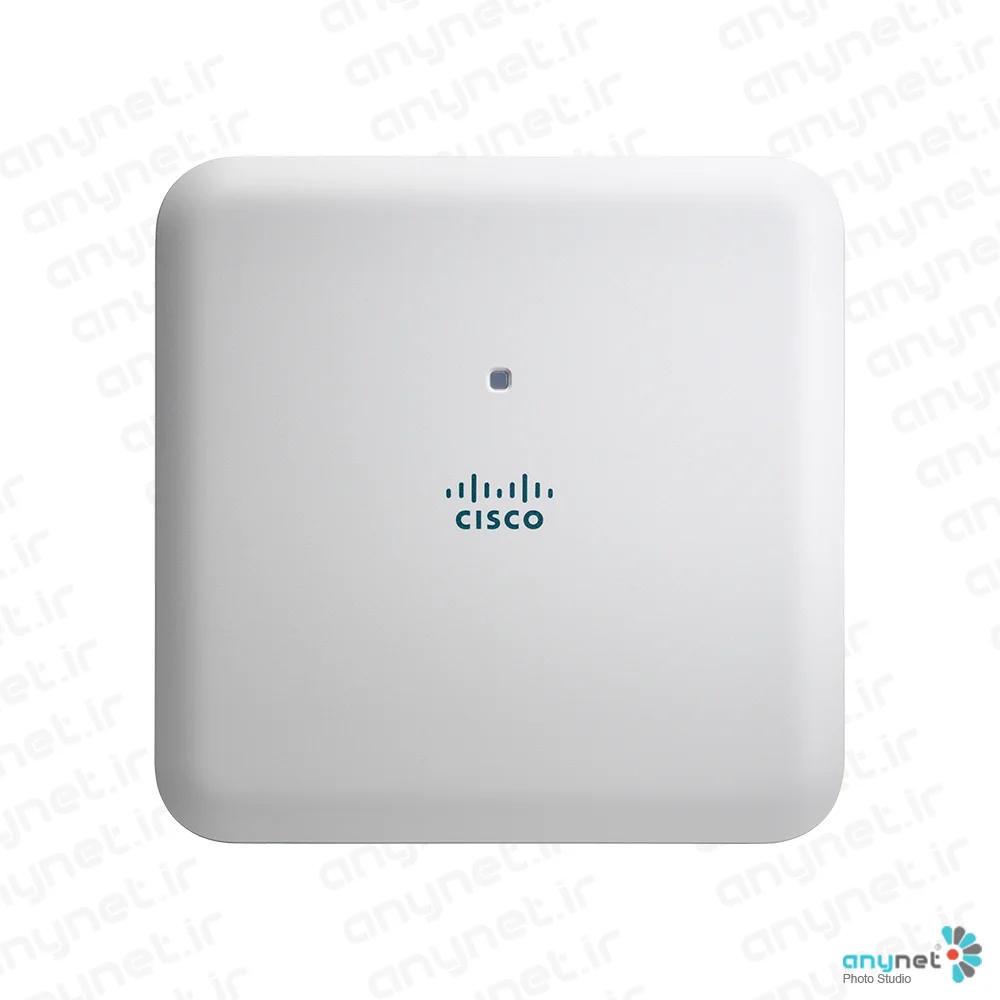

Cisco AIR-AP1832I-E-K9 Access Point
-
: AIR-AP1832I-EK9-RF
-
: 802.11ac Wave 2; 3x3:2SS; Int Ant; E Reg Dom REMANUFACTURED
-
: 469.50: 2021-04-29
- اطلاعات مربوط به تاریخ های پایان فروش و پایان پشتیبانی فنی (EOL/EOS - End-of-Sale and End-of-Life)
- تاریخ معرفی محصول:
- تاریخ پایان فروش:
- تاریخ پایان پشتیبانی:
Introduction
The Cisco Aironet 1830 Series access points represent a pivotal advancement in enterprise-grade wireless networking, specifically engineered to address the escalating demands of small to medium-sized business environments. As mobile devices continue to proliferate and bandwidth-intensive applications become the standard, organizations require robust, reliable, and high-performance connectivity that does not compromise on security or manageability. This series is designed to bridge the gap between consumer-grade simplicity and enterprise-class performance, ensuring that businesses can support a growing number of wireless clients without experiencing latency or connectivity bottlenecks. By leveraging the latest industry standards, these access points provide a seamless user experience that is essential for maintaining productivity in modern, fast-paced digital workspaces.
Furthermore, the 1830 Series is built upon the foundation of Cisco’s industry-leading wireless innovation, incorporating advanced radio frequency management and intelligent traffic handling. The architecture is focused on delivering consistent performance even in challenging RF environments where interference from other devices might typically degrade signal quality. By prioritizing ease of deployment and operational efficiency, Cisco has created a solution that allows IT administrators to scale their wireless infrastructure effectively. Whether it is supporting guest access, internal corporate traffic, or specialized IoT devices, the 1830 Series ensures that the network remains a strategic asset rather than a technical hurdle, providing the stability and speed necessary for today’s cloud-centric business operations.
Product overview
The Cisco Aironet 1830 Series encompasses two primary models: the 1832i and the 1832e. Both models are built to support the IEEE 802.11ac Wave 2 standard, which significantly enhances throughput and capacity compared to previous generations. The 1832i model features integrated antennas, making it an ideal choice for standard office deployments where a sleek, unobtrusive aesthetic is preferred. Conversely, the 1832e model is equipped with external antenna connectors, providing the flexibility required for specialized environments such as high-ceiling warehouses or areas with complex physical obstructions where directional signal coverage is necessary. These access points operate in a dual-radio configuration, supporting both 2.4 GHz and 5 GHz bands to ensure broad compatibility with legacy devices while maximizing performance for modern hardware.
At the core of the 1830 Series is the integration of Multi-User MIMO (MU-MIMO) technology, which allows the access point to communicate with multiple clients simultaneously. This is a critical improvement over traditional Single-User MIMO, as it drastically reduces the time each device spends waiting for airtime, thereby increasing the overall capacity of the wireless network. The hardware is designed to be managed through Cisco’s versatile controller-based architecture or via the Cisco Mobility Express solution, which is specifically tailored for smaller deployments that do not require a dedicated physical controller. This flexibility ensures that as a business grows, the network infrastructure can evolve alongside it, transitioning from a simple setup to a more complex, centralized management environment without needing to replace the existing hardware investment.
Features and benefits
- Support for 802.11ac Wave 2 standard provides high-speed wireless performance, enabling faster data transfers and improved support for bandwidth-heavy applications like video conferencing and cloud-based collaboration tools.
- MU-MIMO technology allows for simultaneous data transmission to multiple 802.11ac Wave 2 capable clients, which significantly increases the total network capacity and improves the efficiency of the wireless medium.
- The Cisco Mobility Express solution offers an intuitive, easy-to-use interface for small to medium-sized businesses, allowing for quick deployment and management of the network without the need for complex, expensive controller hardware.
- Integrated dual-radio support ensures that the access points can handle both legacy 2.4 GHz devices and modern 5 GHz devices, providing a balanced and inclusive wireless environment for all users.
- Advanced radio resource management (RRM) automatically optimizes the RF environment by adjusting channel and power settings, which helps in mitigating interference and ensuring consistent coverage throughout the facility.
- The 1832e model’s external antenna support provides the versatility needed for challenging RF environments, allowing businesses to customize their coverage patterns to suit specific physical layouts.
- Robust security features, including WPA3 support and integrated threat detection, ensure that the network remains protected against unauthorized access and common wireless vulnerabilities.
- Energy-efficient design helps businesses reduce their operational costs by minimizing power consumption, while still maintaining high performance during peak usage hours.
- Seamless roaming capabilities allow users to move throughout the office space without losing their connection, ensuring a consistent and uninterrupted experience for mobile workers.
- Comprehensive management tools provide IT administrators with deep visibility into network health, client statistics, and traffic patterns, facilitating proactive troubleshooting and informed capacity planning.
Cisco Aironet 1830 Series
Product overview
Ideal for small and medium-sized networks, the Cisco® Aironet® 1830 Series delivers industry-leading wireless performance with support for the latest Wi-Fi standard, IEEE’s new 802.11ac Wave 2 specification, and meets the growing requirements of wireless networks by delivering a better user experience. The 1830 Series extends support to a new generation of Wi-Fi clients, such as smartphones, tablets, and high-performance laptops that have integrated 802.11ac Wave 1 or Wave 2 support.
Features and benefits
With 802.11ac Wave 2, the 1830 Series provides a data rate of up to 867 Mbps on the 5-GHz radio, exceeding the data rates offered by today’s high-end 802.11n access points. It also enables a total aggregate dual-radio data rate of up to 1 Gbps, providing the necessary foundation for enterprise and service provider networks to stay ahead of the performance and bandwidth expectations and needs of their wireless users.
Due to its convenience, wireless access is increasingly the preferred form of network connectivity for corporate users. Along with this shift, there is an expectation that wireless should not slow down users’ day-to-day work, but should enable a high-performance experience while allowing users to move freely. The 1830 Series delivers industry-leading performance for highly secure and reliable wireless connections and provides a robust mobility experience that includes:
● 802.11ac Wave 2 with 3x3 Multiple-Input Multiple-Output (MIMO) technology with two spatial streams when operating in single-user or multiuser MIMO mode, offering 867-Mbps rates for more capacity and reliability than competing access points.
● Multiuser MIMO (MU-MIMO) allows transmission of data to multiple 802.11ac Wave 2 capable clients simultaneously to improve client experience. Prior to MU-MIMO, 802.11n and 802.11ac Wave 1 access points could transmit data to only one client at a time, typically referred to as single-user MIMO.
● Transmit beamforming technology improves downlink performance to mobile devices, including one- and two-spatial-stream devices on 802.11ac, while improving battery life on mobile devices such as smartphones and tablets.
● Flexible deployment mode through the Mobility Express Solution is ideal for small to medium-sized deployments that require multiple access points. Easy setup allows the 1830 Series to be deployed on networks without a physical controller.
● Security for remote workers or the micro-office. Any Cisco Aironet or Catalyst access point can function as an OfficeExtend access point (OEAP). With an OEAP, an employee at home or in a temporary micro-office will have access to the corporate SSID and the corporate network without the need to set up a VPN or have any advanced technical know-how.
● Cisco User Defined Network, a feature available in Cisco DNA Center that allows IT to give end users control of their very own wireless network partition on a shared network. End-users can then remotely and securely deploy their devices on this network. Perfect for university dormitories or extended hospital stays, Cisco User Defined Network grants both device security and control, allowing each user to choose who can connect to their network. (Available second half of calendar year 2020.)
● The Wi-Fi 6 readiness dashboard, a new dashboard in the Assurance menu of Cisco DNA Center. It will look through the inventory of all devices on the network and verify device, software, and client compatibility with the new Wi-Fi 6 standard. After upgrading, advanced wireless analytics will indicate performance and capacity gains as a result of the Wi-Fi 6 deployment. This is an incredible tool that will help your team define where and how the wireless network should be upgraded. It will also give you insights into the access point distribution by protocol (802.11 ac/n/abg), wireless airtime efficiency by protocol, and granular performance metrics.
All of these features help ensure the best possible end-user experience on the wireless network.
Product specifications
Table 1. Product specifications
|
Feature |
Specifications |
||||||||||||||||||
|
Software |
Cisco Unified Wireless Network Software Release with AireOS wireless controllers: ● 8.1.121.0 or later for the Cisco Aironet 1830 Series Access Points
|
||||||||||||||||||
|
Deployment modes |
Centralized, standalone, sniffer,** Cisco FlexConnect®, monitor,** OfficeExtend,** mesh** |
||||||||||||||||||
|
Supported wireless LAN controllers |
● Cisco 2500 Series Wireless Controllers, Cisco 3500 Series Wireless Controllers, Cisco Wireless Controller Module for ISR G2, Cisco Wireless Services Module 2 (WiSM2) for Cisco Catalyst ® 6500 Series Switches, Cisco 5500 Series Wireless Controllers, Cisco Flex ® 7500 Series Wireless Controllers, Cisco 8500 Series Wireless Controllers, Cisco Catalyst 9800 Series Wireless Controllers, Cisco 5760 Wireless LAN Controller, * * Cisco Catalyst 3650 and 3850 Series Switches with integrated controller **
● Cisco Mobility Express
|
||||||||||||||||||
|
802.11n version 2.0 (and related) capabilities |
● 3x3 MIMO with two spatial streams
● Maximal Ratio Combining (MRC)
● 20- and 40-MHz channels
● PHY data rates up to 300 Mbps (40 MHz with 5 GHz)
● Packet aggregation: A-MPDU (Tx/Rx), A-MSDU (Tx/Rx)
● 802.11 Dynamic Frequency Selection (DFS)
● Cyclic Shift Diversity (CSD) support
|
||||||||||||||||||
|
802.11ac Wave 1 and 2 capabilities |
● 3x3 MIMO with two spatial streams, single-user or multiuser MIMO
● MRC
● 802.11ac beamforming (transmit beamforming)
● 20-, 40-, and 80-MHz channels
● PHY data rates up to 867 Mbps (80 MHz in 5 GHz)
● Packet aggregation: A-MPDU (Tx/Rx), A-MSDU (Tx/Rx)
● 802.11 DFS
● CSD support
|
||||||||||||||||||
|
Data rates supported |
802.11a: 6, 9, 12, 18, 24, 36, 48, and 54 Mbps |
||||||||||||||||||
|
802.11g: 1, 2, 5.5, 6, 9, 11, 12, 18, 24, 36, 48, and 54 Mbps |
|||||||||||||||||||
|
802.11n data rates on 2.4 GHz (only 20 MHz and MCS 0 to MCS 23) and 5 GHz: |
|||||||||||||||||||
|
MCS index[1] |
GI[2] = 800 ns |
GI = 800 ns |
GI = 400 ns |
GI = 400 ns |
|||||||||||||||
|
|
20-MHz rate (Mbps) |
40-MHz rate (Mbps) |
20-MHz rate (Mbps) |
40-MHz rate (Mbps) |
|||||||||||||||
|
0 |
6.5 |
13.5 |
7.2 |
15 |
|||||||||||||||
|
1 |
13 |
27 |
14.4 |
30 |
|||||||||||||||
|
2 |
19.5 |
40.5 |
21.7 |
45 |
|||||||||||||||
|
3 |
26 |
54 |
28.9 |
60 |
|||||||||||||||
|
4 |
39 |
81 |
43.3 |
90 |
|||||||||||||||
|
5 |
52 |
108 |
57.8 |
120 |
|||||||||||||||
|
6 |
58.5 |
121.5 |
65 |
135 |
|||||||||||||||
|
Data rates supported |
MCS index1 |
GI2 = 800 ns |
GI = 800 ns |
GI = 400 ns |
GI = 400 ns |
||||||||||||||
|
|
20-MHz rate (Mbps) |
40-MHz rate (Mbps) |
20-MHz rate (Mbps) |
40-MHz rate (Mbps) |
|||||||||||||||
|
7 |
65 |
135 |
72.2 |
150 |
|||||||||||||||
|
8 |
13 |
27 |
14.4 |
30 |
|||||||||||||||
|
9 |
26 |
54 |
28.9 |
60 |
|||||||||||||||
|
10 |
39 |
81 |
43.3 |
90 |
|||||||||||||||
|
11 |
52 |
108 |
57.8 |
120 |
|||||||||||||||
|
12 |
78 |
162 |
86.7 |
180 |
|||||||||||||||
|
13 |
104 |
216 |
115.6 |
240 |
|||||||||||||||
|
14 |
117 |
243 |
130 |
270 |
|||||||||||||||
|
15 |
130 |
270 |
144.4 |
300 |
|||||||||||||||
|
802.11ac data rates (5 GHz): |
|||||||||||||||||||
|
MCS index |
Spatial streams |
GI = 800 ns |
GI = 400 ns |
||||||||||||||||
|
|
|
20-MHz rate (Mbps) |
40-MHz rate (Mbps) |
80-MHz rate (Mbps) |
20-MHz rate (Mbps) |
40-MHz rate (Mbps) |
80-MHz rate (Mbps) |
||||||||||||
|
0 |
1 |
6.5 |
13.5 |
29.3 |
7.2 |
15 |
32.5 |
||||||||||||
|
1 |
1 |
13 |
27 |
58.5 |
14.4 |
30 |
65 |
||||||||||||
|
2 |
1 |
19.5 |
40.5 |
87.8 |
21.7 |
45 |
97.5 |
||||||||||||
|
3 |
1 |
26 |
54 |
117 |
28.9 |
60 |
130 |
||||||||||||
|
4 |
1 |
39 |
81 |
175.5 |
43.3 |
90 |
195 |
||||||||||||
|
5 |
1 |
52 |
108 |
234 |
57.8 |
120 |
260 |
||||||||||||
|
6 |
1 |
58.5 |
121.5 |
263.3 |
65 |
135 |
292.5 |
||||||||||||
|
7 |
1 |
65 |
135 |
292.5 |
72.2 |
150 |
325 |
||||||||||||
|
8 |
1 |
78 |
162 |
351 |
86.7 |
180 |
390 |
||||||||||||
|
MCS index |
Spatial streams |
GI = 800 ns |
GI = 400 ns |
||||||||||||||||
|
|
|
20-MHz rate (Mbps) |
40-MHz rate (Mbps) |
80-MHz rate (Mbps) |
20-MHz rate (Mbps) |
40-MHz rate (Mbps) |
80-MHz rate (Mbps) |
||||||||||||
|
9 |
1 |
– |
180 |
390 |
– |
200 |
433.3 |
||||||||||||
|
0 |
2 |
13 |
27 |
58.5 |
14.4 |
30 |
65 |
||||||||||||
|
1 |
2 |
26 |
54 |
117 |
28.9 |
60 |
130 |
||||||||||||
|
2 |
2 |
39 |
81 |
175.5 |
43.3 |
90 |
195 |
||||||||||||
|
3 |
2 |
52 |
108 |
234 |
57.8 |
120 |
260 |
||||||||||||
|
4 |
2 |
78 |
162 |
351 |
86.7 |
180 |
390 |
||||||||||||
|
5 |
2 |
104 |
216 |
468 |
115.6 |
240 |
520 |
||||||||||||
|
6 |
2 |
117 |
243 |
526.5 |
130 |
270 |
585 |
||||||||||||
|
7 |
2 |
130 |
270 |
585 |
144.4 |
300 |
650 |
||||||||||||
|
8 |
2 |
156 |
324 |
702 |
173.3 |
360 |
780 |
||||||||||||
|
9 |
2 |
– |
360 |
780 |
– |
400 |
866.7 |
||||||||||||
|
Maximum number of nonoverlapping channels |
A (A regulatory domain): ● 2.412 to 2.462 GHz; 11 channels
● 5.180 to 5.320 GHz; 8 channels
● 5.500 to 5.700 GHz; 8 channels
(excludes 5.600 to 5.640 GHz) ● 5.745 to 5.825 GHz; 5 channels
B (B regulatory domain): ● 2.412 to 2.462 GHz; 11 channels
● 5.180 to 5.320 GHz; 8 channels
● 5.500 to 5.720 GHz; 12 channels
● 5.745 to 5.825 GHz; 5 channels
C (C regulatory domain): ● 2.412 to 2.472 GHz; 13 channels
● 5.745 to 5.825 GHz; 5 channels
D (D regulatory domain): ● 2.412 to 2.462 GHz; 11 channels
● 5.180 to 5.320 GHz; 8 channels
● 5.745 to 5.825 GHz; 5 channels
E (E regulatory domain): ● 2.412 to 2.472 GHz; 13 channels
● 5.180 to 5.320 GHz; 8 channels
● 5.500 to 5.700 GHz; 8 channels
(excludes 5.600 to 5.640 GHz) F (F regulatory domain): ● 2.412 to 2.472 GHz; 13 channels
● 5.250 to 5.350 GHz; 4 channels
● 5.725 to 5.825 GHz; 4 channels
H (H regulatory domain): ● 2.412 to 2.472 GHz; 13 channels
● 5.150 to 5.350 GHz; 8 channels
● 5.745 to 5.825 GHz; 5 channels
I (I regulatory domain): ● 2.412 to 2.472 GHz; 13 channels
● 5.180 to 5.320 GHz; 8 channels
|
K (K regulatory domain): ● 2.412 to 2.472 GHz; 13 channels
● 5.180 to 5.320 GHz; 8 channels
● 5.500 to 5.620 GHz; 7 channels
● 5.745 to 5.805 GHz; 4 channels
N (N regulatory domain): ● 2.412 to 2.462 GHz; 11 channels
● 5.180 to 5.320 GHz; 8 channels
● 5.745 to 5.825 GHz; 5 channels
Q (Q regulatory domain): ● 2.412 to 2.472 GHz; 13 channels
● 5.180 to 5.320 GHz; 8 channels
● 5.500 to 5.700 GHz; 11 channels
R (R regulatory domain): ● 2.412 to 2.472 GHz; 13 channels
● 5.180 to 5.320 GHz; 8 channels
● 5.660 to 5,805 GHz; 7 channels
S (S regulatory domain): ● 2.412 to 2.472 GHz; 13 channels
● 5.180 to 5.320 GHz; 8 channels
● 5.500 to 5.700 GHz;, 11 channels
● 5.745 to 5.825 GHz; 5 channels
T (T regulatory domain): ● 2.412 to 2.462 GHz; 11 channels
● 5.280 to 5.320 GHz; 3 channels
● 5.500 to 5.700 GHz; 8 channels
(excludes 5.600 to 5.640 GHz) ● 5.745 to 5.825 GHz; 5 channels
Z (Z regulatory domain): ● 2.412 to 2.462 GHz; 11 channels
● 5.180 to 5.320 GHz; 8 channels
● 5.500 to 5.700 GHz; 8 channels
(excludes 5.600 to 5.640 GHz) ● 5.745 to 5.825 GHz; 5 channels
|
|||||||||||||||||
|
Note: Customers are responsible for verifying approval for use in their individual countries. To verify approval that corresponds to a particular country, visit |
|||||||||||||||||||
|
Maximum number of nonoverlapping channels |
2.4 GHz ● 802.11b/g:
◦ 20 MHz: 3 ● 802.11n:
◦ 20 MHz: 3 ◦ 40 MHz: 1 (hardware capable) |
5 GHz ● 802.11a:
◦ 20 MHz: 25 ● 802.11n:
◦ 20 MHz: 25 ◦ 40 MHz: 12 ● 802.11ac:
◦ 20 MHz: 21 ◦ 40 MHz: 12 ◦ 80 MHz: 6 |
|||||||||||||||||
|
Note: This varies by regulatory domain. Refer to the product documentation for specific details for each regulatory domain. |
|||||||||||||||||||
|
Receive sensitivity |
● 802.11b (CCK)
◦ -101 dBm @ 1 Mbps ◦ -98 dBm @ 2 Mbps ◦ -92 dBm @ 5.5 Mbps ◦ -89 dBm @ 11 Mbps |
● 802.11g (non HT20)
◦ -96 dBm @ 6 Mbps ◦ -95 dBm @ 9 Mbps ◦ -94 dBm @ 12 Mbps ◦ -92 dBm @ 18 Mbps ◦ -88 dBm @ 24 Mbps ◦ -85 dBm @ 36 Mbps ◦ -81 dBm @ 48 Mbps ◦ -79 dBm @ 54 Mbps |
● 802.11a (non HT20)
◦ -96 dBm @ 6 Mbps ◦ -95 dBm @ 9 Mbps ◦ -94 dBm @ 12 Mbps ◦ -92 dBm @ 18 Mbps ◦ -88 dBm @ 24 Mbps ◦ -85 dBm @ 36 Mbps ◦ -80 dBm @ 48 Mbps ◦ -79 dBm @ 54 Mbps |
||||||||||||||||
|
2.4 GHz ● 802.11n (HT20)
◦ -96 dBm @ MCS0 ◦ -93 dBm @ MCS1 ◦ -90 dBm @ MCS2 ◦ -87 dBm @ MCS3 ◦ -84 dBm @ MCS4 ◦ -79 dBm @ MCS5 ◦ -78 dBm @ MCS6 ◦ -76 dBm @ MCS7 ◦ -93 dBm @ MCS8 ◦ -90 dBm @ MCS9 ◦ -87 dBm @ MCS10 ◦ -84 dBm @ MCS11 ◦ -81 dBm @ MCS12 ◦ -76 dBm @ MCS13 ◦ -75 dBm @ MCS14 ◦ -73 dBm @ MCS15 |
5 GHz ● 802.11n (HT20)
◦ -96 dBm @ MCS0 ◦ -92 dBm @ MCS1 ◦ -90 dBm @ MCS2 ◦ -86 dBm @ MCS3 ◦ -83 dBm @ MCS4 ◦ -79 dBm @ MCS5 ◦ -77 dBm @ MCS6 ◦ -76 dBm @ MCS7 ◦ -93 dBm @ MCS8 ◦ -89 dBm @ MCS9 ◦ -87 dBm @ MCS10 ◦ -83 dBm @ MCS11 ◦ -80 dBm @ MCS12 ◦ -76 dBm @ MCS13 ◦ -74 dBm @ MCS14 ◦ -73 dBm @ MCS15 |
5 GHz ● 802.11n (HT40)
◦ -93 dBm @ MCS0 ◦ -90 dBm @ MCS1 ◦ -87 dBm @ MCS2 ◦ -84 dBm @ MCS3 ◦ -80 dBm @ MCS4 ◦ -76 dBm @ MCS5 ◦ -75 dBm @ MCS6 ◦ -73 dBm @ MCS7 ◦ -90 dBm @ MCS8 ◦ -87 dBm @ MCS9 ◦ -84 dBm @ MCS10 ◦ -81 dBm @ MCS11 ◦ -77 dBm @ MCS12 ◦ -73 dBm @ MCS13 ◦ -72 dBm @ MCS14 ◦ -70 dBm @ MCS15 |
|||||||||||||||||
|
802.11ac receive sensitivity |
|||||||||||||||||||
|
802.11ac (non HT80) ● -89 dBm @ 6 Mbps
● -73 dBm @ 54 Mbps
|
|||||||||||||||||||
|
MCS index |
Spatial streams |
|
|||||||||||||||||
|
|
|
VHT20 |
VHT40 |
VHT80 |
|||||||||||||||
|
0 |
1 |
-96 dBm |
-93 dBm |
-89 dBm |
|||||||||||||||
|
7 |
1 |
-76 dBm |
-73 dBm |
-70 dBm |
|||||||||||||||
|
8 |
1 |
-71 dBm |
-69 dBm |
-66 dBm |
|||||||||||||||
|
9 |
1 |
NA |
-67 dBm |
-64 dBm |
|||||||||||||||
|
0 |
2 |
-93 dBm |
-90 dBm |
-86 dBm |
|||||||||||||||
|
7 |
2 |
-73 dBm |
-70 dBm |
-67 dBm |
|||||||||||||||
|
8 |
2 |
-68 dBm |
-66 dBm |
-63 dBm |
|||||||||||||||
|
9 |
2 |
NA |
-64 dBm |
-61 dBm |
|||||||||||||||
|
Maximum transmit power |
2.4 GHz ● 802.11b
◦ 22 dBm, 3 antennas ● 802.11g
◦ 22 dBm, 3 antennas ● 802.11n (HT20)
◦ 22 dBm, 3 antennas |
5 GHz ● 802.11a
◦ 23 dBm, 3 antennas ● 802.11n (HT20)
◦ 23 dBm, 3 antennas ● 802.11n (HT40)
◦ 23 dBm, 3 antennas ● 802.11ac
◦ non-HT80: 23 dBm, 3 antennas ◦ VHT20 23 dBm, 3 antennas ◦ VHT40: 23 dBm, 3 antennas ◦ VHT80: 23 dBm, 3 antennas |
|||||||||||||||||
|
Note: The maximum power setting will vary by channel and according to individual country regulations. Refer to the product documentation for specific details. |
|||||||||||||||||||
|
Available transmit power settings |
2.4 GHz ● 22 dBm
● 19 dBm
● 16 dBm
● 13 dBm
● 10 dBm
● 7 dBm
● 4 dBm
● 1 dBm
|
5 GHz ● 23 dBm
● 20 dBm
● 17 dBm
● 14 dBm
● 11 dBm
● 8 dBm
● 5 dBm
● 2 dBm
|
|||||||||||||||||
|
Note: The maximum power setting will vary by channel and according to individual country regulations. Refer to the product documentation for specific details. |
|||||||||||||||||||
|
Integrated antenna |
● 2.4 GHz, gain 3 dBi, internal omni, horizontal beamwidth 360°
● 5 GHz, gain 5 dBi, internal omni, horizontal beamwidth 360°
|
||||||||||||||||||
|
Interfaces |
● 1 x 10/100/1000BASE-T autosensing (RJ-45), Power over Ethernet (PoE)
● Management console port (RJ-45)
● USB 2.0 (enabled via future software)
|
||||||||||||||||||
|
Indicators |
● Status LED indicates boot loader status, association status, operating status, boot loader warnings, boot loader errors
|
||||||||||||||||||
|
Dimensions |
● Access point (without mounting bracket): 8.3 x 8.3 x 2 in. (210.8 x 210.8 x 50.8 mm)
|
||||||||||||||||||
|
Weight |
● 2.05 lb (930 grams)
|
||||||||||||||||||
|
Environmental |
Cisco Aironet 1830i ● Nonoperating (storage) temperature: -22° to 158°F (-30° to 70°C)
● Nonoperating (storage) altitude test: 25˚C, 15,000 ft.
● Operating temperature: 32° to 104°F (0° to 40°C)
● Operating humidity: 10% to 90% (noncondensing)
● Operating altitude test: 40˚C, 9843 ft.
|
||||||||||||||||||
|
System memory |
● 1 GB DRAM
● 256 MB flash
|
||||||||||||||||||
|
Input power requirements |
● AP1830: 44 to 57 VDC
● Power supply and power injector: 100 to 240 VAC; 50 to 60 Hz
|
||||||||||||||||||
|
Power draw |
● 15.4W
Note: When deployed using a PoE specification, the power drawn from the power sourcing equipment will be higher by some amount, depending on the length of the interconnecting cable. |
||||||||||||||||||
|
Powering options |
● 802.3af/802.3at
● Enhanced PoE
● Cisco local power supply, AIR-PWR-C=
● Cisco power injector, AIR-PWRINJ5= ( Note: This injector supports 802.3af only), AIR-PWRINJ6=
Note: If 802.3af PoE is the source of power, the USB port is disabled. |
||||||||||||||||||
|
Warranty |
Limited lifetime hardware warranty |
||||||||||||||||||
|
Compliance standards |
◦ UL 60950-1 ◦ CAN/CSA-C22.2 No. 60950-1 ◦ UL 2043 ◦ IEC 60950-1 ◦ EN 60950-1 ● Radio approvals:
◦ FCC Part 15.247, 15.407** ◦ RSS-210 (Canada) ◦ EN 300.328, EN 301.893 (Europe) ◦ ARIB-STD 66 (Japan) ◦ ARIB-STD T71 (Japan) ◦ EMI and susceptibility (Class B) ◦ FCC Part 15.107 and 15.109** ◦ ICES-003 (Canada) ◦ VCCI (Japan) ◦ EN 301.489-1 and -17 (Europe) ● IEEE standards:
◦ IEEE 802.11a/b/g, 802.11n, 802.11h, 802.11d ◦ IEEE 802.11ac Draft 5 ● Security:
◦ 802.11i, Wi-Fi Protected Access 3 (WPA3), WPA2, WPA ◦ 802.1X ◦ Advanced Encryption Standard (AES) ● Extensible Authentication Protocol (EAP) types:
◦ EAP-Transport Layer Security (TLS) ◦ EAP-Tunneled TLS (TTLS) or Microsoft Challenge Handshake Authentication Protocol Version 2 (MSCHAPv2) ◦ Protected EAP (PEAP) v0 or EAP-MSCHAPv2 ◦ EAP-Flexible Authentication via Secure Tunneling (FAST) ◦ PEAP v1 or EAP-Generic Token Card (GTC) ◦ EAP-Subscriber Identity Module (SIM) ● Multimedia:
◦ Wi-Fi Multimedia (WMM) ● Other:
◦ FCC Bulletin OET-65C ◦ RSS-102 |
||||||||||||||||||
Licensing
In order to connect any access points to the controller, Cisco DNA software subscriptions are required. To be entitled to connect to a Cisco Catalyst 9800 Series Wireless Controller, the access point requires a Cisco DNA subscription license.
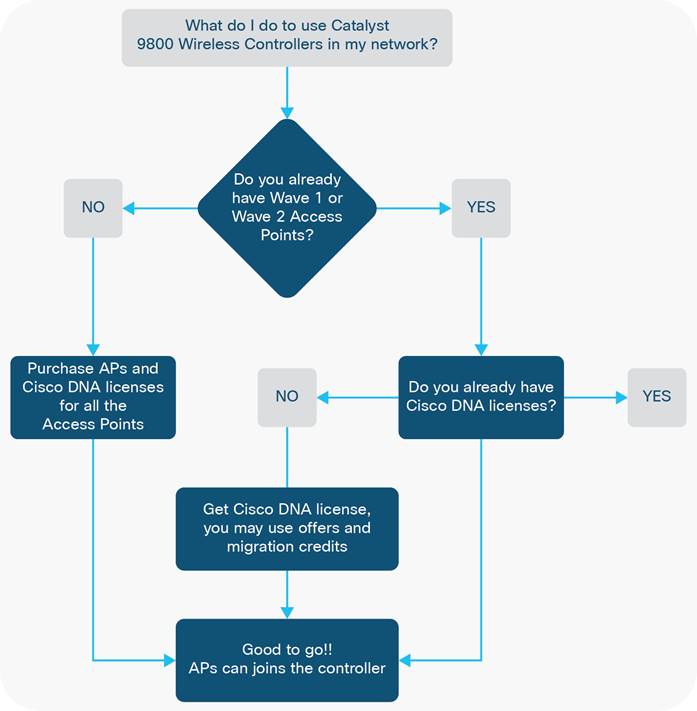
Determining license requirements for access points connecting to Cisco Catalyst 9800 Series Wireless Controllers
Access points connecting to a Cisco Catalyst 9800 Series controller have new and simplified software subscription packages. They can support both tiers of Cisco DNA software: Cisco DNA Essentials and Cisco DNA Advantage.
Cisco DNA software subscriptions provide Cisco innovations on the access point. They also include perpetual Network Essentials and Network Advantage licensing options, which cover wireless fundamentals such as 802.1X authentication, Quality of Service (QoS), and Plug and Play (PnP); telemetry and visibility and Single Sign-On (SSO), as well as security controls.
Cisco DNA subscription software has to be purchased for a 3-, 5-, or 7-year subscription term. If not renewed by the end of the term, Cisco DNA features will expire, whereas Network Essentials and Network Advantage features will remain.
For the full feature list of Cisco DNA Software, including the perpetual Network Essentials and Network Advantage, please see the feature matrix: https://www.cisco.com/c/m/en_us/products/software/dna-subscription-wireless/en-sw-sub-matrix-wireless.html?oid=porew018984.
Two modes of licensing are available:
● Smart Licensing (SL) simplifies and adds flexibility to licensing. It is:
◦ Simple: Procure, deploy, and manage licenses easily. Devices self-register, removing the need for Product Activation Keys (PAKs).
◦ Flexible: Pool license entitlements in a single account. Move licenses freely through the network, wherever you need them.
◦ Smart: Manage your license deployments with real-time visibility into ownership and consumption.
● Specific License Reservation (SLR) is a feature used in highly secure networks. It provides a method for customers to deploy a software license on a device (product instance) without communicating usage information to Cisco. There is no communication with Cisco or a satellite. The licenses are reserved for every controller. It is node-based licensing.
Four levels of license are supported on the Cisco Catalyst 9800 Series Wireless Controllers. The controllers can be configured to function at any one of the four levels.
● Cisco DNA Essentials: At this level the Cisco DNA Essentials feature set will be supported.
● Cisco DNA Advantage: At this level the Cisco DNA Advantage feature set will be supported.
● NE: At this level the Network Essentials feature set will be supported.
● NA: At this level the Network Advantage feature set will be supported.
For customers who purchase Cisco DNA Essentials, Network Essentials will be supported and will continue to function even after term expiration. And for customers who purchase Cisco DNA Advantage, Network Advantage will be supported and will continue to function even after term expiration.
Initial bootup of the controller will be at the Cisco DNA Advantage level.
Ordering information
Table 3. Ordering information
|
Product name |
Part number |
|
Cisco Aironet 1830 Series |
Cisco Aironet 1832i Access Point: Indoor environments, with internal antennas ● AIR-AP1832I-x-K9: Dual-band, controller-based 802.11a/g/n/ac, Wave 2
● AIR-AP1832I-x-K9C: Dual-band, controller-based 802.11a/g/n/ac, Wave 2, configurable, with default software Mobility Express
◦ Regulatory domains: (x = regulatory domain) ◦ For Mobility Express, part number AIR-AP1832I-x-K9C offers default software option Mobility Express Customers are responsible for verifying approval for use in their individual countries. To verify approval that corresponds to a particular country or the regulatory domain used in a specific country, visit https://www.cisco.com/go/aironet/compliance. Not all regulatory domains have been approved. As they are approved, the part numbers will be available on the Global Price List. |
Cisco Services
Realize the full business value of your technology investments faster with intelligent, customized services from Cisco and our partners. Backed by deep networking expertise and a broad ecosystem of partners, Cisco Wireless LAN Services help you deploy a sound, scalable mobility network that enables rich media collaboration while improving the operational efficiency gained from a converged wired and wireless network infrastructure based on the Cisco Unified Wireless Network. Together with partners, we offer expert plan, build, and run services to accelerate your transition to advanced mobility services while continuously optimizing the performance, reliability, and security of that architecture after it is deployed.
Cisco Wireless LAN Services
● AS-WLAN-CNSLT: Cisco Wireless LAN Network Planning and Design Service
● AS-WLAN-CNSLT: Cisco Wireless LAN 802.11n Migration Service
● AS-WLAN-CNSLT: Cisco Wireless LAN Performance and Security Assessment Service
| AIR-AP1832I-EK9-RF | |
| Cisco Wireless LAN Products | |
| 1830 Series Access Points | |
| 802.11ac Wave 2; 3x3:2SS; Int Ant; E Reg Dom REMANUFACTURED | |
| 469.50 | |
| 2021-04-29 |