
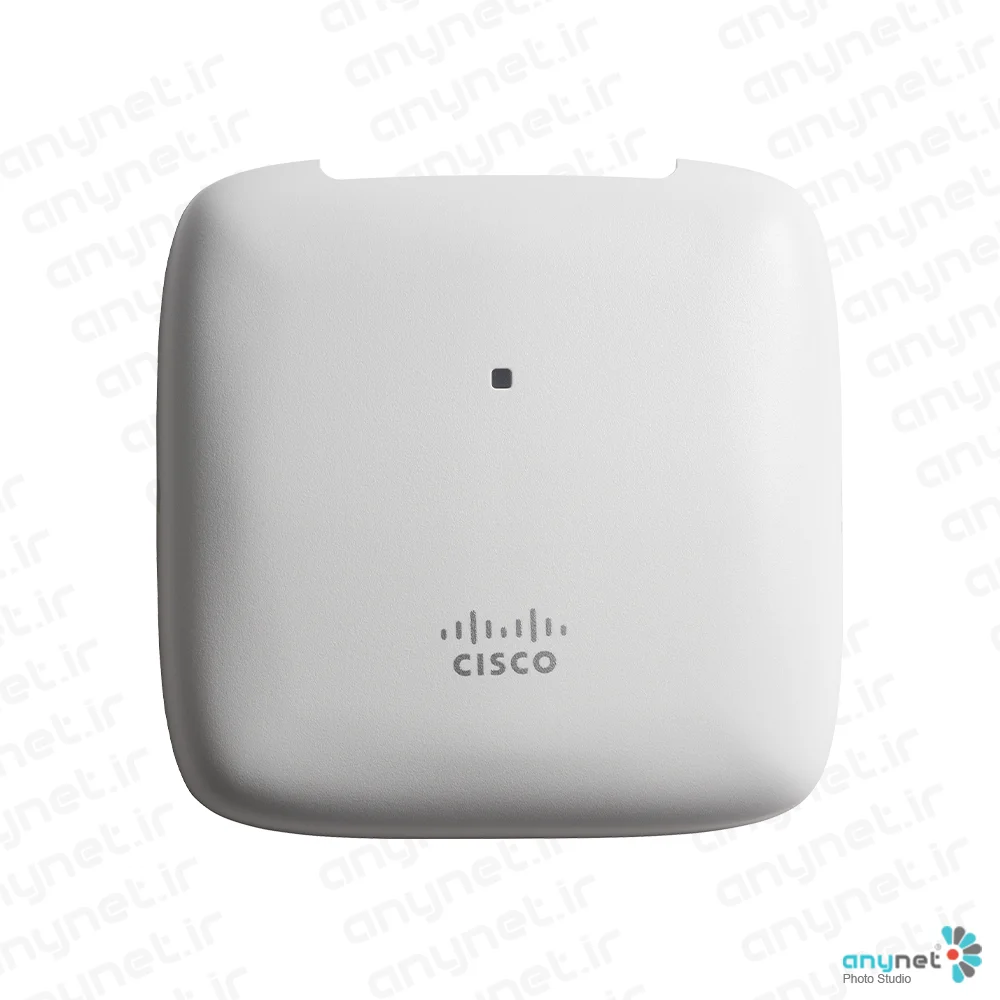

Cisco AIR-AP1840I-D-K9 Access Point
-
: AIR-AP1840I-D-K9
-
: Cisco Aironet AP1840I Series access point - D domain
-
: 1,028.59: 2021-04-29
- اطلاعات مربوط به تاریخ های پایان فروش و پایان پشتیبانی فنی (EOL/EOS - End-of-Sale and End-of-Life)
- تاریخ معرفی محصول:
- تاریخ پایان فروش:
- تاریخ پایان پشتیبانی:
Introduction
The Cisco Aironet 1840 Series access points represent a significant milestone in enterprise-grade wireless networking, specifically engineered to address the growing demands of modern, high-density environments. As businesses increasingly rely on mobile devices and bandwidth-intensive applications, the need for reliable, high-speed connectivity has never been more critical. This series is designed to provide a robust foundation for organizations looking to transition toward 802.11ac Wave 2 standards without compromising on performance or budget. By integrating advanced radio technology with intelligent software features, these access points ensure that users experience seamless connectivity, whether they are in a crowded office, a classroom, or a public venue.
At its core, the 1840 Series is built to simplify the deployment and management of wireless networks while maintaining the high security and reliability standards that Cisco is known for. The architecture focuses on optimizing the user experience by intelligently managing traffic and ensuring that critical applications receive the necessary bandwidth. This approach not only enhances productivity but also reduces the operational burden on IT departments. By leveraging the power of the Cisco Unified Wireless Network, the 1840 Series allows for centralized control, making it an ideal choice for small to medium-sized enterprises that require enterprise-class features in a compact and efficient form factor.
Product overview
The Cisco Aironet 1840 Series consists of several models, primarily the AIR-AP1840I, which is designed for indoor environments where aesthetics and performance must coexist. This access point utilizes 4x4 MU-MIMO technology with three spatial streams, allowing it to handle multiple client connections simultaneously. This capability is essential for environments where many devices are active at the same time, as it prevents bottlenecks and ensures that each device receives a fair share of the network resources. The hardware is encased in a sleek, low-profile design that blends into various professional settings, ensuring that the technology remains unobtrusive while delivering powerful wireless coverage.
In addition to the standard indoor model, the series is designed to work seamlessly with Cisco’s broader ecosystem, including the Mobility Express solution. This is particularly beneficial for organizations that may not have a dedicated hardware wireless controller on-site. The Mobility Express feature allows the access point to act as a virtual controller, simplifying the setup process and reducing the total cost of ownership. Furthermore, the 1840 Series supports advanced radio resource management, which automatically adjusts power levels and channel assignments to mitigate interference and maximize coverage. This level of automation is a game-changer for IT teams who need to maintain high network availability with limited manual intervention.
The series also emphasizes security and scalability, providing robust protection against unauthorized access and potential threats. By incorporating Cisco’s CleanAir technology, the 1840 Series can detect and mitigate interference from non-Wi-Fi sources, such as microwave ovens or Bluetooth devices, which often plague wireless performance in dense areas. This proactive approach to network health ensures that the wireless environment remains stable and secure. Whether an organization is looking to upgrade its existing infrastructure or build a new network from the ground up, the 1840 Series offers a versatile and future-proof solution that adapts to the evolving needs of the digital workplace.
Features and benefits
- Supports the 802.11ac Wave 2 standard, providing significantly higher data rates and improved efficiency compared to previous generations.
- Features 4x4 MU-MIMO with three spatial streams, which allows the access point to communicate with multiple clients simultaneously, drastically increasing overall network capacity.
- Includes Cisco Mobility Express, an integrated controller solution that simplifies deployment and management for small to medium-sized businesses without the need for a physical controller.
- Utilizes Cisco CleanAir technology to proactively detect and neutralize interference from non-Wi-Fi sources, ensuring a cleaner and more reliable wireless signal.
- Offers flexible deployment options, including support for both centralized and distributed architectures, allowing the network to grow alongside the business.
- Provides advanced security features, including WPA3 support and integrated threat detection, to protect sensitive data and prevent unauthorized network access.
- Features an energy-efficient design that helps organizations reduce their power consumption and operational costs while maintaining high performance.
- Includes integrated Bluetooth Low Energy (BLE) radio, enabling location-based services and asset tracking capabilities for enhanced operational insights.
- Supports seamless roaming, ensuring that mobile users maintain a stable connection as they move throughout the facility without experiencing drops or latency.
- Provides comprehensive management tools through Cisco DNA Center, allowing for centralized visibility, automated provisioning, and simplified troubleshooting across the entire wireless infrastructure.
The Cisco Aironet 1840 Series Access Points deliver an ideal blend of predictable performance in a compact form factor. Packed with 802.11ac Wave 2 features and Bluetooth Low Energy (BLE) for location-based services, this platform is ideal for small to midsize enterprise deployments.
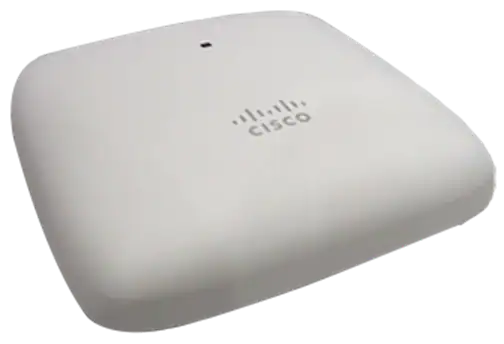
Cisco Aironet 1840 Series Access Point
Ideal for small and medium-sized networks, the Cisco Aironet 1840 Series delivers industry-leading performance for enterprise and service provider markets via enterprise-class 4x4 MU-MIMO, four-spatial-stream access points that support the Institute of Electrical and Electronic Engineers (IEEE) 802.11ac Wave 2 standard. Integrated BLE radio enables location-based use cases such as wayfinding and asset tracking. The 1840 Series t extends support to a new generation of Wi-Fi clients, such as smartphones, tablets, and high-performance laptops that have integrated 802.11ac Wave 1 or Wave 2 support.
With the 1840 Series, you can secure remote workers or the micro-office. Any Cisco Aironet or Catalyst access point can function as an OfficeExtend Access Point (OEAP). With an OEAP, an employee at home or in a temporary micro-office will have access to the corporate SSID and the corporate network without the need to set up a VPN or have any advanced technical know-how.
Cisco User Defined Network, a feature available in Cisco DNA Center, allows IT to give end users control of their very own wireless network partition on a shared network. End users can then remotely and securely deploy their devices on this network. Perfect for university dormitories or extended hospital stays, Cisco User Defined Network grants both device security and control, allowing each user to choose who can connect to their network. (Available second half of calendar year 2020)
The Wi-Fi 6 readiness dashboard is a new dashboard in the Assurance menu of Cisco DNA Center. It will look through the inventory of all devices on the network and verify device, software, and client compatibility with the new Wi-Fi 6 standard. After upgrading, advanced wireless analytics will indicate performance and capacity gains as a result of the Wi-Fi 6 deployment. This is an incredible tool that will help your team define where and how the wireless network should be upgraded. It will also give you insights into the access point distribution by protocol (802.11 ac/n/abg), wireless airtime efficiency by protocol, and granular performance metrics.
Features and benefits
Table 1. Features and benefits
|
Feature |
Benefit |
|
802.11ac Wave 1 and 2 capabilities |
The IEEE 802.11ac standard delivers a better experience in typical environments, and a more predictable performance for advanced applications such as 4K or 8K video, high-density high-definition collaboration apps, all-wireless offices and Internet-of-Things (IoT). |
|
Multiuser Multiple-Input Multiple-Output (MU‑MIMO) technology |
Supporting four spatial streams, MU-MIMO enables access points to split spatial streams between client devices, to maximize throughput. |
|
Intelligent Capture* |
Intelligent Capture probes the network and provides DNA Center with deep analysis. The software can track over 240 anomalies and instantaneously review all packets on demand, emulating the onsite network administrator. Intelligent Capture allows for more informed decisions on your wireless networks. |
|
Cisco Mobility Express* |
Mobility Express is designed for networks of all sizes, including small and medium-sized businesses and distributed enterprises. It provides industry-leading wireless LAN technology without the need for a physical controller or additional licenses. |
|
Bluetooth 4.2 |
Integrated BLE 4.2 radio to enable IoT use cases such as location tracking. |
Cisco DNA support
Pairing the 1840 Series Access Points with Cisco DNA allows for a total network transformation. Cisco DNA allows you to truly understand your network with real-time analytics, quickly detect and contain security threats, and easily provide network-wide consistency through automation and virtualization. By decoupling network functions from the hardware, you can build and manage your entire wired and wireless network from a single user interface.
Working together, the Aironet 1840 Series and Cisco DNA offer such features as:
● Cisco Spaces
● Fast Lane
● Cisco Identity Services Engine
● Cisco DNA Analytics and Assurance
● And much more
The result? Your network stays relevant, becomes digital-ready, and is the lifeblood of your organization.
Product specifications
Table 2. Specifications
|
Item |
Specification |
|||||||||||||||||||||||||
|
Part numbers |
Cisco Aironet 1840 Series Access Point: Indoor environments, with internal antennas ● AIR-AP1840I-x-K9: Aironet 1840
Cisco Aironet 1840 Series Access Point with Mobility Express: Indoor environments, with internal antennas ● AIR-AP1840I-x-K9C: Aironet 1840 Series with Mobility Express
Regulatory domains: (x = regulatory domain) Customers are responsible for verifying approval for use in their individual countries. To verify approval and to identify the regulatory domain that corresponds to a particular country, visit https://www.cisco.com/go/aironet/compliance. Not all regulatory domains have been approved. As they are approved, the part numbers will be available on the Global Price List. Cisco Wireless LAN Services ● AS-WLAN-CNSLT: Cisco Wireless LAN Network Planning and Design Service
● AS-WLAN-CNSLT: Cisco Wireless LAN 802.11n Migration Service
● AS-WLAN-CNSLT: Cisco Wireless LAN Performance and Security Assessment Service
|
|||||||||||||||||||||||||
|
Software |
● Cisco Unified Wireless Network Software Release 8.8 MR2 or later
● Cisco IOS XE Software Release 16.12 or later
|
|||||||||||||||||||||||||
|
Supported wireless LAN controllers |
● Cisco Catalyst 9800 Wireless Controllers
● Cisco 3500, 5520 and 8540 Series Wireless Controllers, Cisco Virtual Wireless Controller
● Cisco Mobility Express
|
|||||||||||||||||||||||||
|
802.11n version 2.0 (and related) capabilities |
● 5 GHz, 4x4 MIMO with four spatial streams
● 2.4 GHz, 2x2 MIMO with two spatial streams
● Maximal Ratio Combining (MRC)
● 802.11n and 802.11a/g beamforming
● 20 and 40 MHz channels
● PHY data rates up to 744 Mbps (40 MHz with 5 GHz and 20MHz with 2.4GHz)
● Packet aggregation: A-MPDU (Tx/Rx), A-MSDU (Tx/Rx)
● 802.11 Dynamic Frequency Selection (DFS)
● Cyclic Shift Diversity (CSD) support
|
|||||||||||||||||||||||||
|
802.11ac |
● 4x4 DL MU-MIMO with four spatial streams
● MRC
● 802.11ac beamforming
● 20, 40, 80 MHz channels
● PHY data rates up to 1733 Mbps (80MHz with 5 GHz)
● Packet aggregation: A-MPDU (Tx/Rx), A-MSDU (Tx/Rx)
● 802.11 DFS
● CSD support
|
|||||||||||||||||||||||||
|
Integrated antenna |
● 2.4 GHz, peak gain 4 dBi, internal antenna, omnidirectional in azimuth
● 5 GHz, peak gain 5 dBi, internal antenna, omnidirectional in azimuth
|
|||||||||||||||||||||||||
|
Interfaces |
● 2 x 10/100/1000BASE-T autosensing (RJ-45), Power over Ethernet (PoE)
● Management console port (RJ-45)
● USB 2.0 (enabled via future software)
|
|||||||||||||||||||||||||
|
Indicators |
● Status LED indicates boot loader status, association status, operating status, boot loader warnings, boot loader errors
|
|||||||||||||||||||||||||
|
Dimensions (W x L x H) |
● Access point (without mounting brackets): AIR-AP1840I: 7 x 7 x 1.5 in
|
|||||||||||||||||||||||||
|
Weight |
Cisco AIR-AP1840I ● 0.94 lb (0.43 kg)
|
|||||||||||||||||||||||||
|
Input power requirements |
● 802.3at PoE+, Cisco Universal PoE (Cisco UPOE)
● Cisco power injector, AIR-PWRINJ6=
● 802.3af PoE
● Cisco power injector, AIR-PWRINJ5= (note: this injector only supports 802.3af)
Note: When 802.3af PoE is the source of power, then USB port will be off |
|||||||||||||||||||||||||
|
Power draw |
Cisco AIR-AP1840I ● 13.2W at the PSE (12.1W at the PD) with all features enabled except for the USB port
● 17.8W at the PSE (16.0W at the PD) with the USB port enabled
|
|||||||||||||||||||||||||
|
Environmental |
Cisco AIR-AP1840I ● Nonoperating (storage) temperature: -22° to 158°F (-30° to 70°C)
● Nonoperating (storage) altitude test: 25˚C, 15,000 ft.
● Operating temperature: 32° to 122°F (0° to 50°C)
● Operating humidity: 10% to 90% (noncondensing)
● Operating altitude test: 40˚C, 9843 ft.
Note: when ambient operating temperature exceeds 40°C, then the radio transmit duty cycle may be limited to not greater than 50%. |
|||||||||||||||||||||||||
|
System memory |
● 1GB MB DRAM
● 256 MB flash
|
|||||||||||||||||||||||||
|
Warranty |
Limited lifetime hardware warranty |
|||||||||||||||||||||||||
|
Available transmit power settings3 |
2.4 GHz ● 20 dBm (100 mW)
● 17 dBm (50 mW)
● 14 dBm (25 mW)
● 11 dBm (12.5 mW)
● 8 dBm (6.25 mW)
● 5 dBm (3.13 mW)
● 2 dBm (1.56 mW)
● -1dBm (0.79 mW)
|
5 GHz ● 23 dBm (200 mW)
● 20 dBm (100 mW)
● 17 dBm (50 mW)
● 14 dBm (25 mW)
● 11 dBm (12.5 mW)
● 8 dBm (6.25 mW)
● 5 dBm (3.13 mW)
● 2 dBm (1.56 mW)
|
||||||||||||||||||||||||
|
Frequency band and 20-MHz operating channels |
A (A regulatory domain): ● 2.412 to 2.462 GHz; 11 channels
● 5.180 to 5.320 GHz; 8 channels
● 5.500 to 5.700 GHz; 8 channels (excludes 5.600 to 5.640 GHz)
● 5.745 to 5.825 GHz; 5 channels
B (B regulatory domain): ● 2.412 to 2.462 GHz; 11 channels
● 5.180 to 5.320 GHz; 8 channels
● 5.500 to 5.700 GHz; 11 channels
● 5.745 to 5.865 GHz; 7 channels
C (C regulatory domain): ● 2.412 to 2.472 GHz; 13 channels
● 5.745 to 5.825 GHz; 5 channels
D (D regulatory domain): ● 2.412 to 2.462 GHz; 11 channels
● 5.180 to 5.320 GHz; 8 channels
● 5.500 to 5.700 GHz; 11 channels
● 5.745 to 5.825 GHz; 5 channels
E (E regulatory domain): ● 2.412 to 2.472 GHz; 13 channels
● 5.180 to 5.320 GHz; 8 channels
● 5.500 to 5.700 GHz; 8 channels (excludes 5.600 to 5.640 GHz)
F (F regulatory domain): ● 2.412 to 2.472 GHz; 13 channels
● 5.250 to 5.350 GHz; 4 channels
● 5.725 to 5.825 GHz; 4 channels
G (G regulatory domain): ● 2.412 to 2.472 GHz; 13 channels
● 5.745 to 5.865 GHz; 7 channels
H (H regulatory domain): ● 2.412 to 2.472 GHz; 13 channels
● 5.180 to 5.320 GHz; 8 channels
● 5.745 to 5.825 GHz; 5 channels
|
I (I regulatory domain): ● 2.412 to 2.472 GHz; 13 channels
● 5.180 to 5.320 GHz; 8 channels
K (K regulatory domain): ● 2.412 to 2.472 GHz; 13 channels
● 5.180 to 5.320 GHz; 8 channels
● 5.500 to 5.620 GHz; 7 channels
● 5.745 to 5.805 GHz; 4 channels
N (N regulatory domain): ● 2.412 to 2.462 GHz; 11 channels
● 5.180 to 5.320 GHz; 8 channels
● 5.745 to 5.825 GHz; 5 channels
Q (Q regulatory domain): ● 2.412 to 2.472 GHz; 13 channels
● 5.180 to 5.320 GHz; 8 channels
● 5.500 to 5.700 GHz; 11 channels
R (R regulatory domain): ● 2.412 to 2.472 GHz; 13 channels
● 5.180 to 5.320 GHz; 8 channels
● 5.660 to 5,825 GHz; 8 channels (excludes 5.700 to 5.745 GHz)
S (S regulatory domain): ● 2.412 to 2.472 GHz; 13 channels
● 5.180 to 5.320 GHz; 8 channels
● 5.500 to 5.700 GHz; 11 channels
● 5.745 to 5.825 GHz; 5 channels
T (T regulatory domain): ● 2.412 to 2.462 GHz; 11 channels
● 5.180 to 5.320 GHz; 8 channels
● 5.500 to 5.700 GHz; 12 channels
● 5.745 to 5.825 GHz; 5 channels
Z (Z regulatory domain): ● 2.412 to 2.462 GHz; 11 channels
● 5.180 to 5.320 GHz; 8 channels
● 5.500 to 5.700 GHz; 8 channels (excludes 5.600 to 5.640 GHz)
● 5.745 to 5.825 GHz; 5 channels
|
||||||||||||||||||||||||
|
Note: Customers are responsible for verifying approval for use in their individual countries. To verify approval and to identify the regulatory domain that corresponds to a particular country, visit https://www.cisco.com/go/aironet/compliance. |
||||||||||||||||||||||||||
|
Maximum number of nonoverlapping channels |
2.4 GHz ● 802.11b/g:
◦ 20 MHz: 3 ● 802.11n:
◦ 20 MHz: 3 |
5 GHz ● 802.11a:
◦ 20 MHz: 26 FCC, 16 EU ● 802.11n:
◦ 20 MHz: 26 FCC, 16 EU ◦ 40 MHz: 12 FCC, 7 EU ● 802.11ac:
◦ 20 MHz: 26 FCC, 16 EU ◦ 40 MHz: 12 FCC, 7 EU ◦ 80 MHz: 5 FCC, 3 EU |
||||||||||||||||||||||||
|
Note: This varies by regulatory domain. Refer to the product documentation for specific details for each regulatory domain. |
||||||||||||||||||||||||||
|
Compliance standards |
● Safety:
◦ IEC 60950-1 ◦ EN 60950-1 ◦ AS/NZS 60950.1 ◦ UL 60950-1 ◦ CAN/CSA-C22.2 No. 60950-1 ◦ UL 2043 ◦ Class III Equipment ● EMC/EMI:
● Emissions:
◦ CISPR 32 (rev. 2015) ◦ EN 55032 (rev. 2012/AC:2013) ◦ EN 55032 (rev. 2015) ◦ EN61000-3-2 (rev. 2014) ◦ EN61000-3-3 (rev. 2013) ◦ KN61000-3-2 ◦ KN61000-3-3 ◦ AS/NZS CISPR 32 Class B (rev. 2015) ◦ 47 CFR FCC Part 15B ◦ ICES-003 (rev. 2016 Issue 6, Class B) ◦ VCCI (V3) ◦ CNS (rev. 13438) ◦ KN-32 ◦ TCVN 7189 (rev. 2009) ● Immunity:
◦ CISPR 24 (rev. 2010) ◦ EN 55024/EN 55035 (rev. 2010) ● Emissions and Immunity:
◦ EN 301 489-1 (v2.1.1 2017-02) ◦ EN 301 489-17 (v3.1.1 2017-02) ◦ QCVN (18:2014) ◦ KN 489-1 ◦ KN 489-17 ◦ EN 60601 (1-1:2015) ● Radio:
◦ EN 300 328 (v2.1.1) ◦ EN 301 893 (v2.1.1) ◦ AS/NZS 4268 (rev. 2017) ◦ 47 CFR FCC Part 15C, 15.247, 15.407 ◦ RSP-100 ◦ RSS-GEN ◦ RSS-247 ◦ China regulations SRRC ◦ LP0002 (rev 2018.1.10) ◦ Japan Std. 33a, Std. 66, and Std. 71 ● RF Safety:
◦ EN 50385 (rev. Aug 2002) ◦ ARPANSA ◦ AS/NZS 2772 (rev. 2016) ◦ EN 62209-1 (rev. 2016) ◦ EN 62209-2 (rev. 2010) ◦ 47 CFR Part 1.1310 and 2.1091 ◦ RSS-102 ● IEEE standards:
◦ IEEE 802.3 ◦ IEEE 802.3ab ◦ IEEE 802.3af/at ◦ IEEE 802.11 a/b/g/n/ac ◦ IEEE 802.11h, 802.11d ● Energy efficiency:
◦ Reg. 278/2009 EuP Lot 7, Tier 1 4/27/2010, Tier 2 4/27/2010 Level V ◦ Reg. 1275/2008 EuP Lot 6, Tier 1 1/7/2010, Tier 2 4/27/2013. Applies to EMC Class B products ◦ EISA 2007, Level V ◦ NRCan Level V ◦ AS/NZS 4665.2, MEPS Level V ◦ CECP Level V ● Security:
◦ 802.11i, Wi-Fi Protected Access 3 (WPA3), WPA2, WPA ◦ 802.1X ◦ Advanced Encryption Standards (AES) ● Extensible Authentication Protocol (EAP) types:
◦ EAP-Transport Layer Security (TLS) ◦ EAP-Tunneled TLS (TTLS) or Microsoft Challenge Handshake Authentication Protocol Version 2 (MSCHAPv2) ◦ Protected EAP (PEAP) v0 or EAP-MSCHAPv2 ◦ EAP-Flexible Authentication via Secure Tunneling (EAP-FAST) ◦ PEAP v1 or EAP-Generic Token Card (GTC) ◦ EAP-Subscriber Identity Module (SIM) |
|||||||||||||||||||||||||
|
Data rates supported |
802.11b: 1, 2, 5.5, and 11 Mbps |
|||||||||||||||||||||||||
|
802.11a/g: 6, 9, 12, 18, 24, 36, 48, and 54 Mbps |
||||||||||||||||||||||||||
|
802.11n data rates on 2.4 GHz (only 20 MHz and MCS 0 to MCS 15) and 5GHz |
||||||||||||||||||||||||||
|
MCS Index[1] |
GI[2] = 800 ns |
GI = 800 ns |
GI = 400 ns |
GI = 400 ns |
||||||||||||||||||||||
|
20-MHz Rate (Mbps) |
40-MHz Rate (Mbps) |
20-MHz Rate (Mbps) |
40-MHz Rate (Mbps) |
|||||||||||||||||||||||
|
0 |
6.5 |
13.5 |
7.2 |
15 |
||||||||||||||||||||||
|
1 |
13 |
27 |
14.4 |
30 |
||||||||||||||||||||||
|
2 |
19.5 |
40.5 |
21.7 |
45 |
||||||||||||||||||||||
|
3 |
26 |
54 |
28.9 |
60 |
||||||||||||||||||||||
|
4 |
39 |
81 |
43.3 |
90 |
||||||||||||||||||||||
|
5 |
52 |
108 |
57.8 |
120 |
||||||||||||||||||||||
|
6 |
58.5 |
121.5 |
65 |
135 |
||||||||||||||||||||||
|
7 |
65 |
135 |
72.2 |
150 |
||||||||||||||||||||||
|
8 |
13 |
27 |
14.4 |
30 |
||||||||||||||||||||||
|
9 |
26 |
54 |
28.9 |
60 |
||||||||||||||||||||||
|
10 |
39 |
81 |
43.3 |
90 |
||||||||||||||||||||||
|
11 |
52 |
108 |
57.8 |
120 |
||||||||||||||||||||||
|
12 |
78 |
162 |
86.7 |
180 |
||||||||||||||||||||||
|
13 |
104 |
216 |
115.6 |
240 |
||||||||||||||||||||||
|
14 |
117 |
243 |
130 |
270 |
||||||||||||||||||||||
|
15 |
130 |
270 |
144.4 |
300 |
||||||||||||||||||||||
|
16 |
19.5 |
40.5 |
21.7 |
45 |
||||||||||||||||||||||
|
17 |
39 |
81 |
43.4 |
90 |
||||||||||||||||||||||
|
18 |
58.5 |
121.5 |
65 |
135 |
||||||||||||||||||||||
|
19 |
78 |
162 |
86.7 |
180 |
||||||||||||||||||||||
|
20 |
117 |
243 |
130 |
270 |
||||||||||||||||||||||
|
21 |
156 |
324 |
173.3 |
360 |
||||||||||||||||||||||
|
22 |
175.5 |
364.5 |
195 |
405 |
||||||||||||||||||||||
|
23 |
195 |
405 |
216.7 |
450 |
||||||||||||||||||||||
|
24 |
26 |
54 |
28.9 |
60 |
||||||||||||||||||||||
|
25 |
52 |
108 |
57.8 |
120 |
||||||||||||||||||||||
|
26 |
78 |
162 |
86.7 |
180 |
||||||||||||||||||||||
|
27 |
104 |
216 |
115.6 |
240 |
||||||||||||||||||||||
|
28 |
156 |
324 |
173.3 |
360 |
||||||||||||||||||||||
|
29 |
208 |
432 |
231.1 |
480 |
||||||||||||||||||||||
|
30 |
234 |
486 |
260 |
540 |
||||||||||||||||||||||
|
31 |
260 |
540 |
288.9 |
600 |
||||||||||||||||||||||
|
802.11ac data rates (5 GHz): |
||||||||||||||||||||||||||
|
MCS |
Spatial Streams |
GI = 800 ns |
GI = 400 ns |
|||||||||||||||||||||||
|
20-MHz Rate (Mbps) |
40-MHz Rate (Mbps) |
80-MHz Rate (Mbps) |
20-MHz Rate (Mbps) |
40-MHz Rate (Mbps) |
80-MHz Rate (Mbps) |
|||||||||||||||||||||
|
0 |
1 |
6.5 |
13.5 |
29.3 |
7.2 |
15 |
32.5 |
|||||||||||||||||||
|
1 |
1 |
13 |
27 |
58.5 |
14.4 |
30 |
65 |
|||||||||||||||||||
|
2 |
1 |
19.5 |
40.5 |
87.8 |
21.7 |
45 |
97.5 |
|||||||||||||||||||
|
3 |
1 |
26 |
54 |
117 |
28.9 |
60 |
130 |
|||||||||||||||||||
|
4 |
1 |
39 |
81 |
175.5 |
43.3 |
90 |
195 |
|||||||||||||||||||
|
5 |
1 |
52 |
108 |
234 |
57.8 |
120 |
260 |
|||||||||||||||||||
|
6 |
1 |
58.5 |
121.5 |
263.3 |
65 |
135 |
292.5 |
|||||||||||||||||||
|
7 |
1 |
65 |
135 |
292.5 |
72.2 |
150 |
325 |
|||||||||||||||||||
|
8 |
1 |
78 |
162 |
351 |
86.7 |
180 |
390 |
|||||||||||||||||||
|
9 |
1 |
- |
180 |
390 |
- |
200 |
433.3 |
|||||||||||||||||||
|
MCS |
Spatial Streams |
GI = 800 ns |
GI = 400 ns |
|||||||||||||||||||||||
|
20-MHz Rate (Mbps) |
40-MHz Rate (Mbps) |
80-MHz Rate (Mbps) |
20-MHz Rate (Mbps) |
40-MHz Rate (Mbps) |
80-MHz Rate (Mbps) |
|||||||||||||||||||||
|
0 |
2 |
13 |
27 |
58.5 |
14.4 |
30 |
65 |
|||||||||||||||||||
|
1 |
2 |
26 |
54 |
117 |
28.9 |
60 |
130 |
|||||||||||||||||||
|
2 |
2 |
39 |
81 |
175.5 |
43.3 |
90 |
195 |
|||||||||||||||||||
|
3 |
2 |
52 |
108 |
234 |
57.8 |
120 |
260 |
|||||||||||||||||||
|
4 |
2 |
78 |
162 |
351 |
86.7 |
180 |
390 |
|||||||||||||||||||
|
5 |
2 |
104 |
216 |
468 |
115.6 |
240 |
520 |
|||||||||||||||||||
|
6 |
2 |
117 |
243 |
526.5 |
130 |
270 |
585 |
|||||||||||||||||||
|
7 |
2 |
130 |
270 |
585 |
144.4 |
300 |
650 |
|||||||||||||||||||
|
8 |
2 |
156 |
324 |
702 |
173.3 |
360 |
780 |
|||||||||||||||||||
|
9 |
2 |
- |
360 |
780 |
- |
400 |
866.7 |
|||||||||||||||||||
|
MCS |
Spatial Streams |
GI = 800 ns |
GI = 400 ns |
|||||||||||||||||||||||
|
20-MHz Rate (Mbps) |
40-MHz Rate (Mbps) |
80-MHz Rate (Mbps) |
20-MHz Rate (Mbps) |
40-MHz Rate (Mbps) |
80-MHz Rate (Mbps) |
|||||||||||||||||||||
|
0 |
3 |
19.5 |
40.5 |
87.8 |
21.7 |
45 |
97.5 |
|||||||||||||||||||
|
1 |
3 |
39 |
81 |
175.5 |
43.3 |
90 |
195 |
|||||||||||||||||||
|
2 |
3 |
58.5 |
121.5 |
263.3 |
65 |
135 |
292.5 |
|||||||||||||||||||
|
3 |
3 |
78 |
162 |
351 |
86.7 |
180 |
390 |
|||||||||||||||||||
|
4 |
3 |
117 |
243 |
526.5 |
130 |
270 |
585 |
|||||||||||||||||||
|
5 |
3 |
156 |
324 |
702 |
173.3 |
360 |
780 |
|||||||||||||||||||
|
6 |
3 |
175.5 |
364.5 |
- |
195 |
405 |
- |
|||||||||||||||||||
|
7 |
3 |
195 |
405 |
877.5 |
216.7 |
450 |
975 |
|||||||||||||||||||
|
8 |
3 |
234 |
486 |
1053 |
260 |
540 |
1170 |
|||||||||||||||||||
|
9 |
3 |
260 |
540 |
1170 |
288.9 |
600 |
1300 |
|||||||||||||||||||
|
MCS |
Spatial Streams |
GI = 800 ns |
GI = 400 ns |
|||||||||||||||||||||||
|
20-MHz Rate (Mbps) |
40-MHz Rate (Mbps) |
80-MHz Rate (Mbps) |
20-MHz Rate (Mbps) |
40-MHz Rate (Mbps) |
80-MHz Rate (Mbps) |
|||||||||||||||||||||
|
0 |
4 |
26 |
54 |
117 |
28.8 |
60 |
130 |
|||||||||||||||||||
|
1 |
4 |
52 |
108 |
234 |
57.8 |
120 |
260 |
|||||||||||||||||||
|
2 |
4 |
78 |
162 |
351 |
86.7 |
180 |
390 |
|||||||||||||||||||
|
3 |
4 |
104 |
216 |
468 |
115.6 |
240 |
520 |
|||||||||||||||||||
|
4 |
4 |
156 |
324 |
702 |
173.3 |
360 |
780 |
|||||||||||||||||||
|
5 |
4 |
208 |
432 |
936 |
231.1 |
480 |
1040 |
|||||||||||||||||||
|
6 |
4 |
234 |
486 |
1053 |
260 |
540 |
1170 |
|||||||||||||||||||
|
7 |
4 |
260 |
540 |
1170 |
288.9 |
600 |
1300 |
|||||||||||||||||||
|
8 |
4 |
312 |
648 |
1404 |
346.7 |
720 |
1560 |
|||||||||||||||||||
|
9 |
4 |
- |
720 |
1560 |
- |
800 |
1733.3 |
|||||||||||||||||||
|
Transmit Power and Receive Sensitivity |
||||||||||||||||||||||||||
|
5-GHz Radio |
2.4-GHz Radio |
|||||||||||||||||||||||||
|
Spatial Streams |
Total Tx Power (dBm) |
Rx Sensitivity (dBm) |
Total Tx Power (dBm) |
Rx Sensitivity (dBm) |
||||||||||||||||||||||
|
802.11/11b |
||||||||||||||||||||||||||
|
1 Mbps |
1 |
- |
- |
20 |
-99 |
|||||||||||||||||||||
|
11 Mbps |
1 |
- |
- |
20 |
-91 |
|||||||||||||||||||||
|
802.11a/g |
||||||||||||||||||||||||||
|
6 Mbps |
1 |
23 |
-94 |
20 |
-93 |
|||||||||||||||||||||
|
24 Mbps |
1 |
23 |
-86 |
20 |
-85 |
|||||||||||||||||||||
|
54 Mbps |
1 |
23 |
-77 |
20 |
-76 |
|||||||||||||||||||||
|
802.11n HT20 |
||||||||||||||||||||||||||
|
MCS0 |
1 |
23 |
-94 |
20 |
-93 |
|||||||||||||||||||||
|
MCS4 |
1 |
23 |
-81 |
20 |
-81 |
|||||||||||||||||||||
|
MCS7 |
1 |
23 |
-74 |
20 |
-73 |
|||||||||||||||||||||
|
MCS8 |
2 |
23 |
-93 |
20 |
-93 |
|||||||||||||||||||||
|
MCS12 |
2 |
23 |
-81 |
20 |
-81 |
|||||||||||||||||||||
|
MCS15 |
2 |
23 |
-75 |
20 |
-75 |
|||||||||||||||||||||
|
MCS16 |
3 |
23 |
-93 |
- |
- |
|||||||||||||||||||||
|
MCS20 |
3 |
23 |
-81 |
- |
- |
|||||||||||||||||||||
|
MCS23 |
3 |
23 |
-74 |
- |
- |
|||||||||||||||||||||
|
MCS24 |
4 |
23 |
-92 |
- |
- |
|||||||||||||||||||||
|
MCS28 |
4 |
23 |
-82 |
- |
- |
|||||||||||||||||||||
|
MCS31 |
4 |
23 |
-75 |
- |
- |
|||||||||||||||||||||
|
802.11n HT40 |
||||||||||||||||||||||||||
|
MCS0 |
1 |
23 |
-91 |
- |
- |
|||||||||||||||||||||
|
MCS4 |
1 |
23 |
-79 |
- |
- |
|||||||||||||||||||||
|
MCS7 |
1 |
23 |
-72 |
- |
- |
|||||||||||||||||||||
|
MCS8 |
2 |
23 |
-90 |
- |
- |
|||||||||||||||||||||
|
MCS12 |
2 |
23 |
-78 |
- |
- |
|||||||||||||||||||||
|
MCS15 |
2 |
23 |
-71 |
- |
- |
|||||||||||||||||||||
|
MCS16 |
3 |
23 |
-89 |
- |
- |
|||||||||||||||||||||
|
MCS20 |
3 |
23 |
-78 |
- |
- |
|||||||||||||||||||||
|
MCS23 |
3 |
23 |
-70 |
- |
- |
|||||||||||||||||||||
|
MCS24 |
4 |
23 |
-90 |
- |
- |
|||||||||||||||||||||
|
MCS28 |
4 |
23 |
-79 |
- |
- |
|||||||||||||||||||||
|
MCS31 |
4 |
23 |
-72 |
- |
- |
|||||||||||||||||||||
|
802.11ac VHT20 |
||||||||||||||||||||||||||
|
MCS0 |
1 |
23 |
-94 |
- |
- |
|||||||||||||||||||||
|
MCS4 |
1 |
23 |
-81 |
- |
- |
|||||||||||||||||||||
|
MCS7 |
1 |
23 |
-74 |
- |
- |
|||||||||||||||||||||
|
MCS8 |
1 |
23 |
-70 |
- |
- |
|||||||||||||||||||||
|
MCS9 |
1 |
23 |
NA |
- |
- |
|||||||||||||||||||||
|
MCS0 |
2 |
23 |
-92 |
- |
- |
|||||||||||||||||||||
|
MCS4 |
2 |
23 |
-81 |
- |
- |
|||||||||||||||||||||
|
MCS7 |
2 |
23 |
-73 |
- |
- |
|||||||||||||||||||||
|
MCS8 |
2 |
23 |
-68 |
- |
- |
|||||||||||||||||||||
|
MCS9 |
2 |
23 |
NA |
- |
- |
|||||||||||||||||||||
|
MCS0 |
3 |
23 |
-92 |
- |
- |
|||||||||||||||||||||
|
MCS4 |
3 |
23 |
-81 |
- |
- |
|||||||||||||||||||||
|
MCS7 |
3 |
23 |
-73 |
- |
- |
|||||||||||||||||||||
|
MCS8 |
3 |
23 |
-68 |
- |
- |
|||||||||||||||||||||
|
MCS9 |
3 |
23 |
-67 |
- |
- |
|||||||||||||||||||||
|
MCS0 |
4 |
23 |
-91 |
- |
- |
|||||||||||||||||||||
|
MCS4 |
4 |
23 |
-80 |
- |
- |
|||||||||||||||||||||
|
MCS7 |
4 |
23 |
-73 |
- |
- |
|||||||||||||||||||||
|
MCS8 |
4 |
23 |
-68 |
- |
- |
|||||||||||||||||||||
|
MCS9 |
4 |
23 |
NA |
- |
- |
|||||||||||||||||||||
|
802.11ac VHT40 |
||||||||||||||||||||||||||
|
MCS0 |
1 |
23 |
-91 |
- |
- |
|||||||||||||||||||||
|
MCS4 |
1 |
23 |
-79 |
- |
- |
|||||||||||||||||||||
|
MCS7 |
1 |
23 |
-72 |
- |
- |
|||||||||||||||||||||
|
MCS8 |
1 |
23 |
-67 |
- |
- |
|||||||||||||||||||||
|
MCS9 |
1 |
23 |
-66 |
- |
- |
|||||||||||||||||||||
|
MCS0 |
2 |
23 |
-90 |
- |
- |
|||||||||||||||||||||
|
MCS4 |
2 |
23 |
-78 |
- |
- |
|||||||||||||||||||||
|
MCS7 |
2 |
23 |
-71 |
- |
- |
|||||||||||||||||||||
|
MCS8 |
2 |
23 |
-66 |
- |
- |
|||||||||||||||||||||
|
MCS9 |
2 |
23 |
-65 |
- |
- |
|||||||||||||||||||||
|
MCS0 |
3 |
23 |
-89 |
- |
- |
|||||||||||||||||||||
|
MCS4 |
3 |
23 |
-78 |
- |
- |
|||||||||||||||||||||
|
MCS7 |
3 |
23 |
-71 |
- |
- |
|||||||||||||||||||||
|
MCS8 |
3 |
23 |
-64 |
- |
- |
|||||||||||||||||||||
|
MCS9 |
3 |
23 |
-62 |
- |
- |
|||||||||||||||||||||
|
MCS0 |
4 |
23 |
-88 |
- |
- |
|||||||||||||||||||||
|
MCS4 |
4 |
23 |
-78 |
- |
- |
|||||||||||||||||||||
|
MCS7 |
4 |
23 |
-70 |
- |
- |
|||||||||||||||||||||
|
MCS8 |
4 |
23 |
-65 |
- |
- |
|||||||||||||||||||||
|
MCS9 |
4 |
23 |
-64 |
- |
- |
|||||||||||||||||||||
|
802.11ac VHT80 |
||||||||||||||||||||||||||
|
MCS0 |
1 |
23 |
-88 |
- |
- |
|||||||||||||||||||||
|
MCS4 |
1 |
23 |
-76 |
- |
- |
|||||||||||||||||||||
|
MCS7 |
1 |
23 |
-68 |
- |
- |
|||||||||||||||||||||
|
MCS8 |
1 |
23 |
-64 |
- |
- |
|||||||||||||||||||||
|
MCS9 |
1 |
23 |
-62 |
- |
- |
|||||||||||||||||||||
|
MCS0 |
2 |
23 |
-87 |
- |
- |
|||||||||||||||||||||
|
MCS4 |
2 |
23 |
-75 |
- |
- |
|||||||||||||||||||||
|
MCS7 |
2 |
23 |
-68 |
- |
- |
|||||||||||||||||||||
|
MCS8 |
2 |
23 |
-63 |
- |
- |
|||||||||||||||||||||
|
MCS9 |
2 |
23 |
-62 |
- |
- |
|||||||||||||||||||||
|
MCS0 |
3 |
23 |
-86 |
- |
- |
|||||||||||||||||||||
|
MCS4 |
3 |
23 |
-75 |
- |
- |
|||||||||||||||||||||
|
MCS7 |
3 |
23 |
-67 |
- |
- |
|||||||||||||||||||||
|
MCS8 |
3 |
23 |
-62 |
- |
- |
|||||||||||||||||||||
|
MCS9 |
3 |
23 |
-61 |
- |
- |
|||||||||||||||||||||
|
MCS0 |
4 |
23 |
-85 |
- |
- |
|||||||||||||||||||||
|
MCS4 |
4 |
23 |
-74 |
- |
- |
|||||||||||||||||||||
|
MCS7 |
4 |
23 |
-67 |
- |
- |
|||||||||||||||||||||
|
MCS8 |
4 |
23 |
-61 |
- |
- |
|||||||||||||||||||||
|
MCS9 |
4 |
23 |
-59 |
- |
- |
|||||||||||||||||||||
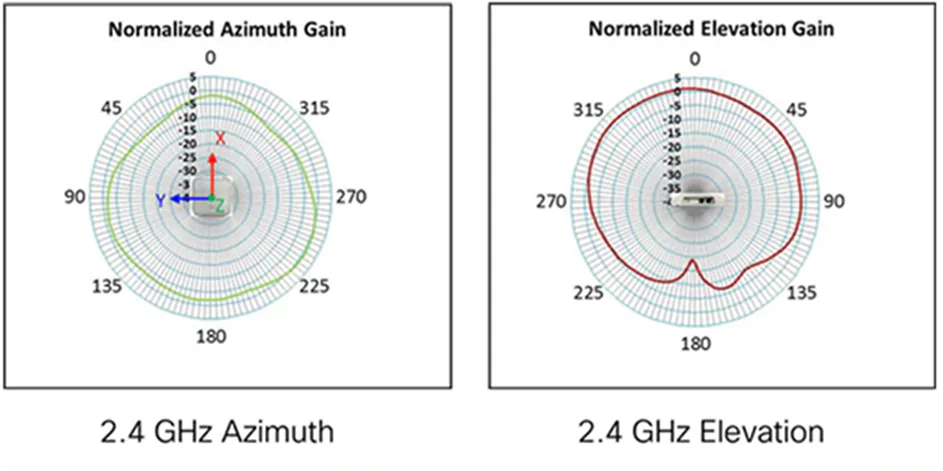
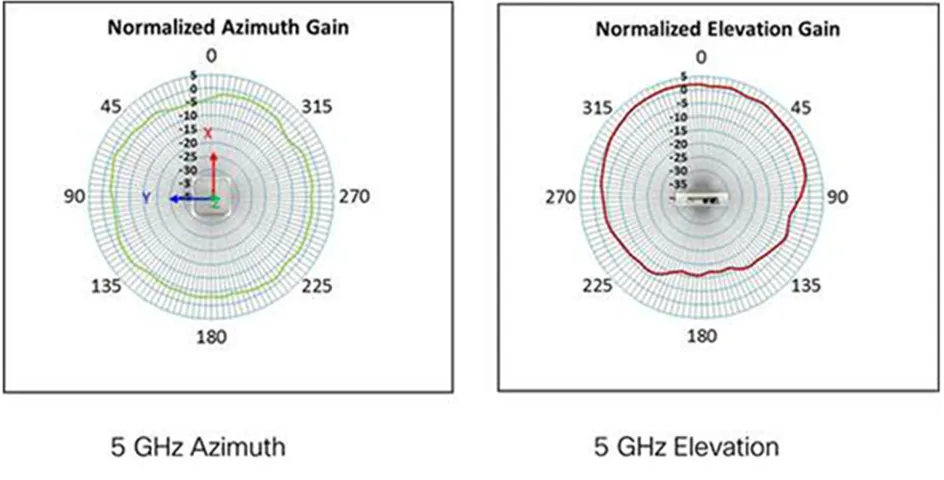
Antenna patterns for AP1840I
Licensing
In order to connect any access points to the controller, Cisco DNA software subscriptions are required. To be entitled to connect to Cisco Catalyst 9800 Series Wireless Controller, the access point requires a Cisco DNA subscription license.
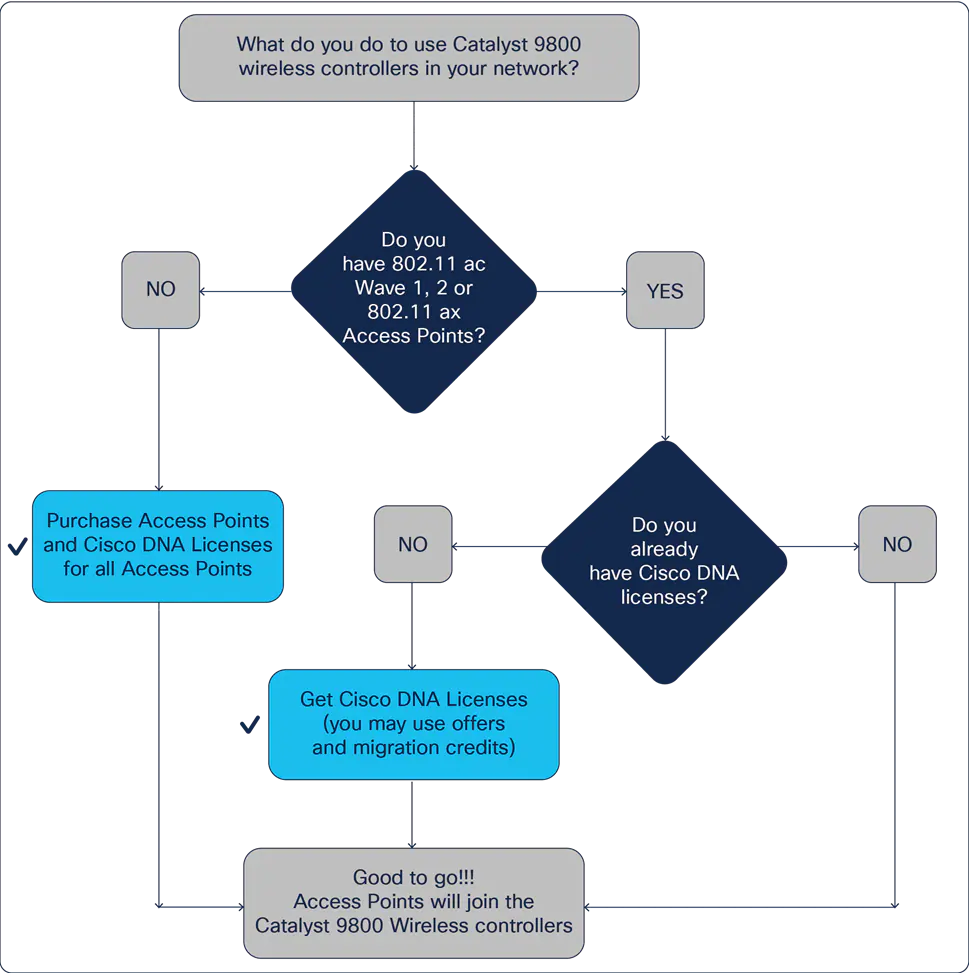
Determining license requirements for access points connecting to Cisco Catalyst 9800 Series Wireless Controllers
The access points connecting to a Cisco Catalyst 9800 Series controller have new and simplified software subscription packages.
They can support both tiers of Cisco DNA software: Cisco DNA Essentials and Cisco DNA Advantage.
Cisco DNA software subscriptions provide Cisco innovations on the access point. They also include perpetual Network Essentials and Network Advantage licensing options, which cover wireless fundamentals such as 802.1X authentication, Quality of Service (QoS), and Plug and Play (PnP); telemetry and visibility, and Single-Sign-On (SSO), as well as security controls.
Cisco DNA subscription software has to be purchased for a 3-, 5-, or 7-year subscription term. If not renewed by the end of the term, Cisco DNA features will expire, whereas Network Essentials and Network Advantage features will remain.
For the full feature list of Cisco DNA Software, including the perpetual Network Essentials and Network advantage, please see the feature matrix:
Two modes of licensing are available
● Smart Licensing (SL) simplifies and adds flexibility to licensing. It is:
● Simple: Procure, deploy, and manage licenses easily. Devices self-register, removing the need for Product Activation Keys (PAKs).
● Flexible: Pool license entitlements in a single account. Move licenses freely through the network, wherever you need them.
● Smart: Manage your license deployments with real-time visibility into ownership and consumption.
● Specific License Reservation (SLR) is a feature used in highly secure networks. It provides a method for customers to deploy a software license on a device (product instance) without communicating usage information to Cisco. There is no communication with Cisco or a satellite. The licenses are reserved for every controller. It is node-based licensing.
Four levels of license are supported on the Cisco Catalyst 9800 Series Wireless Controllers. The controllers can be configured to function at any one of the four levels
● Cisco DNA Essentials: At this level the Cisco DNA Essentials feature set will be supported.
● Cisco DNA Advantage: At this level the Cisco DNA Advantage feature set will be supported.
● NE: At this level the Network Essentials feature set will be supported.
● NA: At this level the Network Advantage feature set will be supported.
For customers who purchase Cisco DNA Essentials, Network Essentials will be supported and will continue to function even after term expiration. And for customers who purchase Cisco DNA Advantage, Network Advantage will be supported and will continue to function even after term expiration.
Initial bootup of the controller will be at the Cisco DNA Advantage level.
| AIR-AP1840I-D-K9 | |
| Cisco Wireless LAN Products | |
| Cisco Aironet AP1840 Series access point | |
| Cisco Aironet AP1840I Series access point - D domain | |
| 1,028.59 | |
| 2021-04-29 |