
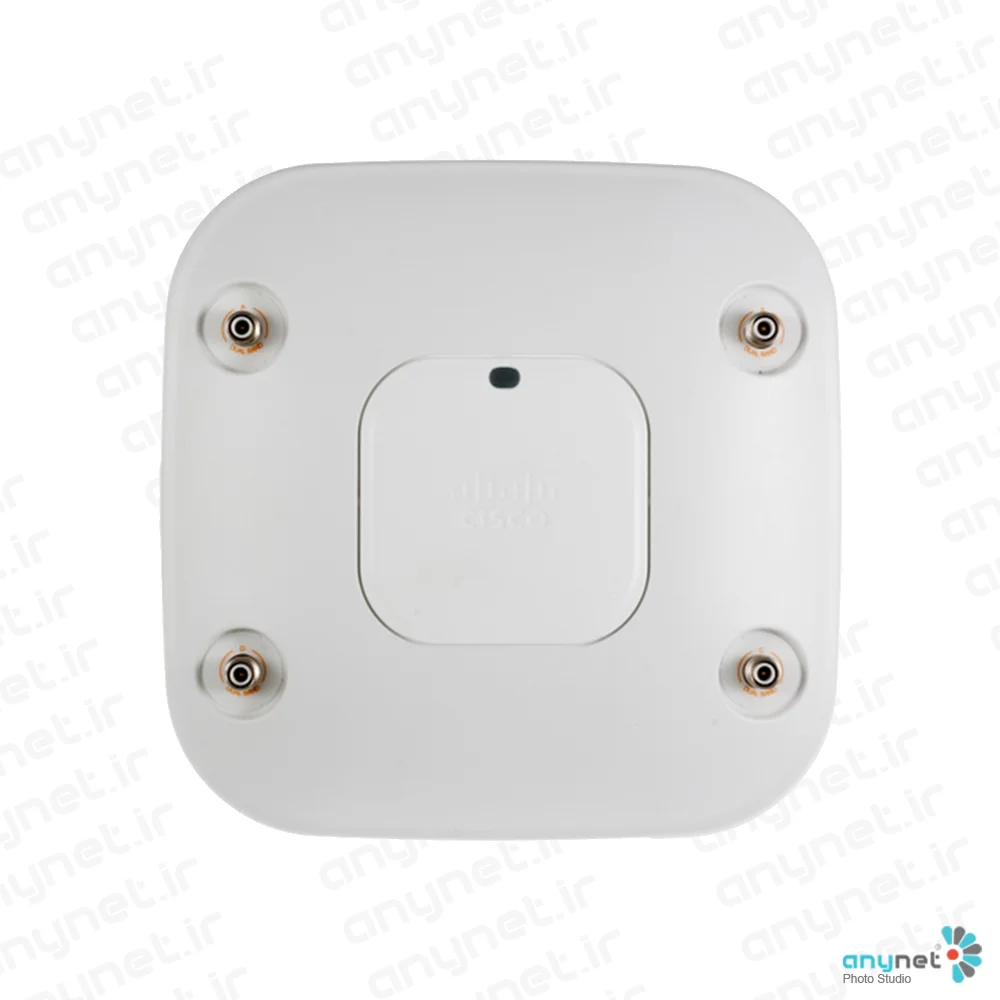

Cisco AIR-CAP2602E-E-K9 Access Point
- اطلاعات مربوط به تاریخ های پایان فروش و پایان پشتیبانی فنی (EOL/EOS - End-of-Sale and End-of-Life)
- تاریخ معرفی محصول:
- تاریخ پایان فروش:
- تاریخ پایان پشتیبانی:
Introduction
The Cisco Aironet 2600 Series Access Point stands as a pivotal milestone in enterprise-grade wireless networking, specifically engineered to address the growing demands of high-density environments. As mobile devices continue to proliferate within corporate infrastructures, the necessity for reliable, high-speed, and secure connectivity has never been more critical. This series was developed to bridge the gap between standard connectivity and the high-performance requirements of modern business applications, ensuring that users experience seamless mobility without compromising on network integrity. By leveraging the 802.11n standard, Cisco provided a robust solution that balances cost-effectiveness with advanced technological capabilities, making it an ideal choice for organizations looking to modernize their wireless footprint.
The architecture of the Aironet 2600 Series is built upon the foundation of Cisco’s CleanAir technology, which is designed to proactively manage interference and optimize radio frequency performance. This series is not merely about providing a signal; it is about creating an intelligent network that can adapt to the unpredictable nature of wireless environments. Whether deployed in a large campus, a healthcare facility, or a corporate office, the 2600 Series ensures that mission-critical data is delivered with low latency and high reliability. By focusing on scalability and ease of management, Cisco has enabled IT departments to deploy and maintain complex wireless networks with greater efficiency, ultimately supporting the digital transformation goals of diverse enterprises.
Product overview
The Cisco Aironet 2600 Series Access Point is a versatile, dual-radio, 802.11n-based platform that offers significant performance improvements over its predecessors. It features a 3x3 Multiple-Input Multiple-Output (MIMO) configuration with three spatial streams, which allows for higher throughput and better coverage across a wide range of client devices. The product is available in two primary models: the AIR-CAP2602I, which includes integrated antennas for aesthetic and simplified deployments, and the AIR-CAP2602E, which features external antenna connectors for specialized coverage requirements, such as high-ceiling warehouses or directional needs. Both models are designed to operate within the Cisco Unified Wireless Network, allowing for centralized management through Cisco wireless LAN controllers.
Beyond the hardware specifications, the 2600 Series is deeply integrated with Cisco’s broader ecosystem, including the Cisco Wireless Controller software and the Cisco Prime Infrastructure. This integration ensures that administrators have granular visibility into network traffic, client behavior, and security threats. The access point supports both autonomous and lightweight modes, providing flexibility for different deployment scenarios. Furthermore, the series is built to be future-proof, incorporating hardware-accelerated features that handle complex tasks like radio resource management and security encryption without taxing the main processor. This design philosophy ensures that the access point remains responsive even under heavy load, maintaining consistent performance levels that businesses rely on for their daily operations.
Features and benefits
- Cisco CleanAir Technology: Provides proactive, high-speed spectrum intelligence to combat performance problems caused by wireless interference, ensuring a self-healing and self-optimizing network environment.
- ClientLink 2.0: Enhances the performance and range for both 802.11n and legacy 802.11a/g clients by improving the signal-to-noise ratio, which results in a better overall user experience for all connected devices.
- 3x3 MIMO with Three Spatial Streams: Delivers a theoretical data rate of up to 450 Mbps, providing the necessary bandwidth for high-demand applications such as video conferencing and voice over wireless LAN.
- Integrated and External Antenna Options: Offers flexibility for various physical environments, allowing IT teams to choose between the sleek integrated design of the 2602I or the specialized coverage capabilities of the 2602E.
- Cisco Unified Wireless Network Integration: Enables seamless roaming and centralized management, reducing the operational complexity of maintaining large-scale wireless deployments across multiple locations.
- Advanced Security Features: Includes support for 802.11i, Wi-Fi Protected Access 2 (WPA2), and 802.1X, ensuring that the network remains protected against unauthorized access and potential security breaches.
- Energy-Efficient Design: Incorporates power-saving features that align with modern green IT initiatives, reducing the overall power consumption of the wireless infrastructure without sacrificing performance.
- Hardware-Accelerated Performance: Offloads critical tasks to dedicated hardware, ensuring that the access point maintains high throughput and low latency even when advanced security and management features are enabled.
- Simplified Deployment and Management: Compatible with Cisco Prime Infrastructure and Cisco wireless controllers, allowing for rapid provisioning, monitoring, and troubleshooting of the entire wireless network from a single pane of glass.
- Robust Reliability: Engineered for high-density environments, the 2600 Series provides the stability required for mission-critical business operations, minimizing downtime and maximizing productivity for mobile users.
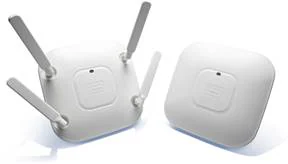
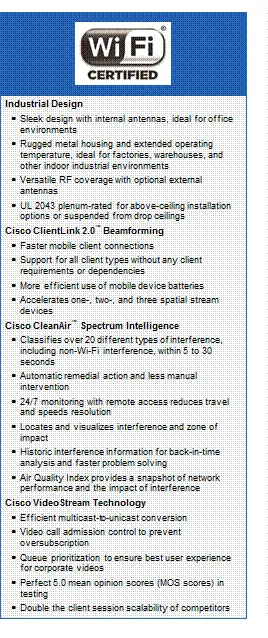 The new Cisco® Aironet® 2600 Series Access Point delivers the most advanced features in its class - with great performance, functionality, and reliability at a great price. The 802.11n based Aironet 2600 Series includes 3x4 MIMO, with three spatial streams, plus Cisco CleanAir™, ClientLink 2.0™, and VideoStream technologies, to help ensure an interference-free, high-speed wireless application experience. Second only to the Cisco Aironet 3600 Series in performance and features, the Aironet 2600 Series sets the new standard for enterprise wireless technology.
Designed with rapidly evolving mobility needs in mind, the Aironet 2600 Series access point is packed with more Bring Your Own Device (BYOD)-enhancing functionality than any other access point at its price point. The new Cisco Aironet 2600 Series sustains reliable connections at higher speeds farther from the access point than competing solutions resulting in more availability of 450-Mbps data rates. Optimized for consumer devices, the Aironet 2600 Series accelerates client connections and consumes less mobile device battery power than competing solutions.
RF Excellence
The Cisco Aironet 2600 Series is ideal for enterprise networks of any size that need high-performance, secure, and reliable Wi-Fi connectivity for consumer devices, high-performance laptops, and specialized industry equipment such as point-of-sale devices and wireless medical equipment. Enterprise-class silicon and optimized radios deliver a robust mobility experience that includes:
● 802.11n with 3x4 multiple-input multiple-output (MIMO) technology with three spatial streams, which sustains 450-Mbps rates over a greater range for more capacity and reliability than competing access points.
● Cisco ClientLink 2.0 technology to improve downlink performance and range for all mobile devices, including one-, two-, and three- spatial stream devices on 802.11n, while improving battery life on mobile devices such as smartphones and tablets.
● Cisco CleanAir technology, which provides proactive, high-speed spectrum intelligence to combat performance problems due to wireless interference for a self-healing, self-optimized network.
All of these features help ensure the best possible end-user experience on the wireless network.
Cisco also offers the industry’s broadest selection of 802.11n antennas delivering optimal coverage for a variety of deployment scenarios.
Scalability
The Cisco Aironet 2600 Series is a component of the Cisco Unified Wireless Network, which can scale to up to 18,000 access points with full Layer 3 mobility across central or remote locations on the enterprise campus, in branch offices, and at remote sites. The Cisco Unified Wireless Network is the industry’s most flexible, resilient, and scalable architecture delivering secure access to mobility services and applications, and offering the lowest total cost of ownership and investment protection by integrating seamlessly with the existing wired network.
Product Specifications
Table 1 lists the product specifications for Cisco Aironet 2600 Series Access Points.
Table 1. Product Specifications for Cisco Aironet 2600 Series Access Points
|
Item |
Specification |
|||||||
|
Part Numbers |
The Cisco Aironet 2600i Access Point: Indoor environments with internal antennas ● AIR-CAP2602I-x-K9: Dual-band controller-based 802.11a/g/n
● AIR-CAP2602I-xK910: Eco-pack (dual-band 802.11a/g/n) 10 quantity access points
● AIR-SAP2602I-x-K9: Dual-band autonomous 802.11a/g/n
● AIR-SAP2602I-x-K95: Eco-pack (dual-band 802.11a/g/n) 5 quantity access points
The Cisco Aironet 2600e Access Point: Indoor, challenging environments with external antennas ● AIR-CAP2602E-x-K9: Dual-band controller-based 802.11a/g/n
● AIR-CAP2602E-xK910: Eco-pack (dual-band 802.11a/g/n) 10 quantity access points
● AIR-SAP2602E-x-K9: Dual-band autonomous 802.11a/g/n
● AIR-SAP2602E-x-K95: Eco-pack (dual-band 802.11a/g/n) 5 quantity access points
Cisco SMARTnet® Service for the Cisco Aironet 2600i Access Point with internal and External antennas ● CON-SNT-y - SMARTnet 8x5xNBD 2600i/e access point (dual-band 802.11 a/g/n)
(e.g. CON-SNT-C262IE for AP2600 internal antenna for E Domain)
Cisco Wireless LAN Services ● AS-WLAN-CNSLT - Cisco Wireless LAN Network Planning and Design Service
● AS-WLAN-CNSLT - Cisco Wireless LAN 802.11n Migration Service
● AS-WLAN-CNSLT - Cisco Wireless LAN Performance and Security Assessment Service
Regulatory Domains: (x = regulatory domain) Customers are responsible for verifying approval for use in their individual countries. To verify approval and to identify the regulatory domain that corresponds to a particular country, visit: http://www.cisco.com/go/aironet/compliance. Not all regulatory domains have been approved. As they are approved, the part numbers will be available on the Global Price List. |
|||||||
|
Software |
Cisco Unified Wireless Network Software Release 7.2.110 or later. |
|||||||
|
Supported Wireless LAN Controllers |
● Cisco 2500 Series, Cisco Wireless LAN Controller Module (WLCM) on Cisco Services Ready Engine (SRE) for Integrated Services Router Generation 2 (ISR G2), Cisco Wireless Services Module 2 (WiSM2), Cisco 5500 Series, Cisco Flex 7500 Series
|
|||||||
|
802.11n Version 2.0 (and Related) Capabilities |
● 3x4 multiple-input multiple-output (MIMO) with three spatial streams
● Maximal ratio combining (MRC)
● 802.11n and 802.11a/g beamforming
● 20- and 40-MHz channels
● PHY data rates up to 450 Mbps (40-MHz with 5 GHz)
● Packet aggregation: Aggregated MAC Protocol Data Unit (A-MPDU) (Tx/Rx), Aggregated MAC Protocol Service Unit (A-MSDU) (Tx/Rx)
● 802.11 dynamic frequency selection (DFS)
● Cyclic shift diversity (CSD) support
|
|||||||
|
Data Rates Supported |
802.11a: 6, 9, 12, 18, 24, 36, 48, and 54 Mbps |
|||||||
|
802.11bg: 1, 2, 5.5, 6, 9, 11, 12, 18, 24, 36, 48, and 54 Mbps |
||||||||
|
802.11n data rates (2.4 GHz[1] and 5 GHz): |
||||||||
|
MCS Index[2] |
GI[3] = 800ns |
GI = 400ns |
||||||
|
20-MHz Rate (Mbps) |
40-MHz Rate (Mbps) |
20-MHz Rate (Mbps) |
40-MHz Rate (Mbps) |
|||||
|
0 |
6.5 |
13.5 |
7.2 |
15 |
||||
|
1 |
13 |
27 |
14.4 |
30 |
||||
|
2 |
19.5 |
40.5 |
21.7 |
45 |
||||
|
3 |
26 |
54 |
28.9 |
60 |
||||
|
4 |
39 |
81 |
43.3 |
90 |
||||
|
5 |
52 |
108 |
57.8 |
120 |
||||
|
6 |
58.5 |
121.5 |
65 |
135 |
||||
|
7 |
65 |
135 |
72.2 |
150 |
||||
|
8 |
13 |
27 |
14.4 |
30 |
||||
|
9 |
26 |
54 |
28.9 |
60 |
||||
|
10 |
39 |
81 |
43.3 |
90 |
||||
|
11 |
52 |
108 |
57.8 |
120 |
||||
|
12 |
78 |
162 |
86.7 |
180 |
||||
|
13 |
104 |
216 |
115.6 |
240 |
||||
|
14 |
117 |
243 |
130 |
270 |
||||
|
15 |
130 |
270 |
144.4 |
300 |
||||
|
16 |
19.5 |
40.5 |
21.7 |
45 |
||||
|
17 |
39 |
81 |
43.3 |
90 |
||||
|
18 |
58.5 |
121.5 |
65 |
135 |
||||
|
19 |
78 |
162 |
86.7 |
180 |
||||
|
20 |
117 |
243 |
130 |
270 |
||||
|
21 |
156 |
324 |
173.3 |
360 |
||||
|
22 |
175.5 |
364.5 |
195 |
405 |
||||
|
23 |
195 |
405 |
216.7 |
450 |
||||
|
Frequency Band and 20-MHz Operating Channels |
A (A regulatory domain - FCC): ● 2.412 to 2.462 GHz; 11 channels
● 5.180 to 5.320 GHz; 8 channels
● 5.500 to 5.700 GHz, 8 channels
(excludes 5.600 to 5.640 GHz) ● 5.745 to 5.825 GHz; 5 channels
C (C regulatory domain): ● 2.412 to 2.472 GHz; 13 channels
● 5.745 to 5.825 GHz; 5 channels
E (E regulatory domain - ETSI): ● 2.412 to 2.472 GHz; 13 channels
● 5.180 to 5.320 GHz; 8 channels
● 5.500 to 5.700 GHz, 8 channels
(excludes 5.600 to 5.640 GHz) I (I regulatory domain): ● 2.412 to 2.472 GHz, 13 channels
● 5.180 to 5.320 GHz; 8 channels
K (K regulatory domain): ● 2.412 to 2.472 GHz; 13 channels
● 5.180 to 5.320 GHz; 8 channels
● 5.500 to 5.620 GHz, 7 channels
● 5.745 to 5.805 GHz, 4 channels
|
N (N regulatory domain - Non FCC): ● 2.412 to 2.462 GHz; 11 channels
● 5.180 to 5.320 GHz; 8 channels
● 5.745 to 5.825 GHz; 5 channels
Q (Q regulatory domain): ● 2.412 to 2.472 GHz; 13 channels
● 5.180 to 5.320 GHz; 8 channels
● 5.500 to 5.700 GHz; 11 channels
R (R regulatory domain): ● 2.412 to 2.472 GHz; 13 channels
● 5.180 to 5.320 GHz; 8 channels
● 5,660 to 5,805 GHz, 7 channels
S ● 2.412 to 2.472 GHz; 13 channels
● 5.180 to 5.320 GHz; 8 channels
● 5.500 to 5.700 GHz; 11 channels
● 5.745 to 5.825 GHz; 5 channels
T (T regulatory domain): ● 2.412 to 2.462 GHz; 11 channels
● 5.280 to 5.320 GHz; 3 channels
● 5.500 to 5.700 GHz, 8 channels
(excludes 5.600 to 5.640 GHz) ● 5.745 to 5.825 GHz; 5 channels
Z (Z regulatory domain): ● 2.412 to 2.462 GHz; 11 channels
● 5.180 to 5.320 GHz; 8 channels
● 5.500 to 5.700 GHz, 8 channels
(excludes 5.600 to 5.640 GHz) ● 5.745 to 5.825 GHz; 5 channels
|
||||||
|
Note: Customers are responsible for verifying approval for use in their individual countries. To verify approval and to identify the regulatory domain that corresponds to a particular country, visit: http://www.cisco.com/go/aironet/compliance. |
||||||||
|
Maximum Number of Nonoverlapping Channels |
2.4 GHz ● 802.11b/g:
◦ 20 MHz: 3
● 802.11n:
◦ 20 MHz: 3
|
5 GHz ● 802.11a:
◦ 20 MHz: 21
● 802.11n:
◦ 20 MHz: 21
◦ 40 MHz: 9
|
||||||
|
Note: This varies by regulatory domain. Refer to the product documentation for specific details for each regulatory domain. |
||||||||
|
Receive Sensitivity |
● 802.11b (CCK)
◦ -100 dBm @ 1 Mb/s
◦ -99 dBm @ 2 Mb/s
◦ -92 dBm @ 5.5 Mb/s
◦ -88 dBm @ 11 Mb/s
|
● 802.11g (non HT20)
◦ -91 dBm @ 6 Mb/s
◦ -91 dBm @ 9 Mb/s
◦ -91 dBm @ 12 Mb/s
◦ -90 dBm @ 18 Mb/s
◦ -87 dBm @ 24 Mb/s
◦ -85 dBm @ 36 Mb/s
◦ -80 dBm @ 48 Mb/s
◦ -78 dBm @ 54 Mb/s
|
● 802.11a (non HT20)
◦ -92 dBm @ 6 Mb/s
◦ -92 dBm @ 9 Mb/s
◦ -92 dBm @ 12 Mb/s
◦ -92 dBm @ 18 Mb/s
◦ -89 dBm @ 24 Mb/s
◦ -86 dBm @ 36 Mb/s
◦ -81 dBm @ 48 Mb/s
◦ -79 dBm @ 54 Mb/s
|
|||||
|
|
2.4-GHz ● 802.11n (HT20)
◦ -91 dBm @ MCS0
◦ -90 dBm @ MCS1
◦ -90 dBm @ MCS2
◦ -88 dBm @ MCS3
◦ -85 dBm @ MCS4
◦ -80 dBm @ MCS5
◦ -78 dBm @ MCS6
◦ -75 dBm @ MCS7
◦ -90 dBm @ MCS8
◦ -90 dBm @ MCS9
◦ -89 dBm @ MCS10
◦ -86 dBm @ MCS11
◦ -82 dBm @ MCS12
◦ -78 dBm @ MCS13
◦ -77 dBm @ MCS14
◦ -75 dBm @ MCS15
◦ -90 dBm @ MCS16
◦ -89 dBm @ MCS17
◦ -87 dBm @ MCS18
◦ -84 dBm @ MCS19
◦ -81 dBm @ MCS20
◦ -76 dBm @ MCS21
◦ -75 dBm @ MCS22
◦ -74 dBm @ MCS23
|
|
5-GHz ● 802.11n (HT20)
◦ -92 dBm @ MCS0
◦ -91 dBm @ MCS1
◦ -90 dBm @ MCS2
◦ -87 dBm @ MCS3
◦ -84 dBm @ MCS4
◦ -80 dBm @ MCS5
◦ -78 dBm @ MCS6
◦ -75 dBm @ MCS7
◦ -92 dBm @ MCS8
◦ -90 dBm @ MCS9
◦ -88 dBm @ MCS10
◦ -85 dBm @ MCS11
◦ -81 dBm @ MCS12
◦ -77 dBm @ MCS13
◦ -76 dBm @ MCS14
◦ -74 dBm @ MCS15
◦ -91 dBm @ MCS16
◦ -89 dBm @ MCS17
◦ -86 dBm @ MCS18
◦ -83 dBm @ MCS19
◦ -80 dBm @ MCS20
◦ -75 dBm @ MCS21
◦ -74 dBm @ MCS22
◦
|
5-GHz ● 802.11n (HT40)
◦ -89 dBm @ MCS0
◦ -88 dBm @ MCS1
◦ -87 dBm @ MCS2
◦ -84 dBm @ MCS3
◦ -81 dBm @ MCS4
◦ -76 dBm @ MCS5
◦ -74 dBm @ MCS6
◦ -73 dBm @ MCS7
◦ -89 dBm @ MCS8
◦ -87 dBm @ MCS9
◦ -85 dBm @ MCS10
◦ -81 dBm @ MCS11
◦ -78 dBm @ MCS12
◦ -74 dBm @ MCS13
◦ -72 dBm @ MCS14
◦ -71 dBm @ MCS15
◦ -88 dBm @ MCS16
◦ -85 dBm @ MCS17
◦ -83 dBm @ MCS18
◦ -79 dBm @ MCS19
◦ -76 dBm @ MCS20
◦ -72 dBm @ MCS21
◦
◦ -69 dBm @ MCS23
|
||||
|
Maximum Transmit Power |
2.4 GHz ● 802.11b
◦ 22 dBm: 3 Antennas
● 802.11g
◦ 22 dBm: 3 Antennas
● 802.11n (HT20)
◦ 22 dBm: 3 Antennas
|
5 GHz ● 802.11a
◦ 23 dBm: 4 Antennas
● 802.11n (HT20)
◦ 23 dBm: 4 Antennas
● 802.11n (HT40)
◦ 23 dBm: 4 Antennas
|
||||||
|
Note: The maximum power setting will vary by channel and according to individual country regulations. Refer to the product documentation for specific details. |
||||||||
|
Available Transmit Power Settings |
2.4 GHz ● 22 dBm (160 mW)
● 19 dBm (80 mW)
● 16 dBm (40 mW)
● 13 dBm (20 mW)
● 10 dBm (10 mW)
● 7 dBm (5 mW)
● 4 dBm (2.5 mW)
|
5 GHz ● 23 dBm (200 mW)
● 20 dBm (100 mW)
● 17 dBm (50 mW)
● 14 dBm (25 mW)
● 11 dBm (12.5 mW)
● 8 dBm (6.25 mW)
● 5 dBm (3.13 mW)
|
||||||
|
Note: The maximum power setting will vary by channel and according to individual country regulations. Refer to the product documentation for specific details. |
||||||||
|
Integrated Antenna |
● 2.4 GHz, Gain 4 dBi, internal omnidirectional, horizontal beamwidth 360°
● 5 GHz, Gain 4 dBi, internal omnidirectional, horizontal beamwidth 360°
|
|||||||
|
External Antenna (Sold Separately) |
● Certified for use with antenna gains up to 6 dBi (2.4 GHz and 5 GHz)
● Cisco offers the industry's broadest selection of 802.11n antennas delivering optimal coverage for a variety of deployment scenarios
|
|||||||
|
Interfaces |
● 10/100/1000BASE-T autosensing (RJ-45)
● Management console port (RJ-45)
|
|||||||
|
Indicators |
● Status LED indicates boot loader status, association status, operating status, boot loader warnings, boot loader errors
|
|||||||
|
Dimensions |
● Access point (without mounting bracket): 8.69x8.69x2.11in. (22.1x22.1x5.4)
|
|||||||
|
Weight |
● 2.3 lbs (1.04 kg) (2.7 lbs for external)
|
|||||||
|
Environmental |
Cisco Aironet 2600i ● Nonoperating (storage) temperature: -22 to 158°F (-30 to 70°C)
● Nonoperating (storage) Altitude Test 25˚C, 15,000 ft.
● Operating temperature: 32 to 104°F (0 to 40°C)
● Operating humidity: 10 to 90% percent (noncondensing)
● Operating Altitude Test: 40˚C, 9843 ft.
Cisco Aironet 2600e ● Nonoperating (storage) temperature: -22 to 158°F (-30 to 70°C)
● Nonoperating (storage) Altitude Test: 25˚C, 15,000 ft.
● Operating temperature: -4 to 131°F (-20 to 55°C)
● Operating humidity: 10 to 90 % (noncondensing)
● Operating Altitude Test: 40˚C, 9843 ft.
|
|||||||
|
System Memory |
● 256 MB DRAM
● 32 MB flash
|
|||||||
|
Input Power Requirements |
● AP2600: 44 to 57 VDC
● Power Supply and Power Injector: 100 to 240 VAC; 50 to 60 Hz
|
|||||||
|
Powering Options |
● 802.3af Ethernet Switch
● Cisco AP2600 Power Injectors (AIR-PWRINJ4=)
● Cisco AP2600 Local Power Supply (AIR-PWR-B=)
|
|||||||
|
Power Draw |
● AP2600: 12.95W
Note: When deployed using Power over Ethernet (PoE), the power drawn from the power sourcing equipment will be higher by some amount depending on the length of the interconnecting cable. This additional power may be as high as 2.45W, bringing the total system power draw (access point + cabling) to 15.4W. |
|||||||
|
Warranty |
Limited Lifetime Hardware Warranty |
|||||||
|
Compliance Standards |
◦ UL 60950-1
◦ CAN/CSA-C22.2 No. 60950-1
◦ UL 2043
◦ IEC 60950-1
◦ EN 60950-1
◦ EN 50155
● Radio approvals:
◦ FCC Part 15.247, 15.407
◦ RSS-210 (Canada)
◦ EN 300.328, EN 301.893 (Europe)
◦ ARIB-STD 66 (Japan)
◦ ARIB-STD T71 (Japan)
◦ EMI and susceptibility (Class B)
◦ FCC Part 15.107 and 15.109
◦ ICES-003 (Canada)
◦ VCCI (Japan)
◦ EN 301.489-1 and -17 (Europe)
◦ EN 60601-1-2 EMC requirements for the Medical Directive 93/42/EEC
● IEEE Standard:
◦ IEEE 802.11a/b/g, IEEE 802.11n, IEEE 802.11h, IEEE 802.11d
● Security:
◦ 802.11i, Wi-Fi Protected Access 2 (WPA2), WPA
◦ 802.1X
◦ Advanced Encryption Standards (AES), Temporal Key Integrity Protocol (TKIP)
● EAP Type(s):
◦ Extensible Authentication Protocol-Transport Layer Security (EAP-TLS)
◦ EAP-Tunneled TLS (TTLS) or Microsoft Challenge Handshake Authentication Protocol Version 2 (MSCHAPv2)
◦ Protected EAP (PEAP) v0 or EAP-MSCHAPv2
◦ Extensible Authentication Protocol-Flexible Authentication via Secure Tunneling (EAP-FAST)
◦ PEAPv1 or EAP-Generic Token Card (GTC)
◦ EAP-Subscriber Identity Module (SIM)
● Multimedia:
◦ Wi-Fi Multimedia (WMM™)
● Other:
◦ FCC Bulletin OET-65C
◦ RSS-102
|
|||||||
For More Information
For more information about the Cisco Aironet 2600 Series, visit http://www.cisco.com/go/wireless or contact your local account representative.